Yahoo Launches Open AI Agent Network for Advertisers
Yahoo’s new AI Agent Network looks like more than another adtech product release. It signals a clear shift toward a future where AI agents don’t sit in isolated silos, but operate inside connected, interoperable systems advertisers can actually put to work.
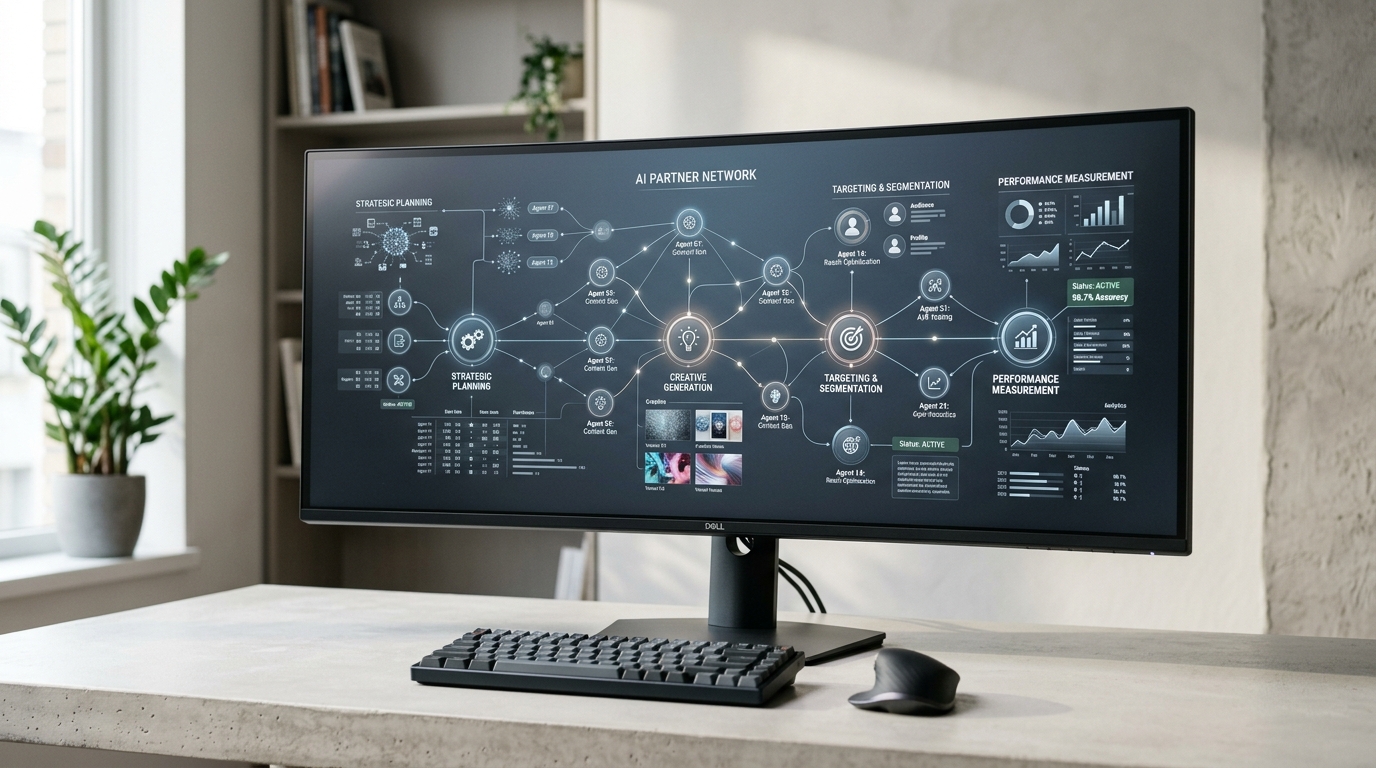
On June 18, 2026, Yahoo officially launched its DSP Agent Network, opening its platform to AI agents from 23 partners across campaign workflows including targeting, activation, creative, and measurement. That matters because it changes the role of the DSP. Rather than acting as a closed platform that forces advertisers into a single way of working, Yahoo is positioning its DSP as infrastructure: a central system where advertisers can use Yahoo’s native AI, bring their own tools, or combine both.
 Why this launch stands out
The most notable part of the announcement is Yahoo’s emphasis on openness. Earlier in 2026 at CES, Yahoo introduced its “Yours, Mine, and Ours” AI strategy. The idea was simple: advertisers should be free to use Yahoo’s agents, their own agents, or a hybrid approach. The new Agent Network is the practical version of that strategy.
The timing makes sense. The ad industry is excited about agentic AI, but concerns around governance, transparency, and vendor lock-in are still very real. Advertisers want automation, but not black-box decision-making or a complete rebuild of their stack around one company’s ecosystem. Yahoo is clearly trying to address that directly.
What the Yahoo DSP Agent Network includes
At launch, Yahoo connected its DSP to 23 partners, including DoubleVerify, Integral Ad Science, Innovid, Kochava, LiveRamp, MiQ, Pacvue, PMG, Snowflake, and Samba. These partners cover several critical advertising functions:
- Audience and contextual targeting
- Campaign planning and activation
- Creative generation and trafficking
- Measurement and analytics
That range matters. This is not just Yahoo adding a single AI assistant feature. It’s building the framework for a coordinated team-of-agents model, where specialized AI tools can plug into the same authenticated environment and support different stages of campaign execution.
The bigger strategic move
Yahoo’s real play appears to be interoperability. Adam Roodman, GM of Yahoo DSP, has consistently framed agentic AI as something that should make advertising simpler, not more complicated. That point is central. If AI creates more workflow fragmentation, more vendors to juggle, and more hidden logic, it fails the people it’s supposed to help.
This launch also builds on earlier industry efforts. Yahoo was part of the Ad Context Protocol initiative announced in October 2025, which aimed to standardize how AI agents communicate in advertising. That suggests Yahoo isn’t chasing headlines with a one-off feature. It’s aligning itself with the standards layer that could shape how future agent-to-agent systems work.
 Why advertisers should pay attention
For advertisers, the value proposition is straightforward. A network like this can reduce the time spent evaluating point solutions, simplify integration across teams, and make it easier to operationalize AI without giving up oversight.
That last point is the most important. For all the excitement around autonomous systems, most brands and agencies still want human approval for high-stakes decisions such as budget allocation, strategic changes, and major campaign shifts. Yahoo seems to understand that. The current model is less about fully autonomous media buying and more about using AI agents for operational work such as setup, optimization, anomaly detection, troubleshooting, and measurement.
In other words, this is practical AI, not science fiction.
What this means for the industry
Yahoo’s launch will likely put pressure on competitors to show how open their own AI ecosystems really are. The market is moving quickly, with agencies building internal agents, brands testing in-house systems, and major tech platforms trying to own the next layer of advertising automation. In that environment, openness becomes a real differentiator.
There’s a broader shift underway as well: the DSP is evolving from a media-buying console into a coordination layer for AI-powered workflows. If that continues, the winners may not be the companies with the smartest single agent, but the ones that can make many agents work together reliably, securely, and transparently.
That’s the real significance of Yahoo’s move. It suggests the future of advertising AI won’t belong to one tool. It will belong to the platforms that can orchestrate many tools without creating chaos.
FAQ
What is Yahoo’s DSP Agent Network?
It’s an open network that allows AI agents from 23 partner companies to work inside Yahoo’s DSP across functions like targeting, activation, creative, and measurement.
Why does Yahoo’s approach matter?
Because it focuses on interoperability. Advertisers can use Yahoo’s native AI, their own tools, or a combination of both instead of being locked into a single closed system.
Who is this built for?
Brands, agencies, and advertisers that want to use AI more deeply in campaign workflows while maintaining governance, transparency, and human oversight.
Is this fully autonomous advertising?
No. The current model is geared more toward operational support such as setup, optimization, anomaly detection, troubleshooting, and measurement than fully autonomous media buying.
Conclusion
Yahoo’s open AI Agent Network stands out as one of the more meaningful adtech launches of 2026 because it balances innovation with something advertisers still badly need: control. If campaign management is heading toward multiple AI systems working in parallel, then interoperability, governance, and measurable performance will matter far more than hype. For teams that want to pair that mindset with sharper performance tracking and return-focused optimization, ROAS Suite is worth considering as part of a more accountable advertising stack.