WSJ Highlights Chinese Dominance in AI Video Generation Impacting Hollywood and Marketing
When The Wall Street Journal flags a shift in technology power, it’s worth paying attention—especially when that shift affects Hollywood, advertising, and performance marketing. Its recent reporting on Chinese dominance in AI video generation points to a clear reality: the center of gravity in generative video is moving east, and the effects are already showing up in the content people watch and the campaigns brands run.
For teams in media, ecommerce, and growth, this isn’t a far-off innovation story. It’s a business story about cost, speed, scale, and creative leverage.
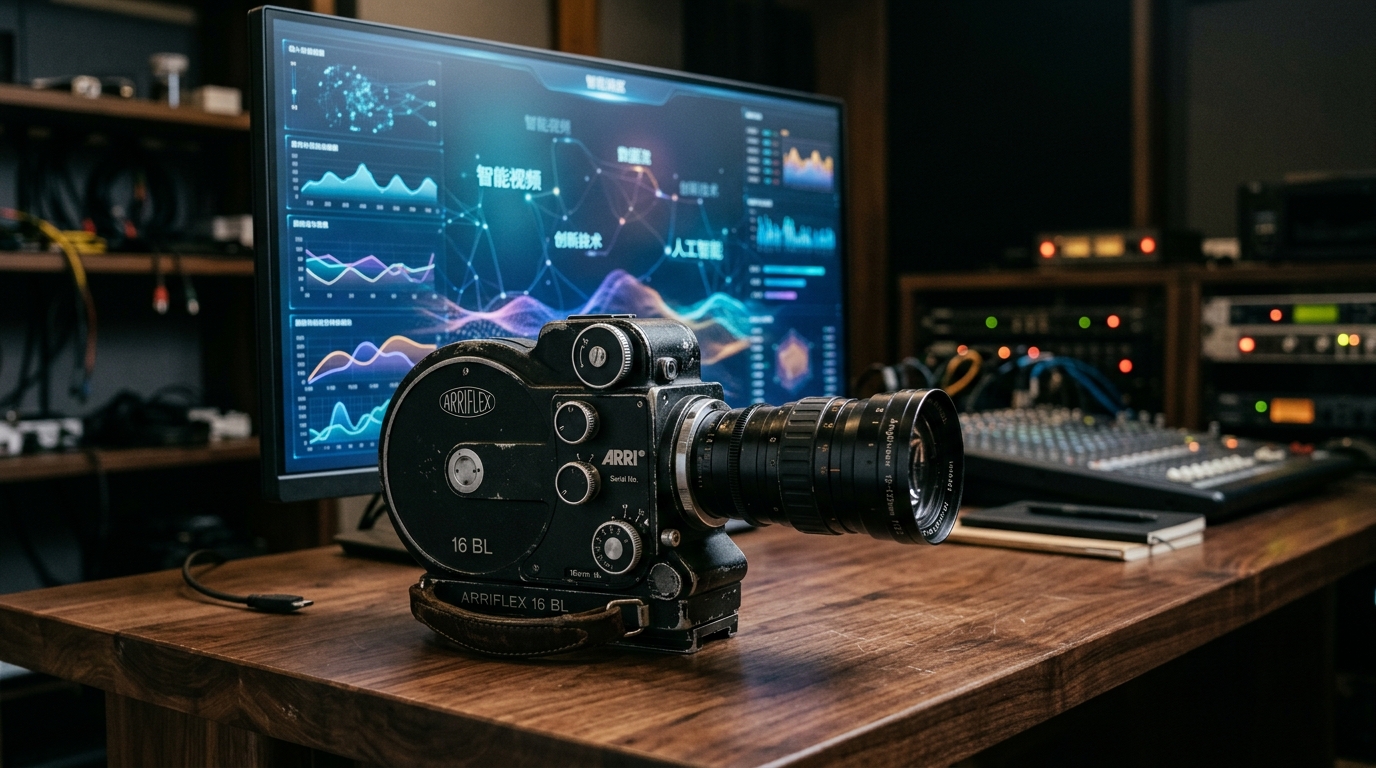 How China Took the Lead in AI Video
The AI video race didn’t begin in China. Early attention centered on OpenAI’s Sora, which helped define what high-end text-to-video could look like. But as the market developed, Chinese companies started to pull ahead through a mix of better data access, faster iteration, and a stronger focus on commercialization.
A big part of that advantage came from platforms built around short-form video. Companies like Kuaishou and ByteDance had something unusually valuable: enormous volumes of labeled video data generated by real users at scale. That matters because AI video models improve when they can learn motion, scene transitions, camera behavior, and real-world visual dynamics—not just still images.
By 2026, the lead was hard to dismiss. Based on the reporting and leaderboard data cited by the WSJ, Chinese models held 7 of the top 10 spots in AI video rankings. ByteDance’s Seedance 2.0, Kuaishou’s Kling 3.0, and Alibaba’s HappyHorse emerged as serious global competitors, with some benchmarks placing them ahead of major Western alternatives.
Hollywood Is Already Using the Tools
This matters because it’s no longer theoretical. Hollywood productions are already folding Chinese AI video tools into real workflows.
One of the clearest examples is Amazon’s House of David, where AI-generated visual effects were used across dozens of shots in Season 1 and reportedly far more heavily in Season 2. Rather than relying only on traditional VFX pipelines or costly location work, the production used hybrid workflows that included tools like Kling to generate backgrounds and environmental elements.
That says a lot about where the market is. AI video is no longer just an experimental tool for concept artists or social creators. It’s moving into professional production environments where deadlines, budgets, and visual standards actually count.
For studios, the appeal is straightforward. If AI can cut production costs while speeding up shot creation, it becomes difficult to ignore. For independent filmmakers, the shift may be even bigger. Work that once required teams, travel, and six-figure budgets is becoming more accessible to smaller crews—and sometimes even solo creators.
Why Marketers Should Care Even More
As significant as the Hollywood angle is, the marketing impact may be even larger.
Chinese AI video platforms are helping drive a new era of low-cost, high-volume creative production. The WSJ points to viral ad campaigns and short-form content ecosystems where AI-generated videos can pull in billions of views. That should grab every brand marketer’s attention.
Why does this matter? Because the economics of creative testing are changing quickly.
In performance marketing, the bottleneck often isn’t media buying. It’s creative production. Teams can test only so many hooks, scenes, formats, and angles before costs and timelines start slowing them down. AI video changes that by making it possible to generate more concepts, more variations, and more platform-native creative at a fraction of traditional production cost.
That opens the door to a different mindset:
- Less protection of every asset
- More testing of anything that might convert
That’s where the real disruption happens. The winners won’t just be the companies with access to AI tools. They’ll be the ones that know how to connect AI-generated creative to actual revenue outcomes.
The Economics Are Reshaping the Market
One of the clearest lessons in the WSJ coverage is that leadership in this space isn’t just about model quality. It’s also about whether the business model holds up.
OpenAI’s Sora helped establish the category, but reports of high compute costs and weak monetization raised questions about the long-term economics. Chinese players, by contrast, appeared to push aggressively toward commercialization, global adoption, and production-ready outputs.
Kling reportedly generated substantial revenue, with a large share coming from outside China. That matters because it signals real international demand, including in the U.S. This is no longer just a domestic Chinese success story. It’s a global platform story.
When a technology gets cheaper, better, and easier to adopt, creative markets tend to move fast. That’s true in entertainment, but it’s especially true in direct response marketing, where speed and iteration can directly affect return on ad spend.
 The Tension: Efficiency vs. Creative Labor
None of this comes without friction.
As AI video gets more capable, the labor implications are becoming harder to ignore. Comments from media executives suggesting that human-actor-based filming could become obsolete have already triggered backlash. Hollywood unions, creators, and rights holders are watching closely, and concerns around intellectual property, consent, synthetic likenesses, and content labeling will only intensify.
China has already moved toward stricter rules for labeling AI-generated synthetic content, which suggests regulators understand the stakes. But regulation alone won’t settle the bigger issue: AI video is moving faster than the institutions built to govern creative work.
The most likely near-term outcome is a hybrid model. Human-led creative direction, scripting, performance, and brand strategy will remain essential, while AI increasingly takes over repeatable production layers, variation generation, environment creation, and some post-production tasks.
That model isn’t hypothetical anymore. It’s already in use.
What This Means for Brands Right Now
If I were advising a brand or agency today, I’d pull out three immediate lessons from this shift.
- Creative velocity is becoming a competitive advantage. If Chinese AI tools enable much faster content production, brands stuck in slow legacy workflows will lose ground.
- Platform-native storytelling matters more than polished legacy production. Short-form, high-frequency, testable content is where AI video works best today, and that lines up perfectly with modern social and paid media environments.
- Measurement is now the real moat. As content creation gets cheaper and more abundant, the advantage shifts to the teams that can identify what actually performs. Producing more videos only matters if those outputs connect to engagement, conversion, CAC, and ROAS.
That’s why this WSJ story feels bigger than a technology headline. It’s a signal that creative production and performance optimization are converging faster than most brands realize.
FAQ
Why are Chinese companies leading in AI video generation?
They benefit from massive amounts of short-form video data, fast product iteration, and a stronger push toward commercial use. That combination has helped them improve model quality and reach market adoption quickly.
How is Hollywood using these tools?
Studios are starting to use AI video in hybrid production workflows, especially for visual effects, backgrounds, and environmental elements that would otherwise require more time or budget.
Why does this matter for marketers?
Because AI video lowers the cost of producing and testing creative. That gives brands more chances to experiment with hooks, formats, and messaging without the same production bottlenecks.
What’s the biggest competitive advantage now?
Not just making more content—measuring what works. As creative becomes easier to generate, performance insight becomes more valuable.
Conclusion
Chinese dominance in AI video generation is no longer a future possibility. It’s a current market reality shaping Hollywood production, viral content, and digital advertising at the same time. The tools are improving quickly, costs are coming down, and the brands that adapt early will have a clear edge in both storytelling and scale. Competing in that environment takes more than stronger creative—it takes better visibility into what drives revenue, which is exactly why solutions like ROAS Suite deserve a closer look.