Week of July 20 Marketing Trends Highlight AI Search and Ad Shifts
This week’s marketing signals point in one direction: AI search is no longer a side story. It’s becoming the place where visibility, ad strategy, and attribution are being reshaped in real time.
Looking across the biggest developments from the week of July 20, the market is splitting into two tracks. Brands can now buy placement inside AI-driven experiences more aggressively than ever. But earning trust, citations, and organic visibility in those same environments still comes down to authority, relevance, and content quality. That gap is becoming one of the defining realities of modern digital marketing.
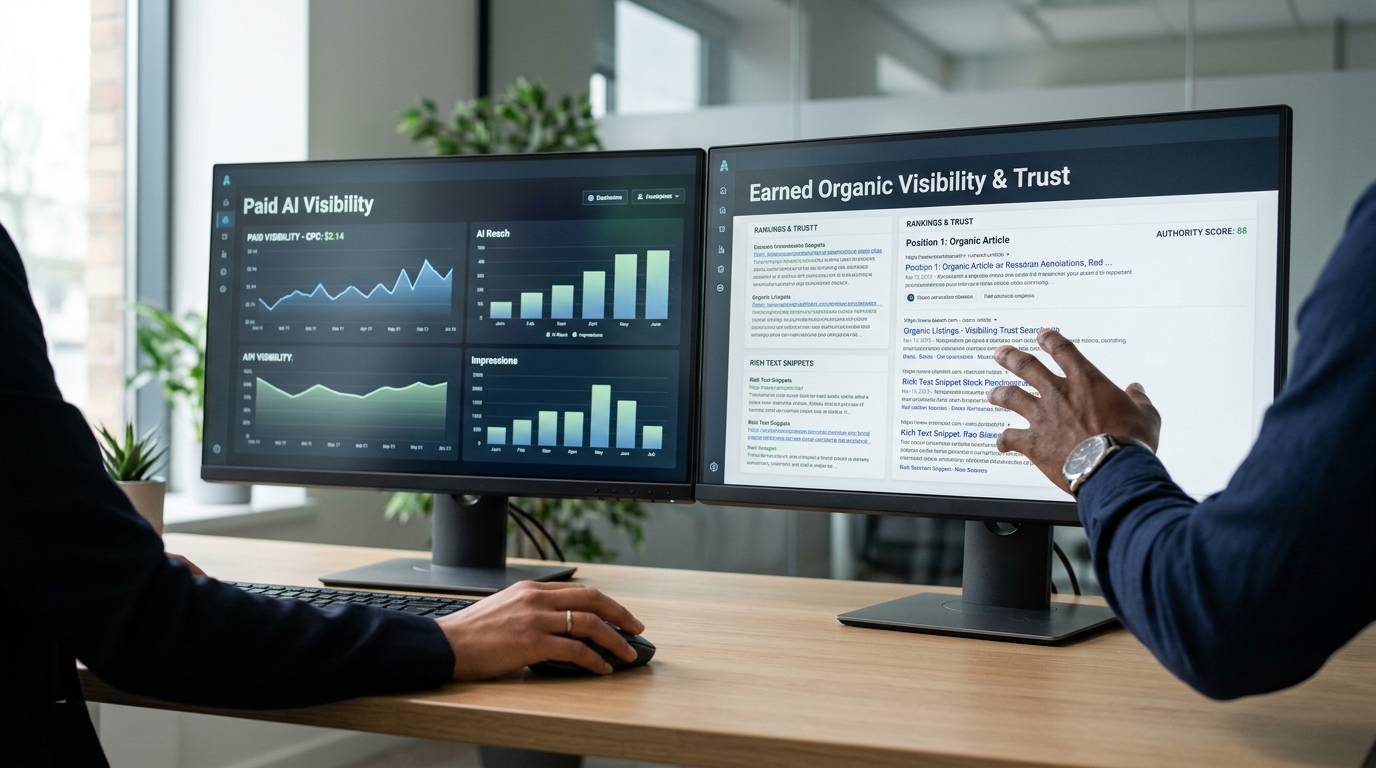 Paid and earned visibility have officially separated
The biggest takeaway this week is simple: paid AI visibility and earned AI visibility are not the same thing, and there’s no guarantee they support each other.
A major SE Ranking study covering more than 50,000 commercial keywords found that ads now appear in Google AI Mode for 29.45% of queries. That’s a rapid climb for a format that was barely on the market not long ago. Even more telling, 71.1% of those results showed two competing ads side by side, a sign of how quickly AI search is becoming a crowded paid media channel.
But marketers need to internalize the next part: buying an ad does not mean earning a citation in AI answers. Only 11.53% of advertiser domains appeared in AI Mode citations for the same keyword, and just 1.95% of exact URLs showed up. In fact, 85% of advertisers in the study did not rank organically at all. That may be the clearest evidence yet that ad spend and AI authority operate as separate systems.
If I’m advising a team right now, I’d put it plainly: paid buys exposure, but it does not buy trust.
CPC matters more than traditional SEO signals in AI ad placement
Another revealing trend is what actually predicts ad presence in AI Mode. It isn’t search volume. It isn’t keyword difficulty. It’s CPC.
The same research found a strong relationship between higher CPCs and higher ad frequency in AI Mode. Lower-CPC terms showed ad rates around 24.33%, while keywords with CPCs of $10 or more saw ad prevalence jump to 53.56%.
That changes the planning conversation. If I’m running paid strategy in AI search, I’m not assuming the highest-volume keywords are the best place to test. I’m looking hard at commercial intent and auction economics. AI ad inventory is showing up fastest in categories where money is already concentrated.
There’s also major niche variation. Pets showed AI Mode ad prevalence above 72%, while Healthcare was down at 2.64%. That kind of gap makes broad assumptions risky. Every vertical needs its own benchmark.
Google is reducing click incentives inside search
Google’s expansion of AI Overviews continues to reshape user behavior, and this week’s image-generation update is another major step.
With image creation now built directly into AI Overviews, users can generate custom visuals from text prompts without leaving the results page. From a product perspective, it’s a smart engagement play. From a marketing perspective, it’s another sign that Google wants to keep more activity inside its own ecosystem.
For publishers, ecommerce brands, and content teams that have long relied on image discovery or SERP click-throughs, this matters. The more useful the results page becomes on its own, the less traffic naturally flows outward. That puts even more pressure on creating assets AI can’t easily replace: original visuals, proprietary insights, a clear brand perspective, and content with real human value.
Generic content gets squeezed first.
Measurement is finally catching up to AI traffic
One of the most practical updates in this cycle came from GA4. Since May 13, Google Analytics 4 has included a native AI Assistant default channel group, classifying traffic from recognized chatbot sources like ChatGPT, Gemini, and Claude under the medium ai-assistant.
That matters because, for the first time, many marketers can measure chatbot-driven traffic without custom workarounds. It’s one of the most useful operational upgrades in the current AI marketing shift.
There’s an important caveat: traffic from Google’s own AI Overviews and AI Mode still rolls into Organic Search rather than the AI Assistant channel. So reporting is better, but it’s not complete. Marketers still need to interpret AI-influenced traffic carefully.
Even with that limitation, this update changes how I’d evaluate content. Instead of guessing which pages resonate with AI assistants, I can identify them directly, compare them with traditional organic landing pages, and start seeing where AI recommendation behavior differs from classic search behavior.
That’s where better strategy starts: not with assumptions, but with source-level data.
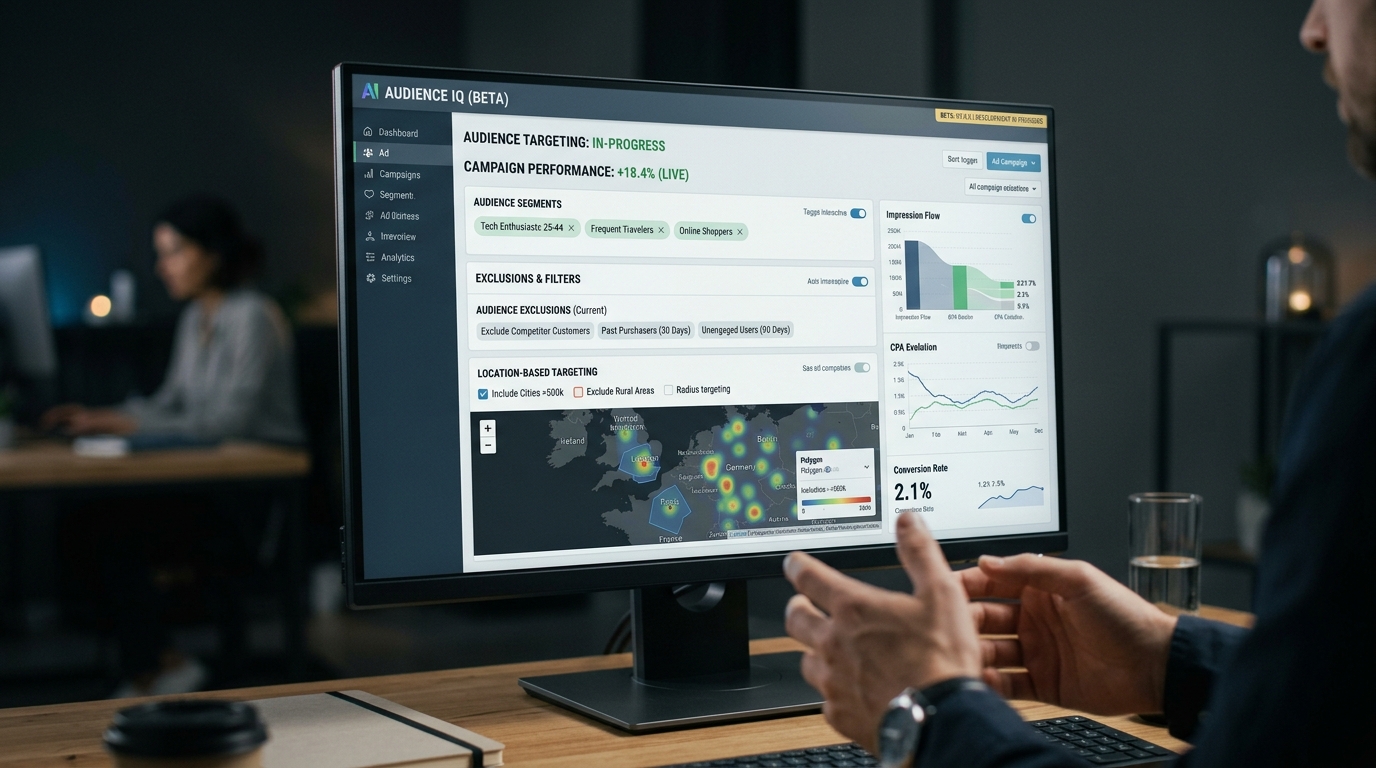 ChatGPT ads are maturing fast, even if the market is still early
OpenAI’s advertising stack also moved quickly this week, continuing a pattern of rapid feature releases. New controls around audience exclusions and location-based targeting suggest that ChatGPT Ads Manager is developing into a more serious platform for advertisers who want precision, testing flexibility, and localized campaign control.
The feature velocity is the real story. Weekly product improvements usually signal a company trying to accelerate adoption and shape advertiser habits early.
At the same time, there’s still volatility underneath. Broader reporting suggests OpenAI’s ad business is pacing well below some internal expectations, which tells me the market is still in its formative stage. The tools are improving quickly, but the revenue model is not fully proven at scale yet.
For marketers, that creates an interesting window. Early platforms often offer outsized learning opportunities before they become crowded, expensive, and standardized. The key is to treat them as test environments, not finished ecosystems.
LinkedIn’s new reach split adds a useful layer of context
Outside search, LinkedIn’s growing visibility into in-network versus out-of-network impressions is another update worth watching closely.
This isn’t as headline-grabbing as AI Mode ads, but it matters. For content marketers and personal brands, out-of-network reach is one of the clearest signals that content is moving beyond an existing audience. It gives a better read on algorithmic amplification and topical resonance.
I’d still avoid treating that metric in isolation. A high percentage of out-of-network impressions does not automatically mean high impact if total impression volume is small. But paired with absolute reach, it offers a more nuanced way to judge whether content is actually breaking through.
In a landscape where audience growth is getting harder and platform distribution is less predictable, that kind of diagnostic signal is valuable.
What marketers should do next
If I had to sum up this week in one line, it would be this: AI marketing is becoming more measurable, more monetized, and more fragmented at the same time.
That means the old habit of treating search visibility as one blended outcome no longer works. I need separate plans for:
- paid AI placement
- earned AI citations and recommendations
- chatbot referral traffic
- on-platform content distribution signals
The brands that adapt fastest will be the ones that stop expecting one tactic to solve all four.
My view is straightforward: test AI ads where CPC and category dynamics justify it, build GEO-focused content for earned authority, monitor AI Assistant traffic in GA4, and watch platform analytics closely enough to separate noise from momentum.
FAQ
Why doesn’t paid AI visibility guarantee earned AI citations?
Because AI ad placement and AI citation systems appear to operate independently. Paying for exposure can increase visibility, but it doesn’t automatically build the authority or relevance needed to be cited organically in AI-generated answers.
What’s the strongest signal for AI ad presence right now?
Based on this week’s research, CPC is a stronger predictor than search volume or keyword difficulty. Higher-value commercial terms are seeing much heavier ad coverage in AI Mode.
How should marketers measure AI-driven traffic?
GA4’s new AI Assistant channel is a strong start for tracking chatbot referrals from platforms like ChatGPT, Gemini, and Claude. But marketers still need to account for Google AI Overview and AI Mode traffic, which remains grouped under Organic Search.
Conclusion
The week of July 20 made one thing clear: AI search and ad ecosystems are no longer experimental side channels. They’re becoming core to how discovery, competition, and performance marketing work. As this shift continues, the most useful tools will be the ones that connect attribution, media efficiency, and channel clarity in one place. For marketers trying to make smarter decisions as paid and earned AI visibility continue to diverge, ROAS Suite is a practical place to start.