Viral Post Reveals 11 AI Video Tactics Achieving 4.2x ROAS in Ads
I’ve seen plenty of “new creative hack” posts fly around, but a viral thread this week actually earned the attention. It broke down 11 AI video ad tactics reportedly hitting 4.2x ROAS—built around the same formats people already watch on repeat: podcasts, street interviews, unboxings, and quick-hit UGC-style demos.
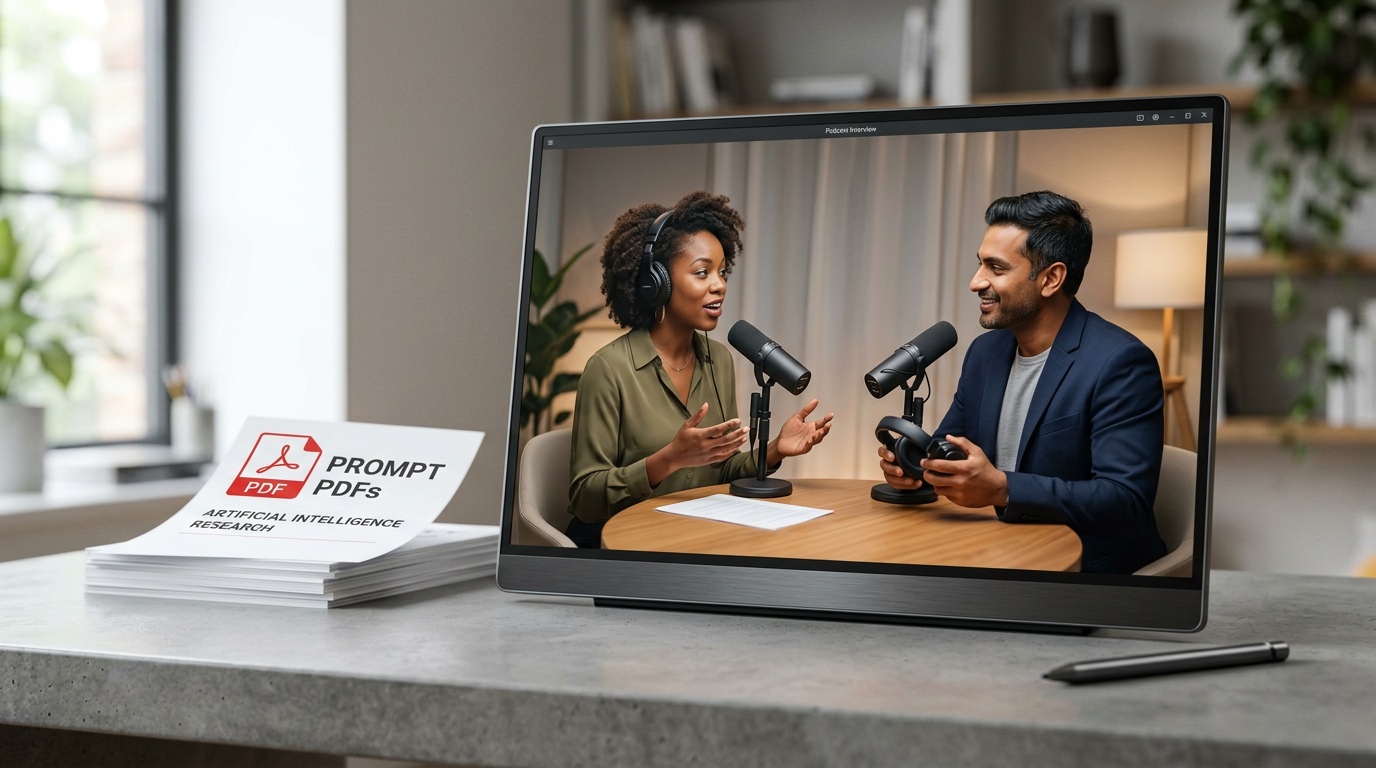
The post came from David Roberts (@recap_david), an AI ads educator and founder of Calico AI, who’s been documenting these formats for months. In February, he pushed “AI street interviews” as an ad format (claiming 4.5x ROAS). Then on March 4, 2026, he raised the stakes with AI podcast interview ads, showing a demo clip and offering prompt PDFs to anyone who commented “AI ADS.”
Predictably, the comments section turned into a stampede.
But the useful takeaway isn’t the virality. It’s what the tactics point to: creative is getting cheaper, faster, and far easier to test. That changes how you build ad systems if you actually care about ROAS.
 Why this post went viral (and why it matters)
A few ingredients made it spread:
- A concrete performance claim (4.2x ROAS) tied to a familiar format (podcast clips).
- A “you can’t tell it’s fake” angle, which reliably sparks curiosity and arguments.
- An early-mover narrative: Roberts warned CPCs can drop before saturation—implying a short window for outsized results.
- A low-friction offer: free prompts gated behind engagement (“comment to get PDF”).
The bigger shift underneath all of this: we’re moving from “make one perfect ad” to ship 50–200 variations, find winners fast, then rotate before fatigue hits.
The 11 AI video tactics (and how I’d think about using them)
The thread frames these as plug-and-play tactics you can generate quickly with AI video tools (and yes, it’s clearly aligned with Calico’s workflow). The tool matters less than the formats—because formats are what platforms tend to reward.
Here are the 11 tactics as they’re commonly interpreted from the examples and surrounding context, plus how I’d deploy each one.
1) AI podcast interview ads
This is the flagship: a “host” interviews a “guest” about the product or the problem, edited like a short podcast clip.
Why it works: It borrows trust from an established content format. It doesn’t feel like direct response until the viewer is already leaning in.
How I’d test it:
- 3 hooks (skeptical, curious, controversial)
- 2 host personalities (friendly vs. challenging)
- 3 “big claims” (speed, price, outcomes)
2) AI street interviews
Same idea, different wrapper: on-the-street Q&A, vox pop energy, quick cuts, casual tone.
Why it works: It feels spontaneous. If you’re selling something that benefits from social proof, it’s a strong vehicle.
Watch-out: This is also where ethical lines blur fastest—because it mimics real people and real reactions.
3) Shock hooks (the completion-rate lever)
The thread cites shock hooks driving up to 47% higher completion rates.
What “shock” should mean in practice: pattern interruption, not clickbait.
- “Nobody talks about the real reason your [problem] won’t go away…”
- “This is why your ads are dying after 10 days…”
4) UGC-style testimonials (synthetic authenticity)
Classic selfie-style “here’s what I tried” storytelling, but generated.
Why it works: Testimonials still perform when they feel specific—timeline, constraints, objections, and a believable before/after.
How I’d structure it: Problem → failed attempts → discovery → “I was skeptical…” → results → how to start.
5) Product demo videos without production
Quick demo-style videos with hands, overlays, UI mockups, or simple “show the thing working” beats.
Why it works: It reduces uncertainty. For ecom, it’s the closest thing to “try it in your hands” without a studio shoot.
6) Unboxings without props
Unboxings are evergreen because they deliver anticipation and sensory cues.
How I’d use it: pair unboxing visuals with:
- benefit overlays
- “what surprised me” narration
- 3 feature callouts in 10 seconds
7) Try-ons without models
If you sell apparel, beauty, or accessories, try-ons are expensive at scale. AI try-ons are the obvious unlock.
Rule I’d follow: Don’t chase perfection; chase volume and iteration. The winners often feel real even if they’re not technically flawless.
8) B-roll mashups that match native feeds
Generate or source B-roll-style sequences that match what’s already working—angles, pacing, lighting—then lay in a tight script.
Why it works: Platforms reward familiarity. Viewers reward clarity.
9) Rapid localization (language + cultural framing)
Tools can dub and adapt quickly into 20+ languages. The advantage isn’t just translation—it’s creative localization: currency, slang, usage scenarios, and what counts as a “credible” claim in that market.
How I’d prioritize: Start with your top two non-English geos and build a mini creative library per region.
10) Infinite variant testing (the real “unfair advantage”)
This is the real strategic shift: when videos cost $5–$20 instead of $200–$1,000, you can test aggressively.
What I’d test systematically:
- hook angle
- first-frame visuals
- offer framing
- voice cadence
- CTA style
- length (12s vs 22s vs 35s)
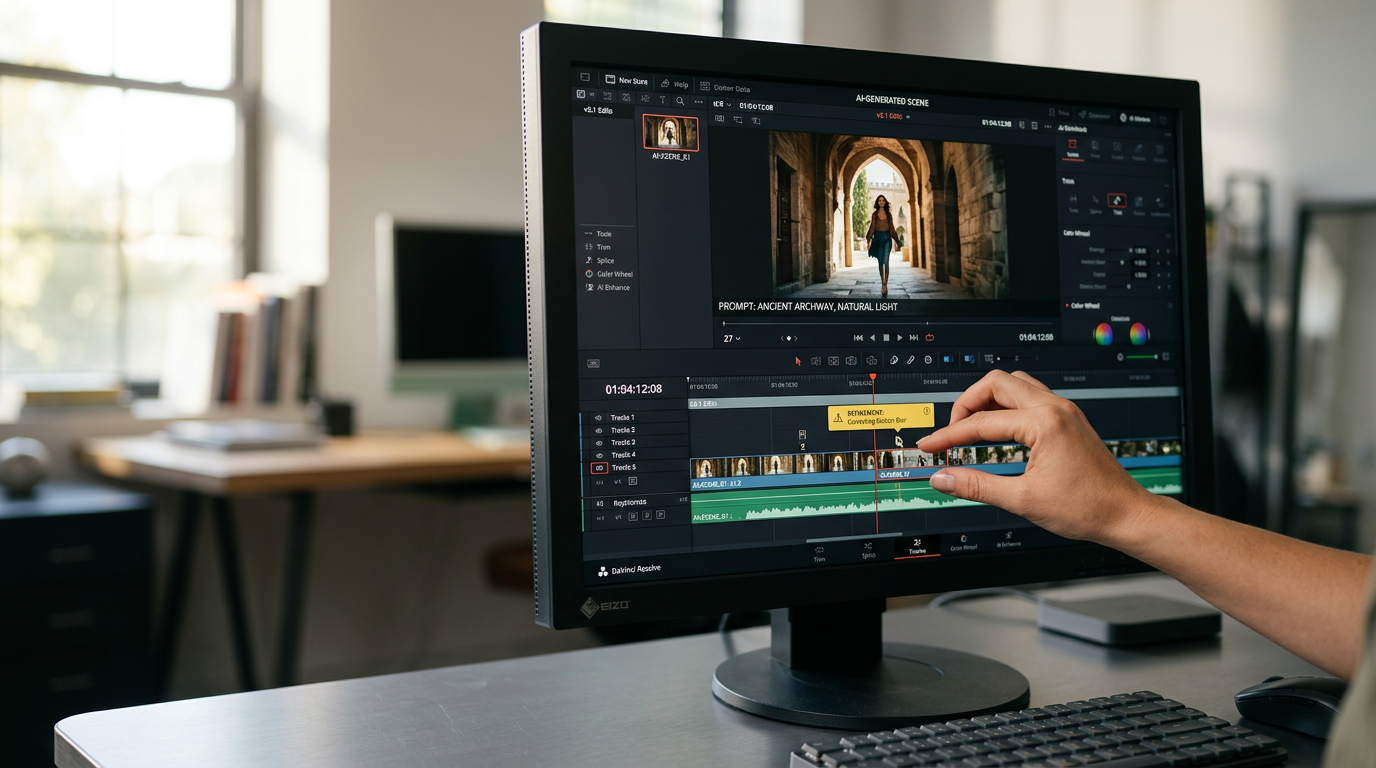
11) Hybrid edits (AI base + human finishing)
Even the pro-AI crowd admits saturation is coming. A solid hedge is a hybrid workflow:
- AI generates the core asset fast
- a human editor tightens pacing, adds platform-native captions, and fixes obvious “AI tells”
Why it matters: As detection improves and novelty fades, “good enough” stops being good enough.
 The opportunity window—and the risks people aren’t saying out loud
The upside is obvious: creative costs collapse, production time drops from days to minutes, and you can out-test competitors.
The downside is what’s easy to ignore:
- Saturation hits fast. Marketers warn ROAS can decay hard as formats become recognizable—4x can slide to 2x (or worse) in weeks if you don’t rotate.
- Authenticity backlash is real. Some audiences won’t watch AI videos. Others may watch but punish brands that feel deceptive.
- Disclosure/regulation pressure is building. If platforms mandate more labeling, the “it looks real” edge weakens.
So these aren’t “set and forget” tactics. Treat them as a creative rotation engine: use them, measure them, then evolve them.
How I’d turn these 11 tactics into an actual ROAS system
If I were building this into a repeatable workflow (not a one-off experiment), I’d run it like this:
- Pick 2–3 core formats (podcast + street + demo, for example).
- Generate 20–40 variants per week, mostly focused on the hook and first three seconds.
- Cull fast: kill losers early, then scale winners with controlled iterations.
- Rotate before fatigue: assume anything that works will be copied.
- Track creative signals like a trader: thumb-stop rate, hold rate, completion, click intent, and downstream ROAS.
That’s the real unlock behind the viral post: not the specific prompts—the speed of the feedback loop.
Conclusion: The “viral post” is a warning and a playbook
I don’t treat the 4.2x ROAS claim as a guarantee. There aren’t independent case studies backing every number, and virality hides survivorship bias. Still, the post signals where paid social is heading: more formats, more iterations, more velocity. The brands that win will be the ones that can operationalize creative testing without burning budget or time.
If you want to turn these AI video tactics into something measurable—something you can scale, rotate, and optimize like a real ads system—build your workflow around disciplined ROAS tracking and iteration. That’s why I point people toward ROAS Suite as a straightforward way to keep the creative chaos organized and profitable.