Top 10 AI Marketing Agents for Shopify Brands in 2026 Published
The release of “Top 10 AI Marketing Agents for Shopify Brands in 2026” feels less like a surprise and more like confirmation of where ecommerce is headed. Shopify brands are moving past basic AI tools and into the next phase: AI agents that don’t just assist marketers, but actively monitor, optimize, and execute across the stack.
The new roundup from Aimerce.ai is a niche industry piece, not major breaking news. Still, it captures a real shift already underway in DTC. Brands want more automation, sharper attribution, stronger first-party data, and better performance without constantly adding headcount.
 Why this publication matters
Over the past year, the language around ecommerce AI has changed. The conversation used to center on AI copy tools, design tools, and analytics platforms. Now it’s increasingly about agents—systems that can manage multi-step workflows, make decisions, and improve results with limited manual input.
For Shopify brands, that matters because marketing keeps getting more difficult. Privacy changes, weaker signal quality, rising acquisition costs, and fragmented attribution have all forced operators to rethink how they work. In that environment, a curated list of top AI marketing agents reflects broader market demand.
The list makes the case that 2026 is the year specialized AI agents become essential infrastructure for ecommerce growth. That framing looks right.
The top 10 AI marketing agents highlighted
The ranking puts Aimerce.ai in the top spot, followed by a range of specialized tools covering key functions in the Shopify growth engine.
1. Aimerce.ai
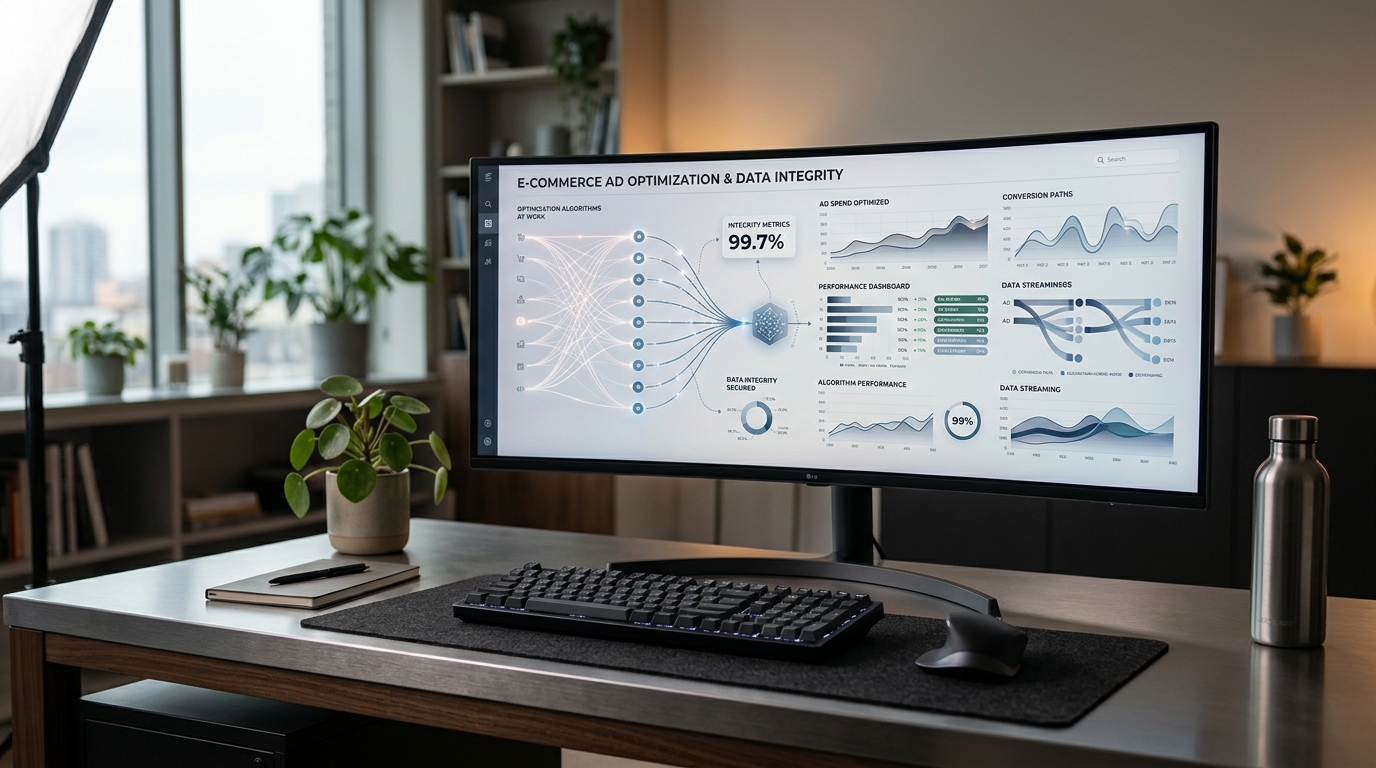
Positioned as the top overall choice, Aimerce is described as a data integrity agent. The focus is on server-side tracking, event accuracy, deduplication, and making sure platforms like Meta and Google receive clean conversion data. Strategically, that makes sense. Every downstream optimization depends on signal quality.
2. Madgicx
Madgicx is presented as the ad optimization agent. Its role is to automate budget allocation, audience targeting, and creative testing across paid channels. For brands trying to improve ROAS while cutting down on manual campaign management, this remains a compelling category.
3. Motion
Motion shows up as the creative intelligence agent. This category matters because creative fatigue is still one of the biggest bottlenecks for scaling Shopify brands. Tools that can identify winning hooks, visuals, and formats are far more valuable now than they were a few years ago.
4. Jasper
Jasper takes the copywriting slot, which is hardly surprising. Even in a crowded market, brand-safe AI copy generation remains a practical use case for ads, product pages, emails, and blog content.
5. Klaviyo AI
Klaviyo AI is featured for personalization and retention. Email and SMS are still major profit centers for Shopify brands, and AI-driven segmentation, predictive insights, and send-time optimization can lift lifecycle revenue in meaningful ways.
6. Northbeam
Northbeam is listed as the attribution agent. In the post-iOS 14 environment, attribution-focused AI is only becoming more central. Marketers need a more balanced view of channel impact, not just platform-reported numbers.
7. Triple Whale (Moby AI)
Triple Whale’s Moby AI lands in the reporting category. Natural-language analytics is one of the clearest examples of AI reducing friction for operators. Instead of pulling reports manually, teams can ask direct questions and get useful answers fast.
8. AdCreative.ai
AdCreative.ai is highlighted for design generation. For brands that need more speed in creative production, this kind of tool can dramatically shorten testing cycles.
9. Postscript AI
Postscript AI covers conversational SMS and cart recovery. That points to a larger trend: retention channels are becoming more autonomous, more responsive, and more personalized.
10. Shopify Magic
Rounding out the list is Shopify Magic, the platform’s native AI layer. Its inclusion matters because it shows how core ecommerce platforms are embedding AI directly into everyday workflows instead of leaving everything to third-party tools.
The bigger story behind the list
The more interesting angle isn’t the ranking itself. It’s what the ranking reveals.
This publication suggests that Shopify marketing is being reorganized around specialized AI layers:
- one layer for data accuracy
- one for media buying
- one for creative production
- one for attribution
- one for lifecycle marketing
- one for reporting and decision support
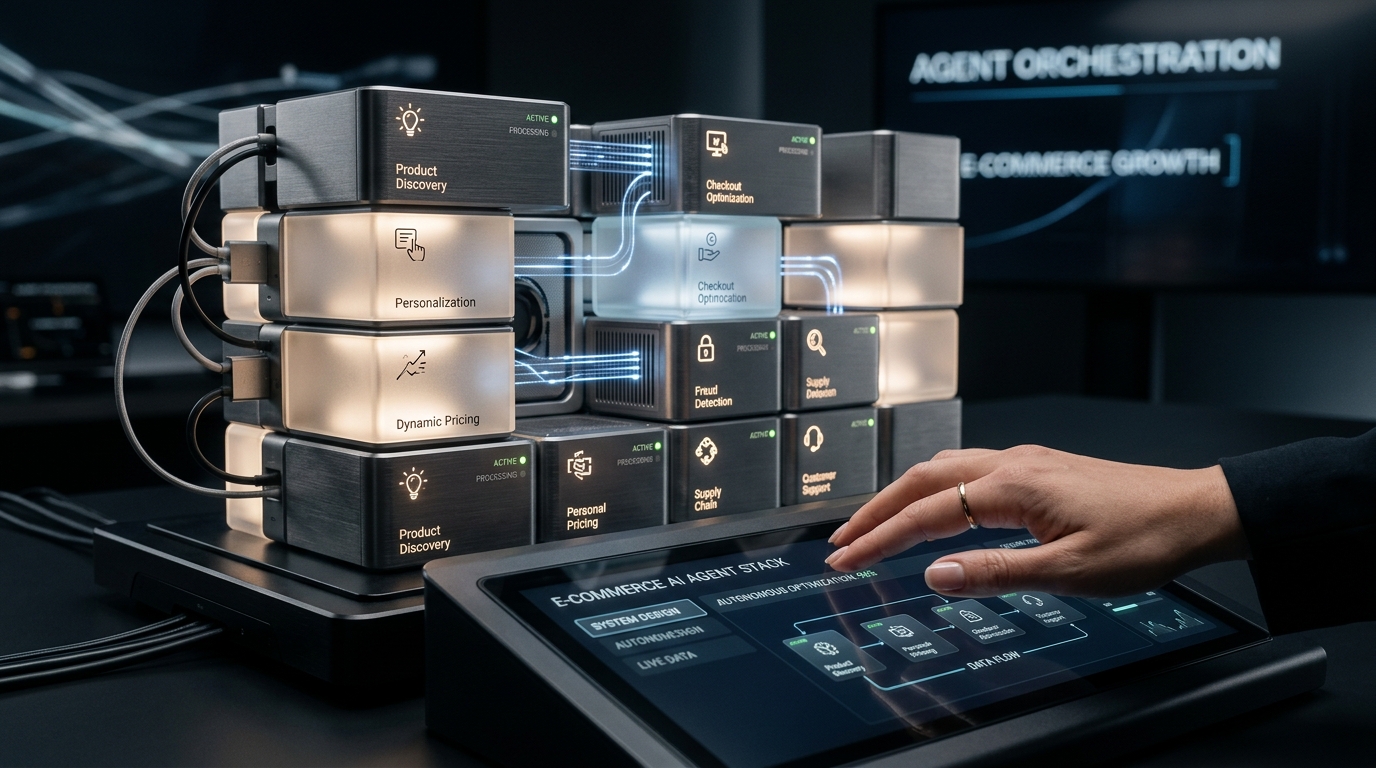
That modular structure is becoming the norm. Instead of relying on one giant all-in-one platform, many brands are assembling agent stacks built around specific outcomes.
If there’s one core message behind the article, it’s this: data comes first. That’s also why the list places a data-focused platform at number one. Without reliable event tracking and attribution signals, every other AI agent in the stack becomes less effective.
 Is this a real industry milestone or just vendor marketing?
The honest answer is: both.
This isn’t a widely covered industry news event with major press attention or broad public reaction. It’s a vendor-led content piece published into an already crowded stream of “best AI tools for Shopify” roundups. But that doesn’t make it useless. In fast-moving categories like ecommerce AI, these lists often work as market snapshots. They show which categories are gaining traction, how vendors want to position themselves, and what pain points brands are trying to solve right now.
In this case, the publication reflects several trends that look very real:
- the rise of agentic AI over passive AI tools
- the growing importance of first-party data
- the push for autonomous optimization in paid media
- the need for better reporting in a privacy-constrained environment
- the expectation that brands can scale efficiently without dramatically expanding teams
So yes, the piece is promotional. It also tracks closely with where the market is going.
What Shopify brands should take from it
If I were advising a Shopify operator reading this list, I wouldn’t spend much time on the exact order from one to ten. The more useful takeaway is the system design behind it.
The winning approach in 2026 probably won’t be “add AI everywhere and hope for the best.” It will look more like this:
- fix data quality first
- improve attribution visibility
- accelerate creative testing
- automate paid media decisions where it makes sense
- strengthen retention with personalized email and SMS
- keep humans in the loop for strategy, brand, and final judgment
That’s the difference between using AI as a gimmick and using it as a real operating advantage.
FAQ
What is an AI marketing agent for Shopify?
An AI marketing agent is a specialized system designed to handle marketing tasks with minimal manual input. For Shopify brands, that can include data tracking, attribution, ad optimization, creative analysis, reporting, and retention workflows.
Why are AI agents becoming more important for ecommerce brands?
Because the operating environment is harder than it used to be. Privacy restrictions, rising ad costs, and weaker tracking signals have made marketing less efficient. AI agents help brands automate decisions, improve speed, and make better use of limited data.
What matters most when building an AI stack for Shopify?
Start with clean data. If tracking, event accuracy, and attribution are unreliable, every other tool in the stack becomes less effective. Strong signal quality is the foundation.
Should brands replace people with AI agents?
No. The strongest setups use AI to handle repetitive analysis and execution while people stay focused on strategy, brand direction, and final decision-making.
Conclusion
The publication of “Top 10 AI Marketing Agents for Shopify Brands in 2026” may not dominate mainstream headlines, but it does highlight one of the most important shifts in ecommerce: the move from standalone tools to coordinated, specialized AI agents.
For Shopify brands, the takeaway is straightforward. Strong performance in 2026 will depend on the right automation stack, built on trustworthy data, measurable attribution, and fast execution. If you’re evaluating how to build that foundation, start with platforms designed around revenue efficiency and signal clarity. ROAS Suite is a smart place to begin.