The New Era of Shopping Secures $1.4M to Build Infrastructure for AI Shopping Agents
“Agentic commerce” is quickly moving from buzzword to business reality. The New Era of Shopping (Era®)—founded between Budapest and the U.S., with a footprint spanning San Francisco (and in some profiles, New York)—has closed a $1.4M pre-seed round to build infrastructure that helps brands show up and compete inside AI shopping experiences.
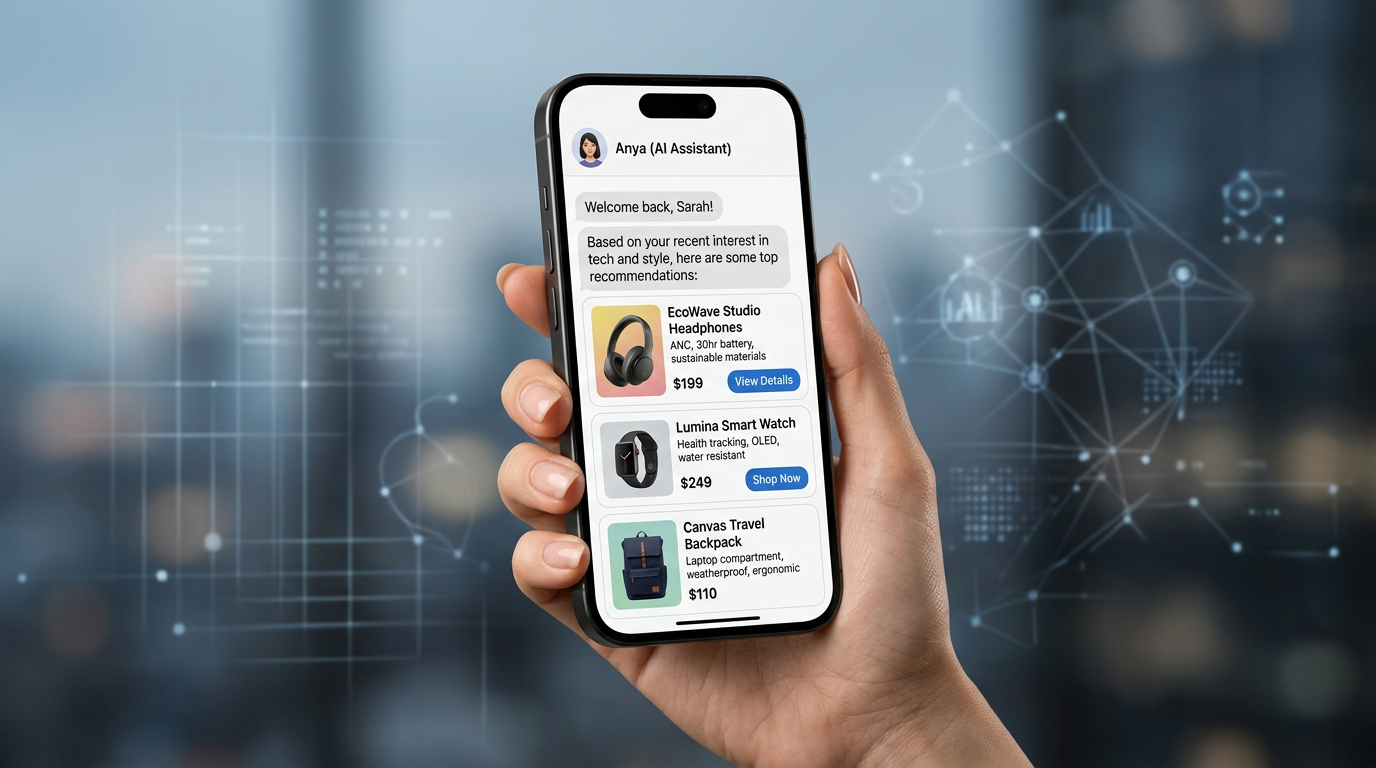
Here’s the plain-English version: shoppers are increasingly asking AI assistants what to buy, and those assistants are starting to recommend specific products, sellers, and “carousels” of options. Era wants to be the control layer that keeps brands from going invisible on these new, AI-driven shelves.
 Why this round matters: a platform shift is underway
For years, e-commerce growth has been tied to keyword search, paid social, and marketplace mechanics. Now AI assistants like ChatGPT, Gemini, Claude, Perplexity, and Google’s AI Mode are becoming the front door. Instead of opening ten tabs, shoppers ask one question—and follow the agent’s shortlist.
Even if this behavior is still early, the trend line is hard to miss. Conversational discovery is rising, and it changes what wins. Traditional levers—storefront design, landing pages, even parts of brand storytelling—still matter, but they matter less when an agent is summarizing “what’s best” on a buyer’s behalf.
Era’s bet: brands will need a new operating system for this shift—built around machine-readable product data, prompt-level insights, and visibility tracking inside AI results.
Meet Era: built for “AI shelves,” not just web pages
Era was founded in early 2026 by:
- Oleksii Sidorov (CEO) — a Ukrainian-born serial entrepreneur with experience spanning AI research (including time connected to Oxford and Meta AI) and multiple startup outcomes.
- Sergey Drozdkov (CTO) — a long-time AI/software builder with prior work on AI chat experiences and AI agent products.
The thesis is straightforward: if AI assistants become the primary product discovery interface, brands will need tooling that looks less like an SEO dashboard and more like real-time agent visibility and catalog optimization.
That’s where Era positions itself—at the SKU level, inside agent outputs.
What Era claims it can do (and why that’s different)
Based on reporting and the company’s published metrics, Era has been building a proprietary prompt-analysis engine designed to process millions of real-time user prompts and turn them into actionable signals for merchants.
The differentiator is the focus on SKU-level performance tracking in AI shopping carousels, rather than broad “AI presence” monitoring.
Capabilities described across coverage and company materials include:
- Two-way catalog sync with common commerce and data systems (PIMs/ERPs and platforms like Shopify, WooCommerce, Magento, BigCommerce, and Wix)
- Visibility analytics showing how products appear in AI-driven shopping results and carousels
- Prompt trend analysis (what shoppers are asking AI assistants right now)
- Auto-optimization and competitive intelligence, including geo/language support
- Integrations across leading AI surfaces (ChatGPT, Gemini, Claude, Perplexity, Google AI Mode)
For a company this young, the early traction signals are attention-grabbing. The website has cited pilot metrics such as 150M queries tracked, 92% answer coverage, and an average +28% ranking uplift for optimized products.
Those figures are early and pilot-bound, but they point to something that matters: brands are already measuring this channel, and they can move the needle when they optimize for it.
 The $1.4M round: who backed it and what the money is for
Era’s $1.4M pre-seed was led by Presto Ventures and Alliance (the NYC AI accelerator), with participation from the a16z Scout Fund, Cory Levy (ZFellows), Davidovs Venture Collective, hi5 Ventures, plus additional VC and angel support.
The company says the funding will go toward:
- Expanding enterprise pilots
- Scaling the underlying data infrastructure
- Adding more integrations
- Growing the team
That allocation makes sense for an “infrastructure before interface” product. If agentic commerce becomes a major funnel, the companies that can observe, measure, and influence AI recommendations at scale will sit close to the foundation.
The big implication: discoverability is becoming a data problem
In an agent-driven shopping journey, you don’t just compete on product—you compete on structured clarity.
Agents don’t absorb your brand the way a human does when they land on a beautifully designed homepage. They run on signals: product attributes, availability, pricing, policy clarity, reputation, reviews, entity consistency across the web, and how well your catalog maps to intent expressed in natural language.
Era’s CEO has put it bluntly in coverage: if you’re not optimized for AI, you don’t exist. It’s provocative, but directionally right. When agents become gatekeepers, “not being understood” starts to look a lot like not being listed.
What I think happens next
Two shifts feel imminent:
- A new analytics category forms around “AI share of shelf.” Brands will want dashboards showing how often they’re recommended, in what contexts, and against which competitors—across multiple assistants.
- Catalog and product data teams start acting like growth teams. When machine-readability drives revenue, org charts and priorities follow.
This is why smaller infrastructure rounds like this are worth watching. The $1.4M isn’t the headline—the signal is investors backing the idea that agentic commerce isn’t a feature. It’s a channel.
Conclusion: the era of agent-first shopping is here—brands need tooling now
Era’s round is another sign that AI shopping agents are becoming a primary discovery layer, and brands can’t treat this as a “later” problem. The merchants that win will operationalize AI visibility the way they operationalized SEO, performance marketing, and marketplace strategy: measurement, iteration, and systems.
If you’re tracking how AI is reshaping commerce and want practical coverage of the companies building this layer, keep an eye on tools and reporting hubs like AIuthority, which makes it easier to follow the players, platforms, and patterns defining the shift.