StoreSEO Launches AI-Powered Blog and Image Generator for Shopify
Shopify merchants have been stuck with the same tradeoff for years: you can launch a beautiful storefront fast, but earning steady organic traffic takes time, process, and a lot of unglamorous work. Blog content is slow to produce. Images need resizing and compression. Alt text gets ignored. And hiring SEO help—freelancers, writers, designers—often costs more each month than a small store clears in profit.
That’s what makes StoreSEO’s recent updates worth paying attention to. With its AI-powered Blog Generator (introduced mid-2025) and the upgraded AI Image Generation features that followed later that year, StoreSEO is moving past “SEO app” territory and into something closer to a Shopify-native content engine.
 From SEO utility to AI content suite: how StoreSEO got here
StoreSEO didn’t begin as an AI product. When it launched in October 2021, it was a practical, all-in-one SEO optimizer for Shopify—focused on fundamentals like meta tags, sitemaps, schema, local SEO, and image compression/alt text management. Anyone who’s tried to clean up hundreds of product pages manually understands why tools like this became popular.
The AI shift accelerated in 2024:
- April 2024: StoreSEO introduced an AI Content Optimizer to generate meta titles, meta descriptions, and on-page suggestions.
- September 2024: AI expanded into image alt text generation and more “streaming” AI content workflows.
- July 2025: The major jump—AI Blog Generator (v3.9.1)—bringing long-form, SEO-focused blog creation into the Shopify admin.
- September 2025: AI Image Generation upgrades (v3.9.7) arrived, turning blog publishing into a text-and-visual workflow instead of “write now, design later.”
As of early 2026, StoreSEO is pushing further with tools like an AI SEO Agent (Beta) and AI Snippets aimed at improving visibility in AI-driven discovery surfaces (such as ChatGPT-style answers and Google AI Overviews). Still, the blog + image generator combination is the real turning point because it targets the biggest bottleneck most merchants hit: producing consistent content that can actually rank.
What the AI Blog Generator changes for Shopify merchants
Most merchants don’t need to be convinced that blogging works. The problem is that blogging is a system, not a one-off task. You need:
- topics aligned with real search demand,
- a structure Google can parse,
- internal links that support product and collection pages,
- solid on-page SEO basics,
- enough consistency for momentum.
StoreSEO’s AI Blog Generator aims to shrink the gap between “we should write about this” and “this is live on the store.” The advantage isn’t that it can generate text—many AI tools can. It’s that it works inside the Shopify workflow, with SEO built in instead of added later.
For solo operators, that means less friction. For small teams, it can reduce how often you need an agency just to keep content moving.
Why AI image generation inside the blog workflow is a bigger deal than it sounds
Images are the hidden cost of content marketing. Even when merchants publish blog posts, they often:
- reuse generic stock photos,
- skip optimization,
- forget alt text,
- upload oversized files that slow pages down.
The AI Image Generation upgrades bundled into StoreSEO’s blog workflow point to a more complete approach: create the visuals alongside the content, then optimize those assets for performance and accessibility.
That matters for three practical reasons:
- Page speed and UX: optimized images help keep storefronts fast.
- Search and accessibility: accurate alt text supports image search and improves usability.
- Brand consistency: even basic generated visuals can match your messaging better than random stock imagery—especially in niche categories.
The bigger trend: SEO isn’t just “Google rankings” anymore
The more interesting story is how StoreSEO is aligning itself with the shift from traditional SEO to AI-aware discoverability, often described as AEO/GEO (Answer Engine Optimization / Generative Engine Optimization). Shoppers aren’t only typing queries into Google; they’re asking AI tools what to buy, which brand to choose, and what product fits a specific situation.
StoreSEO’s newer capabilities—like structured snippets (“Best for,” “Key benefits”) and technical signals like LLMs.txt—point to where Shopify growth is heading: content that’s easy for humans, Googlebot, and large language models to understand and summarize.
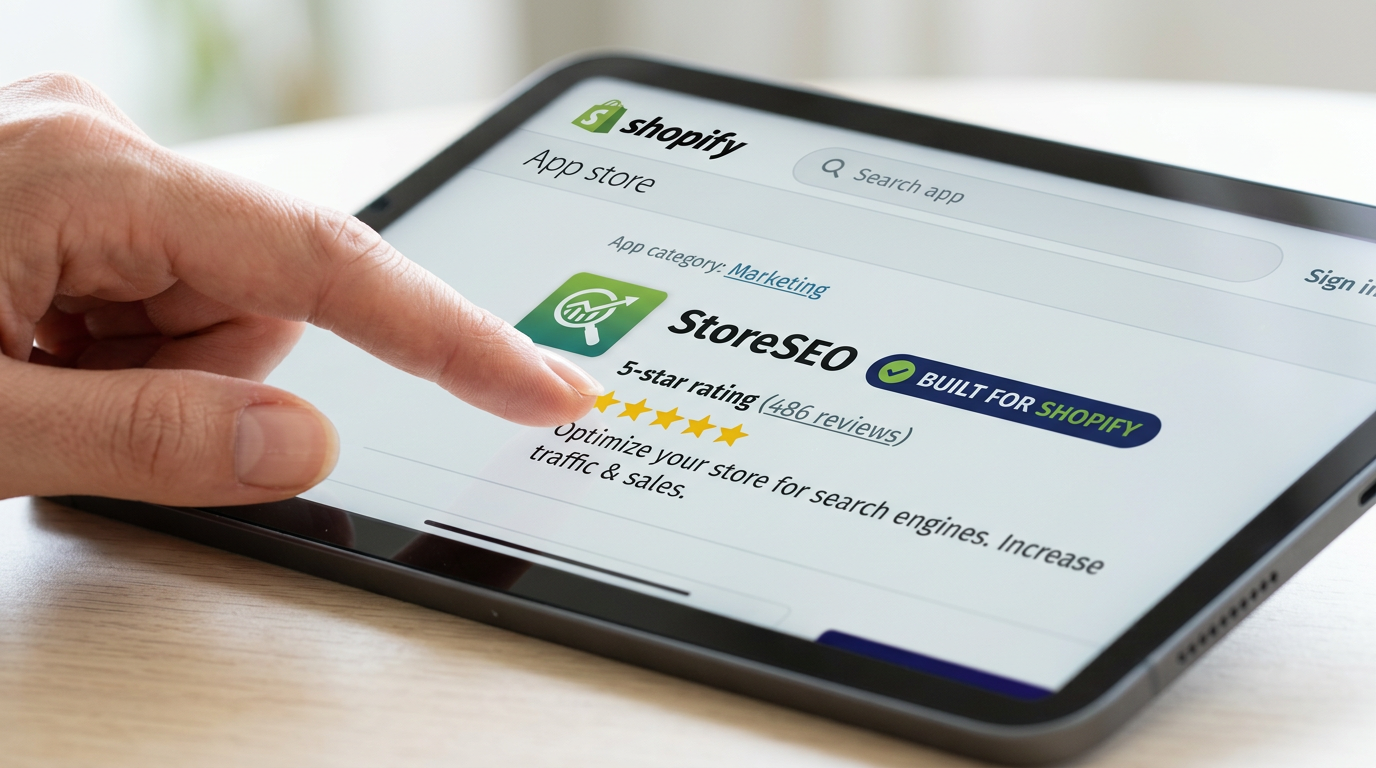 Adoption signals: ratings, reviews, and the “Built for Shopify” marker
In the Shopify ecosystem, credibility usually shows up in usage patterns, not marketing claims. StoreSEO currently has a strong profile on the Shopify App Store, including:
- a 5-star rating across hundreds of reviews,
- and a “Built for Shopify” badge that signals performance and integration standards.
That doesn’t mean every store will see overnight results. It does suggest the product is widely used, actively supported, and improving quickly. The cadence of updates—from AI content optimization to AI blogs to images, agents, and snippets—also signals a roadmap shaped by where search is going next.
What I’d watch out for: the limits of automation
These tools are promising, but they shouldn’t run unattended. AI-generated content still needs:
- a human check for accuracy and product-specific details,
- alignment with your brand voice,
- a real point of view (especially in crowded markets).
There’s also the practical constraint of AI credit limits, which means scaling output takes planning—particularly for stores with large catalogs or aggressive publishing schedules.
FAQ
Is StoreSEO’s AI Blog Generator meant to replace writers?
It’s better viewed as a speed and workflow tool. It can draft quickly, but you’ll still want human review for accuracy, differentiation, and brand voice.
Why does image optimization matter for SEO?
Large or uncompressed images can slow pages down, hurting user experience and performance signals. Good alt text also supports accessibility and image search visibility.
Does AI-generated content rank on Google?
It can, but quality matters. Content still needs to be helpful, accurate, and aligned with search intent. Publishing thin or generic posts at scale is unlikely to perform well.
Conclusion: a meaningful step toward “content ops” for Shopify
StoreSEO’s AI-powered Blog and Image Generator isn’t just another feature update. It reflects a bigger shift: Shopify merchants are moving into a world where content production, SEO fundamentals, and AI-driven discovery need to work as one workflow. If you want to publish consistently without leaning on agencies for every post and asset, this kind of tool makes the process far more realistic.
If you want an additional layer of AI support to turn updates like these into a repeatable content and SEO system, consider adding AIuthority to your stack.