SMEC Study: Google Ads AI Max Delivers 13% Conversion Lift but Higher CPA and Unpredictable ROAS
Google’s AI Max for Search is shaping up the way many advertisers suspected it would: a growth tool, not a clean efficiency upgrade.
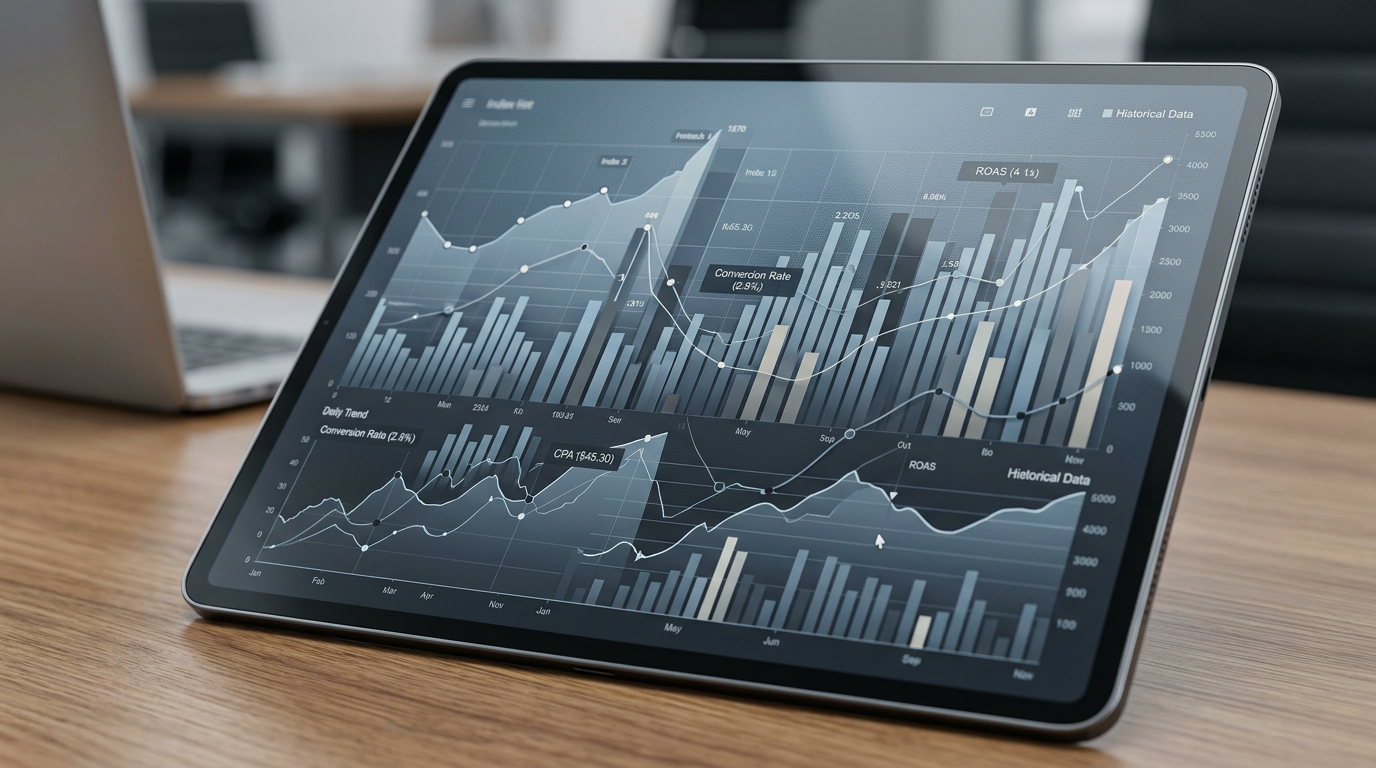
That’s the clearest takeaway from Smarter Ecommerce’s new study, which looked at more than 250 e-commerce Search campaigns across 600 accounts and over 1 million impressions. The headline number is appealing: AI Max delivered a 13% median lift in conversion value. But the deeper you look, the less straightforward the story becomes. CPA increased by 16%, median ROAS was essentially flat, and outcomes varied dramatically, from -35% to +42%.
So yes, AI Max may help advertisers grow. It just doesn’t guarantee that growth will be efficient.
 What AI Max Is Really Doing
Google launched AI Max for Search in open beta in May 2025 as a more automated, AI-driven layer on top of traditional Search campaigns. It combines several features designed to push campaigns beyond strict keyword control, including:
- broader search term matching
- keywordless query expansion
- text customization
- final URL expansion
If that sounds a lot like Performance Max for Search, that’s because it mostly is. Google has said AI Max uses the same underlying technology as PMax for Search.
The pitch was simple: drive more conversion volume from Search campaigns without forcing advertisers entirely into the Performance Max black box. And based on the SMEC data, that promise is at least partly true. There is incremental volume here.
But more volume and better efficiency are two different things.
The Study Confirms the Trade-Off
What makes the SMEC report useful is that it adds some much-needed balance to Google’s launch narrative.
Google had previously cited roughly a 14% uplift in conversions or conversion value, and SMEC’s independent results landed very close, at 13% median conversion value growth. On the surface, that supports Google’s claims.
The bigger question is what advertisers had to pay for that lift.
SMEC found:
- +13% median conversion value
- +16% median CPA
- 0% median ROAS change
- Wide ROAS dispersion from -35% to +42%
- Only 22% of campaigns stayed near their original ROAS targets
That last number matters. Most advertisers should not expect AI Max to behave predictably. In many cases, it will miss efficiency targets by a meaningful margin.
That’s why SMEC’s Mike Ryan compared turning on AI Max to a coin toss. That feels about right. Not because AI Max is inherently bad, but because the results are volatile.
Why ROAS Gets Unstable
The simplest explanation is also the most familiar: incremental conversions usually cost more.
Once a campaign is already capturing obvious high-intent traffic, any automation layer built to expand reach is going to move into less efficient territory. That’s just diminishing returns, and Google has framed rising CPA in exactly those terms.
From that angle, AI Max looks less like a replacement for disciplined Search strategy and more like a volume expansion layer. If your goal is more reach, it can help. If your goal is tight efficiency control, it may create more problems than it solves.
That distinction matters because too many advertisers still judge new Google automation by one simple question: “Did conversions go up?” The better question is: What did those extra conversions cost, and how stable was the return?
With AI Max, the answer seems to be: often more expensive, and not especially stable.
The Overlap Problem Is Real
AI Max also gets messy because it rarely runs in isolation.
SMEC’s data showed substantial overlap between AI Max, Dynamic Search Ads, broad match, and Performance Max. About half of the advertisers in the study were effectively running all three major automation layers at once. That creates obvious risks:
- campaign redundancy
- internal competition
- fragmented reporting
- cannibalization of existing traffic
- “ad rank wars” across overlapping campaign types
This is where the promise of smarter automation can turn into account-level confusion. If AI Max is pulling in traffic your broad match or DSA campaigns would have captured anyway, the incremental lift becomes much harder to trust. And if Performance Max is already absorbing similar intent, attribution gets even murkier.
For e-commerce brands, rollout strategy matters. Turning on AI Max without cleaning up surrounding campaign structures is a good way to end up with noisy data and shaky conclusions.
 Who May Benefit Most
One of the more interesting takeaways from the research is that advertisers with tighter keyword structures may have the most to gain.
Accounts that already rely heavily on broad match, DSA, and PMax often have less room for true incrementality because automation is already doing much of the expansion work. By contrast, advertisers still leaning on exact and phrase match may see more upside when AI Max opens up additional query discovery.
That lines up with Google’s earlier messaging, which suggested stronger gains for exact- and phrase-heavy setups.
So AI Max doesn’t look like a universal win or a clear loss. It looks more like a calibration tool. In the right account, with the right controls, it may unlock additional demand. In the wrong one, it may simply buy more volume at a weaker return.
What Advertisers Should Do Next
The practical takeaway is simple: test AI Max, but don’t treat it like a default upgrade.
This is not the kind of feature to switch on everywhere and trust automatically. The SMEC findings point to a more disciplined approach:
- test over a meaningful period, ideally 6–8 weeks
- isolate overlap with broad match, DSA, and PMax where possible
- audit search terms and landing page behavior aggressively
- monitor cannibalization, not just gross conversion lift
- evaluate performance based on incremental profitability, not platform narrative
There’s also a broader strategic issue here. Google has made it fairly clear that DSA is likely to move toward AI Max over time. So whether advertisers like it or not, this probably isn’t a format they’ll be able to ignore forever.
That makes early testing more valuable. Not because of hype, but because account teams need time to understand where AI Max actually helps, where it leaks budget, and how it interacts with the rest of the stack.
FAQ
What did the SMEC study find about AI Max performance?
SMEC found that AI Max delivered a 13% median lift in conversion value, but also increased CPA by 16%. Median ROAS stayed flat, and results varied widely across campaigns.
Does AI Max improve ROAS?
Not consistently. The study showed 0% median ROAS change, with performance ranging from -35% to +42%. That suggests AI Max can improve results in some accounts while hurting efficiency in others.
Why does AI Max raise CPA?
Because it expands into additional query volume beyond the highest-intent traffic a campaign is already capturing. Those incremental conversions often cost more, which pushes CPA higher.
Which advertisers may benefit most from AI Max?
Advertisers with tighter keyword structures, especially those relying more on exact and phrase match, may see stronger gains. Accounts already using broad match, DSA, and PMax heavily may have less room for true incremental growth.
How should advertisers test AI Max?
Run controlled tests for 6–8 weeks, reduce overlap with other automation layers where possible, monitor search terms and landing pages closely, and judge performance based on incremental profitability rather than top-line conversion growth alone.
Conclusion
The SMEC study offers a useful reality check. Yes, AI Max can increase conversion value. It also tends to raise CPA and can produce highly inconsistent ROAS. That makes it a tool for controlled expansion, not a plug-and-play efficiency fix. If you’re trying to make smarter decisions around automation, overlap, and profitability across Google Ads, using a system like ROAS Suite can make it easier to separate real performance gains from expensive noise.