Shopify's Google AI Integration Drives 15X Order Growth
I’ve watched ecommerce cycle through plenty of “next big things”—social commerce, headless builds, one-click checkout. This update from Shopify feels more consequential because it points to a channel shift, not a shiny new feature.
Shopify has confirmed that orders coming to Shopify stores from AI Search are up 15x since January 2025. The figure came from Shopify leadership during its Q4/full-year 2025 earnings cycle. They’ve also referenced similar momentum again in early March 2026, tying it to traction from “agentic” surfaces and AI-enabled shopping experiences. Yes, it’s growth off a “small base.” Still, the direction is hard to ignore: AI-driven discovery is already producing measurable commerce outcomes.
Here’s how I’m reading what’s happening, why the 15x signal matters, and what merchants can do now to capture the upside.
 The 15x headline: what it really means (and what it doesn’t)
First, separate signal from hype.
- Reality: Shopify leadership publicly pointed to a 15x increase in AI-search-driven orders since January 2025, and reiterated momentum again in early March 2026 around “agentic” shopping surfaces.
- What it doesn’t mean: Shopify’s total orders aren’t up 15x, and most stores aren’t suddenly drowning in AI traffic. This is growth from a smaller baseline—early, but meaningful because it shows a new pipeline forming.
The multiplier is interesting, but the more important detail is what tends to come with these sessions: higher intent. In many cases, the AI layer is doing what strong sales staff do—qualifying needs, narrowing options, answering objections, and moving the buyer forward. That usually translates into better conversion than casual browsing traffic.
Why Shopify + Google is changing the discovery-to-checkout path
Ecommerce has traditionally followed a pretty linear funnel:
Search → click → product page → cart → checkout
AI compresses that path. Instead of serving a list of links, an assistant can hold a conversation, compare options, handle questions, and route a shopper toward purchase without making them do all the navigation work.
Shopify’s work with Google to co-develop and support an open standard—the Universal Commerce Protocol (UCP)—matters because it’s designed to make commerce interoperable across AI surfaces. Put simply: shoppers can discover and buy through AI interfaces (including Google’s AI Mode/Gemini experiences) without merchants having to rebuild their store for every new assistant and platform.
The real unlock is distribution without custom reinvention.
“Agentic commerce” isn’t a buzzword—it’s a new buyer interface
“Agentic commerce” is AI that doesn’t just recommend—it can act.
Here’s the difference in practice:
- A recommendation engine says: “Here are five hoodies you might like.”
- An agentic assistant says: “You want a heavyweight hoodie under $90 that ships in two days and matches your style. Here are the best two options—black or heather gray?” …and can keep going all the way to checkout.
That shift changes what wins. It’s less about who shouts the loudest with ads and more about who’s easy for machines to understand: clean product data, clear positioning, tight merchandising rules, and frictionless conversion paths.
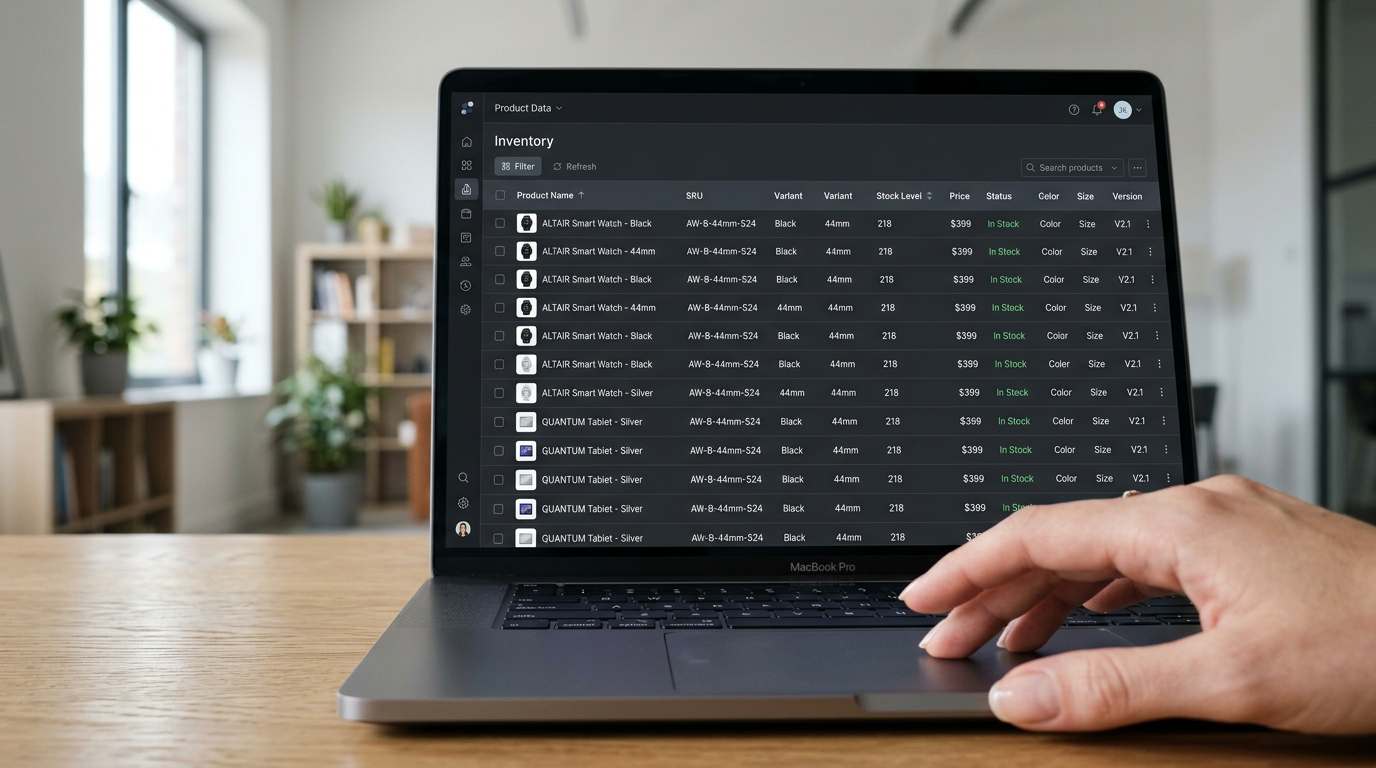 What merchants should do right now to benefit from AI-driven orders
This channel is still early, which is exactly why the brands that adapt first tend to compound their advantage. Here’s where I’d focus.
1) Optimize product content for AI consumption
AI assistants don’t read your store like a human. They extract meaning fast, then make a decision. Help them by tightening your basics:
- Put key differentiators early in product descriptions
- Use consistent naming conventions (materials, sizing, compatibility, use cases)
- Make policies (shipping, returns, warranty) easy to parse and surface
2) Treat structured product data like a growth lever
Messy product information makes you harder to recommend—and easier to swap out. Clean variant data, strong categorization, and consistent attributes improve your odds of being selected when an assistant is narrowing choices.
3) Build measurement around the new funnel
AI-driven journeys can look strange in analytics: shorter paths, new referrers, and purchases that don’t match your usual attribution expectations. Define what you’re tracking now, or you’ll miss what’s working and underinvest in the channel.
4) Prepare for channel volatility
AI platforms will keep changing—formats, placements, and referral behaviors will shift quickly. You can’t control that. You can control fundamentals: conversion rate, AOV, retention, and profitability.
The bigger takeaway: we’re watching a new commerce layer form
Shopify isn’t trying to “win an AI feature race.” It’s positioning itself as the infrastructure layer behind wherever shopping happens next—search assistants, chat interfaces, copilots, and whatever follows.
That’s why the 15x matters. It’s not proof that the market is mature or that everything is solved. It’s proof that this new interface is already sending revenue-producing behavior into real stores.
If you’re a merchant, you don’t need a perfect prediction of what AI commerce becomes. You need a store and a measurement stack that can capture buyers arriving from places that don’t look like the old search results page.
Conclusion: turning AI-driven traffic into profitable growth
Shopify’s Google AI push—and the 15x order-growth signal—looks like an early preview of what happens when AI stops being a back-office helper and becomes a front-door channel. The brands that win won’t just “get more traffic.” They’ll build systems that capture, convert, and measure high-intent demand as these AI surfaces scale.
If you want a practical way to tighten that loop—connecting acquisition performance to real profitability and scaling what’s truly working—consider using ROAS Suite as part of your growth stack as AI commerce channels accelerate.