Shopify Store Generates $2,339 in AI-Driven Sales via Optimized Product Data
One of the biggest shifts in ecommerce is this: AI doesn’t reward the biggest brand first. It rewards the clearest data.
A recent Shopify case study made that clear. A small merchant went from $0 in sales from AI shopping surfaces to $2,339 in revenue in just 14 days, along with 1,209 free visitors, simply by improving product data. No extra ad spend. No major redesign. No viral campaign. Just better product information.
For online sellers, that should get your attention.
 From invisible to recommended
Before the optimization work, the store already had products customers liked. Reviews were strong. The site worked fine. But when shoppers used tools like ChatGPT, Copilot, or Google’s AI shopping experiences to find products, the merchant was effectively invisible.
The problem wasn’t demand. It wasn’t product quality.
It was the feed.
Titles were too generic. Descriptions were thin or duplicated. Brand names were missing. Product categories were off. Important specs weren’t filled in. The store had enough information for a person to browse, but not enough structured clarity for AI systems to recommend the products with confidence.
That gap matters more than ever.
What changed
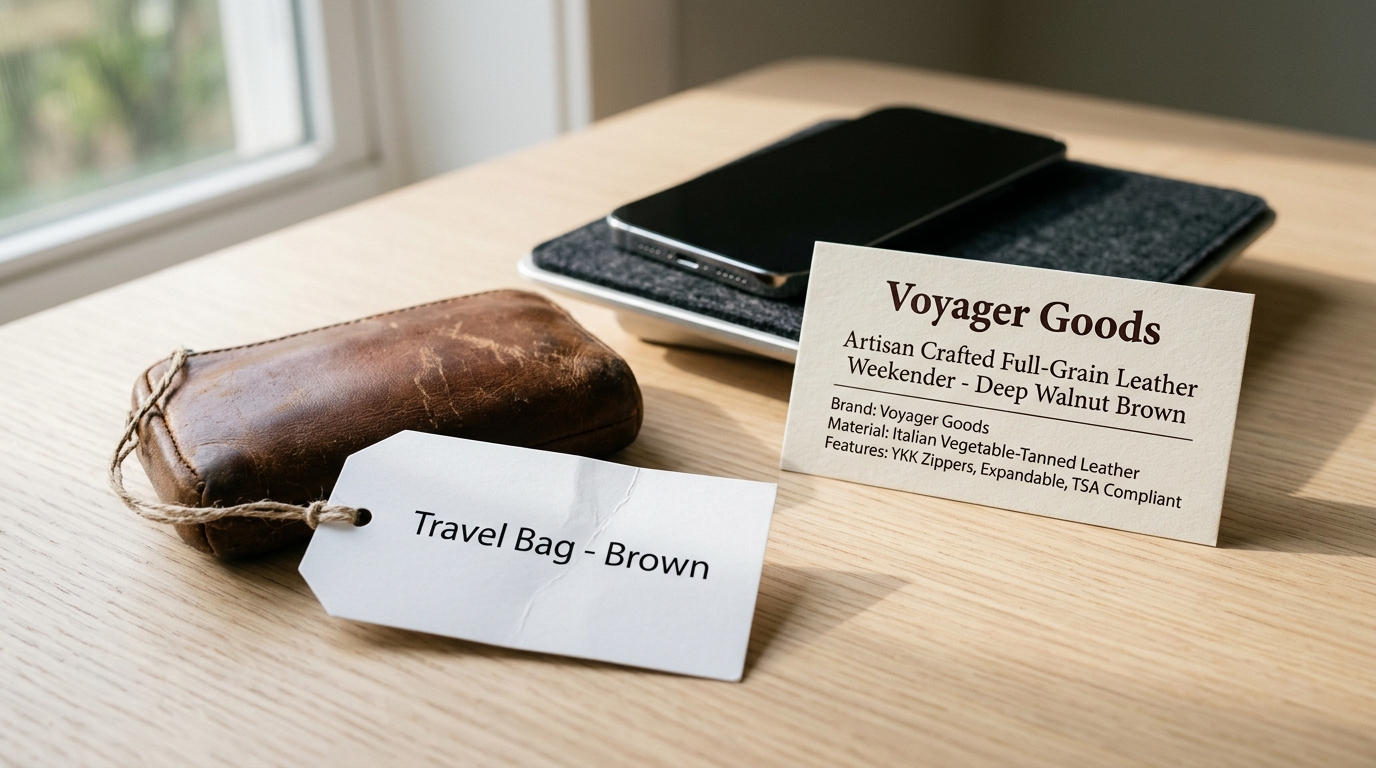
The turnaround started with an audit and cleanup of the product catalog. Instead of vague titles like “Travel Bag - Brown,” listings were rewritten to include the details shoppers actually use to decide: brand, material, use case, fit, and differentiators.
Descriptions were improved too. Rather than relying on generic filler copy, each product explained who it was for, what problem it solved, what it was made from, and what the buyer should expect.
At the same time, the merchant fixed product taxonomy, filled in missing specs, and made sure pricing, availability, shipping, and returns data were complete and accurate.
That may sound basic, but it’s exactly what AI systems depend on.
Why AI commerce rewards better data
Traditional ecommerce has trained merchants to think visually first: an attractive theme, a polished homepage, strong creative, maybe paid media behind it. All of that still matters. But AI-driven discovery changes the order of importance.
When an AI assistant recommends a product, it isn’t moving through your website the way a shopper does. It’s parsing structured information and trying to determine which option best matches the request. If your catalog is vague, incomplete, or inconsistent, you may never make the shortlist.
That’s the real lesson from this Shopify result.
The merchant didn’t need to outspend larger competitors. It needed to become easier for AI to understand.
Once that happened, the store started appearing alongside much bigger names, including marketplaces like Amazon and Etsy.
A small store, a big signal
The $2,339 figure stands out, but the more important number may be 1,209 free visitors. That traffic came from AI surfaces without ad spend, suggesting the merchant unlocked a new acquisition channel simply by becoming machine-readable in the right way.
That’s a meaningful shift for smaller brands.
For years, small Shopify stores have struggled to compete with large retailers on visibility. AI commerce changes that equation. If recommendation engines prioritize relevance and clarity over brand size, then a well-optimized catalog can outperform a larger competitor with weaker product data.
That creates a real early-mover advantage.
 The shift from SEO to AI visibility
Product discovery is moving from classic search behavior toward AI-assisted shopping. SEO still matters, but merchants also need to think beyond page rankings and focus on eligibility inside AI recommendations.
In practical terms, your product feed is no longer just a backend asset. It’s becoming one of the most important sales tools in your business.
If your titles are missing brand information, your descriptions are copied across variants, your categories are too broad, or your specs are incomplete, AI platforms may have little reason to surface your products. If your data is precise, descriptive, and complete, you can compete far above your size.
That’s exactly what happened here.
What merchants should take from this
There are three clear takeaways from this story.
- Feed hygiene is now revenue hygiene.
Product data quality is no longer a technical cleanup task you can keep pushing off. It directly affects visibility and sales. - AI shopping favors specificity.
Generic titles and vague copy won’t do the job. Brand names, materials, use cases, dimensions, compatibility, and policies all help AI systems understand what you sell. - The window is open right now.
This space is still early. Competition inside AI-driven shopping results is lower than it will be six months from now. Merchants who optimize today have a chance to build momentum before the channel gets crowded.
The bigger ecommerce takeaway
What makes this case compelling is how simple the principle is: better data creates better discoverability.
Not better slogans. Not cleverer branding alone. Better data.
As AI becomes a bigger part of how consumers research and buy, the stores that win won’t necessarily be the loudest. They’ll be the ones that make it easiest for machines to interpret, compare, and recommend what they sell.
That’s why this Shopify result matters beyond one store and one 14-day sprint. It points to where ecommerce is heading.
FAQ
How did the Shopify store increase AI-driven sales?
By improving product data across the catalog, including titles, descriptions, taxonomy, specs, and operational details like pricing, shipping, and returns.
Did the merchant need more ad spend to get results?
No. The store generated $2,339 in revenue and 1,209 free visitors from AI shopping surfaces without increasing ad spend.
Why does product data matter for AI shopping?
AI systems rely on structured, complete, and specific information to decide which products match a shopper’s request. Weak or incomplete data reduces the chance of being recommended.
What should merchants optimize first?
Start with product titles, descriptions, brand fields, categories, specifications, and policy data. The goal is to make every listing clear, complete, and easy for AI systems to interpret.
Conclusion
If I were running a Shopify store today, I’d treat product data optimization as a frontline growth strategy, not a backend maintenance task. This case shows how quickly clean, complete, AI-readable product information can turn into real traffic and revenue. For brands that want to improve visibility across AI shopping surfaces and turn catalog quality into performance, ROAS Suite is a smart place to start.