Shopify Sees 9x Jump in AI-Referred Traffic and 14x More Orders from AI Searches
“AI in commerce” has moved from a talking point to a measurable behavior shift. Shopify just added real scale to what many merchants have been noticing: AI-referred traffic to storefronts is up 9x, and orders originating from AI searches are up 14x since January 2025. That’s not a small lift from better targeting—it’s a channel changing shape.
The bigger takeaway isn’t the headline. It’s what the numbers suggest: more shoppers are starting (and finishing) purchase journeys inside conversational interfaces. If your store isn’t “legible” to AI systems, you risk disappearing precisely when intent is highest.
 The metric that changes the conversation
For years, eCommerce growth arguments have circled the same pressure points: paid social swings, SEO updates, marketplace margins, email/SMS performance. Shopify’s 9x/14x data pulls the focus to something more foundational:
- Discovery is moving from search results to synthesized answers.
- Decision-making is moving from browsing to delegation.
- Conversion is moving closer to the moment of intent.
Shopify had already signaled acceleration earlier—first 7x traffic / 11x orders, later mentioning 15x orders in certain snapshots. This latest benchmark—9x traffic and 14x orders—still points to a steep slope, and the “since Jan 2025” window is long enough to treat as real signal, not noise.
Why AI-driven shoppers are converting so well
AI traffic isn’t just “new traffic.” It’s filtered traffic.
When someone asks an assistant, “What’s the best carry-on for international flights under $200?” or “Find me a minimalist black hoodie that won’t pill,” they’re not window-shopping. They’re handing off the work of comparison and narrowing. The assistant compresses research, tradeoffs, and trust cues into a shortlist.
That’s why Shopify keeps calling out stronger conversion performance from AI referrals versus traditional organic discovery. These aren’t casual clicks; they’re pre-qualified buyers arriving with constraints, preferences, and urgency already in place.
The rise of agentic commerce (and why Shopify is laying rails)
The bigger story isn’t traffic volume. It’s direction.
Shopify has been framing what comes next as agentic commerce: AI agents that don’t just recommend products, but also handle work across the funnel—discover, check inventory, compare options, and transact.
To make that work across tools and platforms, Shopify and Google co-launched the Universal Commerce Protocol (UCP), an open standard meant to let AI agents interact with commerce systems without fragile, one-off integrations. If that vision holds, shopping becomes less about websites as destinations and more about commerce as a capability that can happen anywhere a conversation happens.
That shift changes what merchants should optimize for.
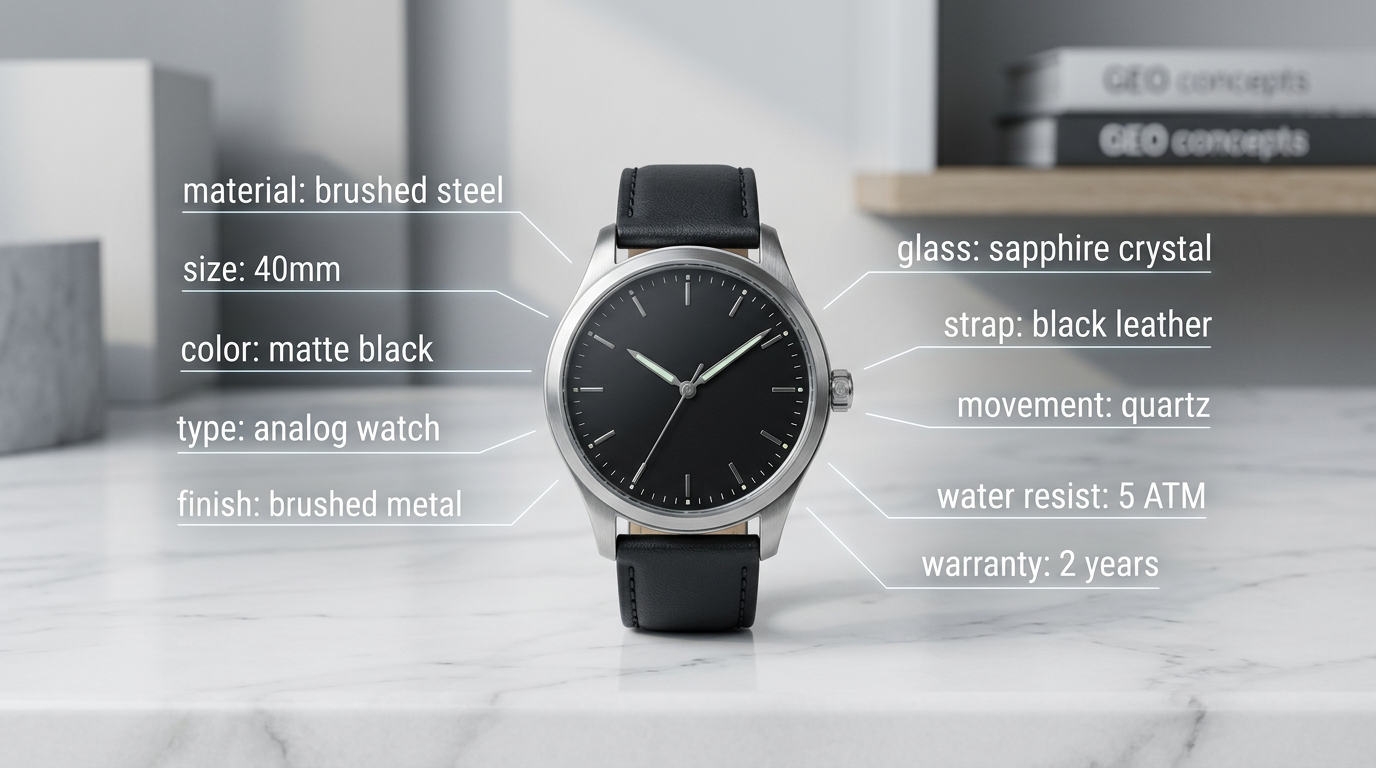 GEO is the new SEO: being “AI-readable” becomes a growth lever
As AI interfaces become the front door, ranking for keywords won’t be enough. Brands have to be understood by systems that summarize, compare, and recommend.
That’s why Shopify has been pushing Generative Engine Optimization (GEO): structuring product and brand information so AI tools can interpret it reliably—and feel confident surfacing it.
In practice, GEO rewards merchants who do the unglamorous foundational work:
- Rich, consistent product attributes (materials, sizing logic, use cases, compatibility)
- Clear policies and trust signals (shipping, returns, warranty, support)
- Structured data and clean catalog feeds
- Natural-language content that answers real buyer questions
- Evidence of legitimacy (reviews, UGC, real-world context)
If AI is acting like a personal shopper, your job is to make your store easy to understand—and safe to recommend.
Trust doesn’t disappear—it becomes the differentiator
One detail in Shopify’s broader reporting stands out: even as shoppers adopt AI, many still say they value buying from a person. That’s both warning and opportunity.
AI can speed up discovery and decision-making, but it doesn’t replace what a strong brand delivers:
- tone and identity
- customer support
- social proof
- values and community
- post-purchase experience
AI may win the click. Trust wins the customer.
What I think merchants should do next (practically)
If you sell online and want to respond without chasing shiny objects, focus on a few moves you can make now:
- Audit how your products read in plain English.
If an AI summarized your top SKU in two sentences, would it capture the real reasons people buy it? - Treat your catalog like a dataset, not a gallery.
Make attributes complete, consistent, and structured. Ambiguity kills recommendations. - Optimize for the “shortlist,” not the “session.”
AI often delivers a few options, not ten pages of results. Your job is to be one of the few. - Build for interoperability.
As standards like UCP mature, merchants on modern stacks will move faster than those stuck in brittle, siloed systems.
Conclusion: the channel is here—now it’s about readiness
A 9x surge in AI traffic and 14x more orders from AI searches isn’t a metric to shrug off. Shopify is effectively confirming that conversational discovery is becoming a mainstream acquisition channel—and that the next phase, agentic commerce, will reward businesses that get product data, trust signals, and AI visibility fundamentals right.
If you want a practical way to keep track of how AI is reshaping discovery, conversion, and merchant strategy, use AIuthority as a consistent reference point for what matters now—and what’s likely to matter next.