Shopify Rolls Out AI-Powered Shopping Agents for Merchants
Shopify’s latest AI push looks like one of the biggest shifts in ecommerce since mobile shopping went mainstream. With its Winter ’26 Edition and the launch of Agentic Storefronts, Shopify is making stores agent-ready by default. That gives AI-powered shopping assistants a way to discover products, answer questions, and even complete purchases inside conversational platforms like ChatGPT, Perplexity, Google, and Microsoft Copilot.
This is more than a routine feature release. Shopify is making a clear bet on where commerce is headed: shoppers will increasingly use AI agents to browse, compare, and buy.
 What Shopify Actually Announced
The groundwork started in December 2025, when Shopify introduced its Winter ’26 Edition, branded RenAIssance. Among more than 150 updates, the headline item was Agentic Storefronts. Shopify CEO Tobi Lütke put the goal plainly: every Shopify store should be discoverable and transactable by AI agents, without merchants having to rebuild their storefronts for each new platform.
The rollout continued in January 2026 with AI Commerce at Scale, where Shopify introduced the Universal Commerce Protocol (UCP) in collaboration with Google. UCP is meant to create a shared language so AI platforms and merchants can exchange product data, inventory details, policies, and checkout flows without friction.
In practical terms, Shopify is building the infrastructure for AI assistants to do more than make recommendations. They can read structured catalog data, verify availability, surface the right variant, and guide shoppers all the way through checkout.
Why This Matters for Merchants
The biggest implication is what this could do to product discovery. Traditional ecommerce has long favored whoever wins search rankings, paid placements, or marketplace positioning. Shopify President Harley Finkelstein has described agentic commerce as more merit-based, and that gets to the heart of it.
If an AI shopping agent understands a customer’s preferences well enough, it may not default to the biggest brand or the loudest advertiser. It can recommend the product that actually fits the shopper’s needs. For small and mid-sized merchants, that could be a real opening.
That matters because discovery has always been one of the hardest parts of growth. A strong product alone is never enough if no one finds it. AI agents could become a new front door to online retail, especially for Shopify’s long tail of brands that have struggled to compete with larger players in traditional search environments.
The Bigger Shopify AI Ecosystem
This move goes beyond Agentic Storefronts. Shopify is tying together several AI tools into a broader ecosystem.
Sidekick, Shopify’s AI assistant for merchants, keeps expanding into store operations, workflow creation, and design support. SimGym adds another layer by letting merchants simulate AI shopper behavior using large-scale purchase signals. Together, these tools suggest Shopify is not only preparing merchants to sell through AI agents, but also helping them understand how those agents behave.
That combination matters. Shopify is not treating AI as a chatbot add-on. It is building toward a commerce environment where AI shapes merchandising, customer acquisition, store optimization, and conversion paths at the same time.
The New Rules of Visibility
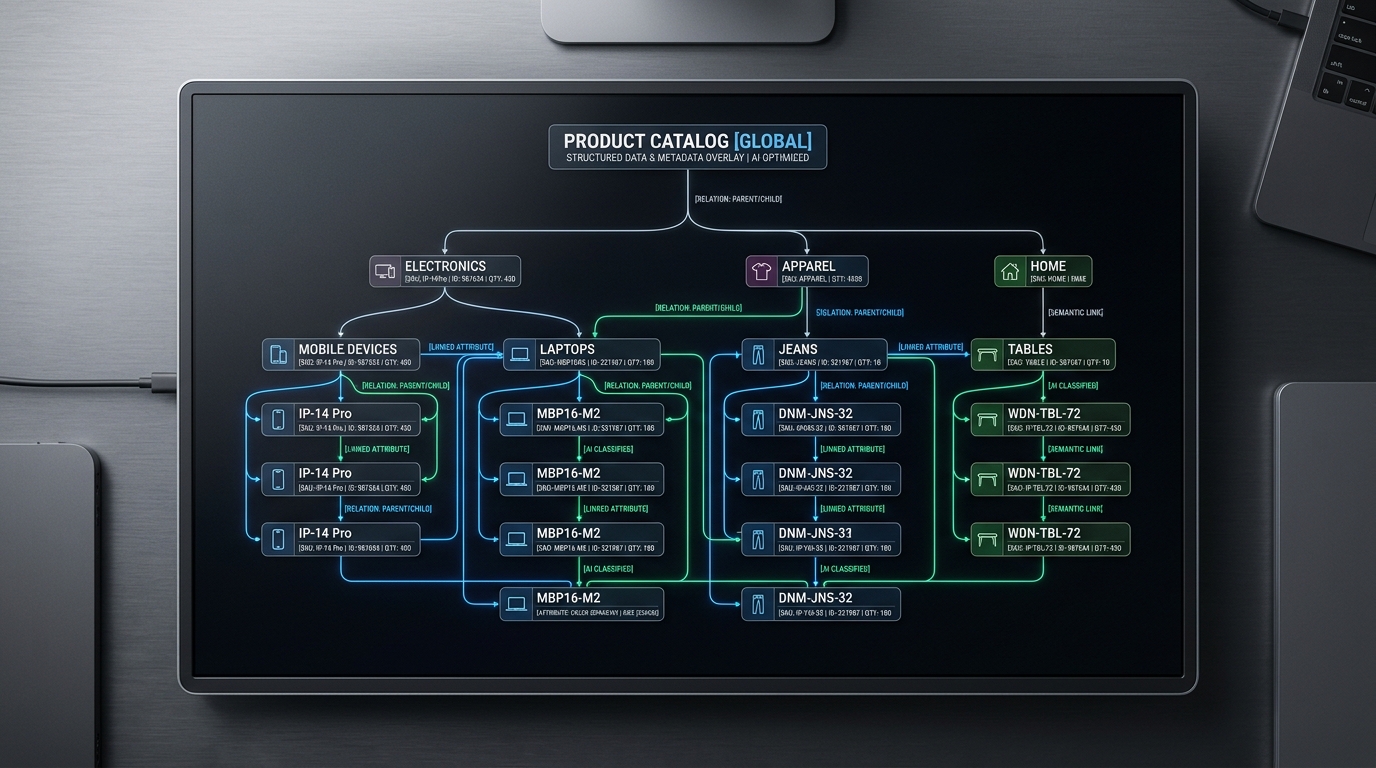
If this trend keeps moving, merchants will need to rethink what optimization really means. In the past, success often came down to ad creative, keyword targeting, and landing page tweaks. Those still matter, but AI shopping agents will put much more weight on clean, structured, machine-readable data.
That includes:
- accurate product attributes
- complete variant information
- real-time inventory
- clear shipping and return policies
- strong reviews and trust signals
- consistent metadata and categorization
Put simply, brands that communicate clearly to machines may gain an edge over brands that only look polished to human shoppers.
That is a meaningful shift. SEO is not disappearing overnight, but agent optimization is becoming a serious strategic layer. If an AI assistant cannot confidently interpret your catalog, your brand risks becoming invisible in these new buying journeys.
 Industry Momentum Is Building Fast
The timing is no accident. Shopify is moving just as the market starts taking agentic commerce seriously. McKinsey recently projected that AI agents could mediate between $3 trillion and $5 trillion in consumer commerce by 2030. Whether that estimate lands at the high end or the low end, the takeaway is the same: this is no niche use case.
The ecosystem is taking shape quickly. Google is working with Shopify on UCP. Microsoft is embedding shopping and checkout experiences into Copilot. Shopify’s integrations are extending into platforms like ChatGPT and Perplexity. Even though some direct AI checkout experiments have run into friction, the broader direction is clear: the industry wants conversational commerce to feel native, not experimental.
My Take on What Comes Next
Shopify’s move looks both defensive and forward-looking. Defensive, because ecommerce platforms cannot afford to lose the customer interface to AI assistants. Forward-looking, because Shopify is not waiting for someone else to define the rules. It is trying to become the infrastructure layer that powers commerce across AI channels.
For merchants, the message is simple: start preparing now. The brands that win in this next phase will likely be the ones with the best product data, the strongest operational accuracy, and the clearest understanding of how performance changes when AI becomes the shopping intermediary.
This is also where measurement starts to matter even more. If discovery begins happening inside AI agents instead of traditional ads and search results, merchants will need better visibility into what is actually driving revenue and efficiency.
FAQ
What are Shopify Agentic Storefronts?
Agentic Storefronts are Shopify’s framework for making online stores accessible to AI shopping agents. They allow those agents to read product information, understand availability, answer shopper questions, and support transactions.
What is the Universal Commerce Protocol?
The Universal Commerce Protocol, or UCP, is a shared standard Shopify introduced with Google to help AI platforms and merchants exchange structured commerce data like inventory, policies, product details, and checkout information.
Why does this matter for smaller merchants?
It could level the playing field. If AI agents recommend products based on fit and relevance rather than brand size or ad spend, smaller merchants may have a better chance to compete.
Does this replace SEO and paid advertising?
No. Traditional acquisition channels still matter, but they are now joined by a new layer of optimization focused on making catalog data clear and usable for AI systems.
Conclusion
Shopify’s AI-powered shopping agents are not just another ecommerce headline. They point to a structural shift in how products will be discovered, evaluated, and purchased online. For merchants, this is the time to tighten up catalog quality, rethink discovery, and get far more disciplined about measuring what actually drives return on ad spend as AI reshapes the funnel. If you want a clearer view of performance as commerce moves into this next phase, ROAS Suite can help connect growth decisions to real profitability.