Shopify Reports 15x Surge in AI Search Orders and Releases GEO Playbook
Shopify just put real numbers behind a shift many merchants have been sensing: orders from AI-driven search are up 15x, and AI-driven traffic is up 8x to Shopify stores since January 2025. Shopify also says this growth is “on a small base,” but that’s the point. Early curves are where direction becomes obvious.
Shopify’s response is familiar: publish the framework, build the rails, and push merchants to adapt quickly. That’s what the new GEO Playbook is—Shopify’s guide to “Generative Engine Optimization,” designed for a world where shoppers don’t type keywords so much as ask questions and expect recommendations.
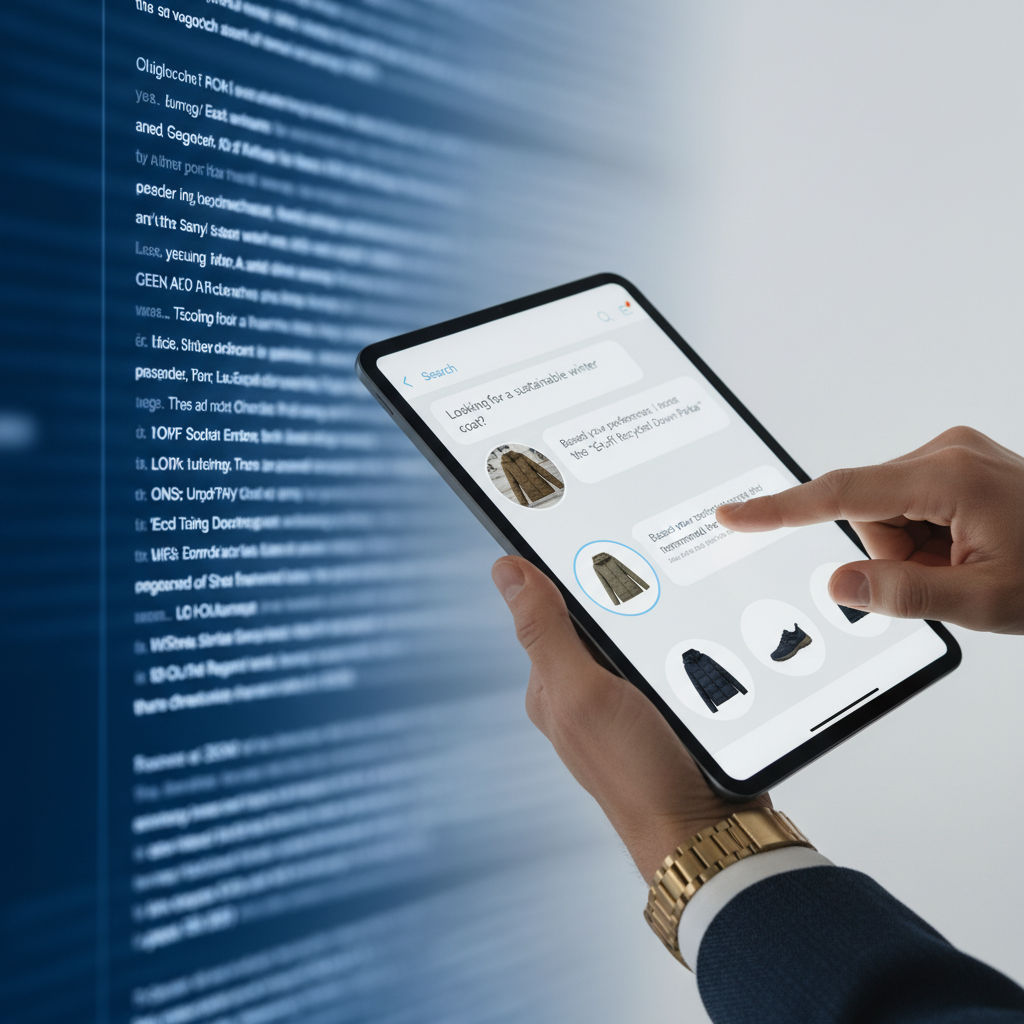 The moment: AI search is turning into AI shopping
The old path was linear: query → blue links → product page → checkout.
The new path is conversational and compressed: prompt → shortlist → decision. When someone asks an assistant, “What’s a marathon shoe for flat feet under $150?” they aren’t casually browsing. They’re stating constraints and intent up front, and they expect an answer that feels curated—not a list of places to hunt.
Shopify is leaning into the idea that this shift creates “merit-based discovery at scale,” with President Harley Finkelstein framing it as fuel for the “long tail of commerce.” Translation: smaller brands can win when they’re the best fit for a specific request—but only if the AI can find them, understand them, and trust what it sees.
GEO isn’t a buzzword—it has receipts
GEO didn’t start as a marketing slogan. The term traces back to academic work in late 2023—most notably Princeton researchers publishing on “GEO: Generative Engine Optimization.” The research showed measurable visibility gains in generative systems when content is written and structured in ways models can reliably reuse: clearer phrasing, credible quotations, concrete statistics, and other signals of confidence.
Now Shopify is treating GEO as operational reality. Not theoretical. Not “someday.” Real enough that they’re already seeing double-digit multipliers in orders connected to AI discovery.
Shopify’s GEO Playbook: what it’s really telling merchants to do
The playbook boils down to three pillars. It’s a practical message for anyone hoping to “prompt” their way into visibility: this is mostly about fundamentals—plus better data and stronger trust signals.
1) Keep the SEO fundamentals (because the plumbing still matters)
Even with AI in the middle, engines still need to crawl, parse, and validate. That makes the basics non-negotiable: clean site architecture, indexable pages, accurate metadata, and sitemaps.
What changes is the target. Instead of obsessing over “rank #1,” the new goal is closer to: get cited and get shortlisted.
2) Build brand authority that an AI can recognize
AI assistants don’t only summarize. They choose. When they decide which brands to mention, they lean on trust-like signals: reputation, consistency, third-party validation, and clear differentiation.
Shopify puts brand-building at the center of GEO because it’s the only durable protection against becoming interchangeable. Sapna Parikh of Kendo Brands puts it bluntly in Shopify’s materials: you have to take risks and jump on trends early—or you’ll average your way into irrelevance.
3) Get serious about data quality (or prepare for “hallucinated” commerce)
This is the least glamorous and most consequential part.
If your pricing, inventory, variants, shipping constraints, or product specs aren’t accessible in clean, structured formats, AI systems will either:
- skip you, because they can’t verify you, or
- misrepresent you, because they’re forced to guess.
Shopify’s underlying point is sharp: the next wave of AI commerce won’t be won by better copy alone. It will be won by reliable, real-time commerce data.
“Agentic commerce” is the bigger play—and Shopify is building the standard
The 15x number is important, but it’s also a hint at a larger strategy.
In late 2025, Shopify announced Agentic Storefronts, allowing products to be syndicated into AI conversations with real-time discovery, pricing, inventory, and even checkout—while still letting merchants retain customer ownership. In January 2026, Shopify and Google went further, introducing the Universal Commerce Protocol (UCP), an open standard meant to help AI agents discover merchants and transact at scale.
Put together, it’s Shopify aiming to be infrastructure, not just a storefront tool: the operating system for agentic commerce.
 Conversational continuity is becoming a conversion advantage
Another piece of the puzzle is the recent Shopify integration from Chatbase, which lets merchants embed AI agents directly on their stores—answering product questions, pulling order status, and making recommendations in a conversational flow.
The goal isn’t “chatbots.” It’s continuity. If a shopping journey starts as a conversation, it should keep moving as a conversation. That’s how you reduce friction for shoppers who are already trained to ask, not browse.
What I think merchants should do next (before GEO becomes table stakes)
If I were advising a Shopify merchant or brand team right now, I’d focus on three moves:
- Audit for AI-readiness, not just SEO health
Ask: can an AI reliably extract what you sell, who it’s for, what it costs, and whether it’s in stock—without guessing? - Rework product and category content to be “answer-shaped”
Keep it concrete: use cases, constraints, comparisons, specs, FAQs, and proof points an assistant can reuse confidently. - Treat brand signals as performance marketing inputs
Reviews, PR mentions, creator validation, and community discussion aren’t just “awareness.” Increasingly, they’re the evidence an AI uses to decide whether you belong in the shortlist.
FAQ
What is GEO (Generative Engine Optimization)?
GEO is the practice of structuring content and commerce data so generative AI systems can accurately understand it, trust it, and reuse it in answers—often by citing or recommending a brand directly.
How is GEO different from SEO?
SEO primarily targets rankings in traditional search results. GEO targets inclusion in AI-generated responses and shortlists, where the assistant is choosing a few options rather than showing ten blue links.
What’s the biggest risk if merchants ignore GEO?
Two main risks: you get overlooked because an AI can’t verify key details, or you get represented incorrectly because the model fills in gaps with guesses (pricing, availability, specs, policies).
Conclusion: GEO is the new battleground for discovery
Shopify’s 15x surge in AI search orders is the kind of datapoint that rewrites roadmaps. AI discovery isn’t on the horizon—it’s already driving real purchase intent to real storefronts, and it’s accelerating. Shopify’s GEO Playbook is a clear message: keep your SEO foundation, build credibility AI can recognize, and tighten your data so assistants can recommend you without hesitation.
If you want a running view of the tools, playbooks, and real examples as this space changes, AIuthority is a solid place to start.