Shopify Launches Winter 2026 Edition with Agentic Storefronts and AI Commerce APIs
Shopify’s Winter 2026 Edition feels like a genuine turning point, not just another round of product updates. With more than 150 changes bundled into what Shopify calls its “RenAIssance” edition, the company is making its position clear: commerce is shifting into an AI-first era, and merchants need to adapt quickly.
What stands out most is that Shopify isn’t treating AI like an add-on. It’s rebuilding the commerce experience around it. From Agentic Storefronts to new AI commerce APIs, Shopify is positioning itself as the infrastructure for a world where products are discovered, evaluated, and purchased inside AI assistants like ChatGPT, Perplexity, Microsoft Copilot, and eventually Google’s Gemini ecosystem.
 The Big Shift: From Browsing to Agentic Commerce
For years, e-commerce has centered on websites, product pages, funnels, and ad-driven traffic. Winter 2026 suggests that model is changing fast. Shopify’s new Agentic Storefronts let merchants make products available directly inside AI-powered environments, so customers can discover and buy without following the usual path from search result to landing page to cart.
That’s a meaningful shift. Instead of optimizing only for human browsing behavior, brands now have to consider how AI agents read, compare, and recommend products. Shopify’s leadership has been blunt about this. Tobi Lütke has framed the update around making every Shopify store “agent-ready by default,” while Harley Finkelstein has described Shopify as the commerce layer for the AI era. That framing fits. This is less about smarter chat and more about reworking how online retail gets transacted.
What Shopify Actually Announced
The Winter 2026 Edition includes several headline launches that work together.
Agentic Storefronts are the merchant-facing layer. They provide a streamlined setup that syndicates products into AI channels, making them discoverable inside systems like ChatGPT, Perplexity, and Copilot.
Shopify Catalog MCP opens up a large product discovery layer for developers and AI agents. Built around the Model Context Protocol, it allows agents to search Shopify’s catalog at scale and pull structured data like inventory, pricing, shipping, and product attributes.
Checkout Kit gives developers a way to embed checkout directly into AI-driven experiences. Instead of forcing customers back into a traditional storefront, the transaction can happen in a lighter, more native flow.
Universal Cart adds more flexibility to the cart experience, including support for nested cart lines and transformations using Shopify Functions. That matters because AI-assisted shopping is rarely linear. Bundles, add-ons, substitutions, and dynamic recommendations become more relevant when an agent is helping build the order.
Shopify also upgraded Sidekick, shifting it from a basic assistant toward a more proactive collaborator. It can now help with app building, theme edits, and more operational work, which signals Shopify’s broader effort to weave AI into every layer of merchant and developer activity.
Why the APIs Matter So Much
The API story may end up mattering even more than the consumer-facing launches. Shopify isn’t just enabling AI shopping on its own platform; it’s building standards and tooling that let AI systems interact with commerce in a structured way.
The most important development is the broader rollout of UCP, the Universal Commerce Protocol, which Shopify co-developed with Google. This protocol helps AI systems and merchants communicate more effectively around product data, pricing, inventory, checkout, and potentially even loyalty or discount logic.
That matters because AI commerce only works at scale if there’s a shared language underneath it. Without one, every assistant, marketplace, and merchant would need fragile custom integrations. With UCP and MCP, Shopify is trying to become the standardized backbone for AI-native buying experiences.
The January 2026 follow-up made that even clearer when Shopify opened catalog access more broadly and introduced the free Agentic Plan, allowing even non-Shopify brands to list products and sell through AI channels. That move expands Shopify’s influence beyond merchants already in its ecosystem. In effect, Shopify wants to power commerce for the AI web, not just the Shopify web.
The Real Competitive Advantage: Product Data
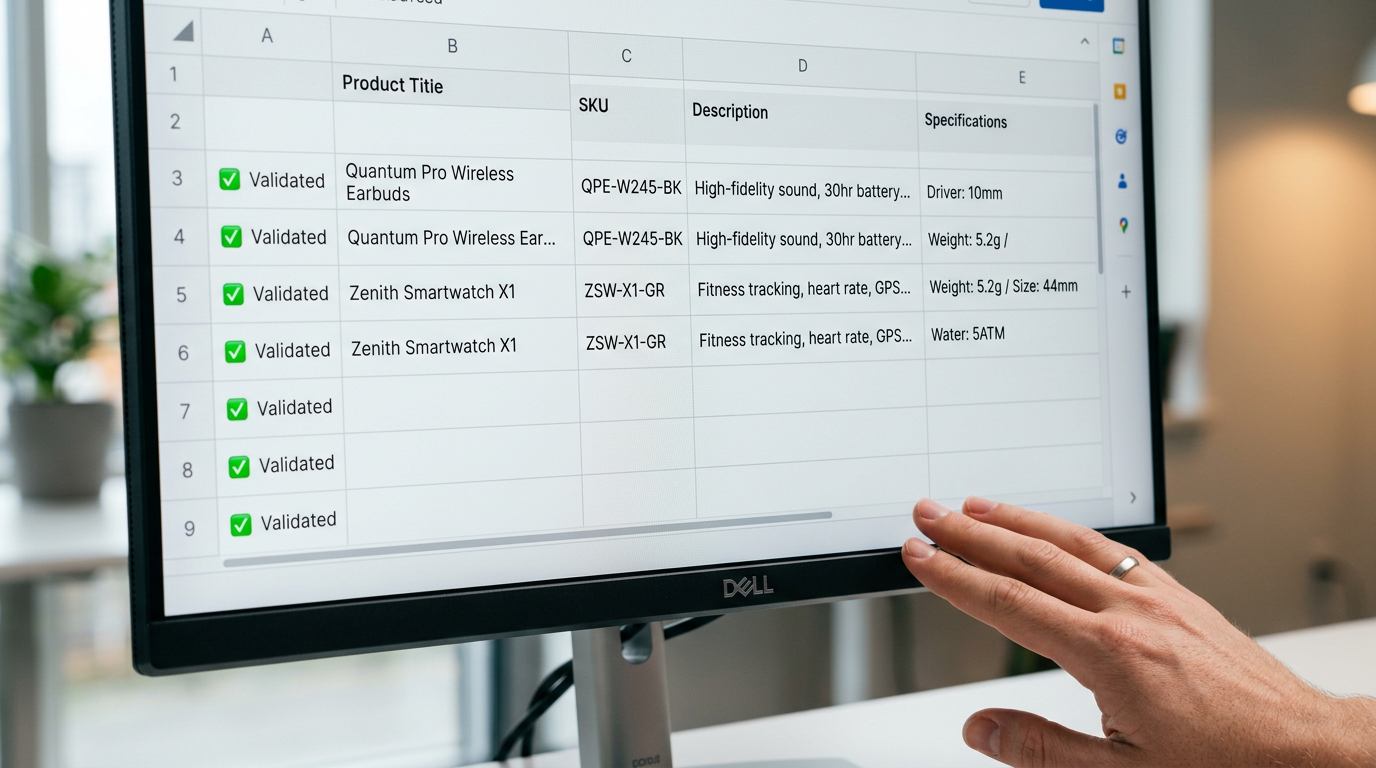
If there’s one lesson merchants should take from this launch, it’s that structured product data is no longer back-office housekeeping. It’s now a front-line growth asset.
AI agents do not care how polished a site header looks if they can’t interpret product titles, variants, descriptions, shipping terms, and availability. Shopify partner discussions have already highlighted that agents often scrape the first several thousand characters of product descriptions. Thin content, vague naming, or poorly organized attributes can make a brand effectively invisible in AI-driven discovery.
That may be one of the biggest implications of Winter 2026. The competitive moat is shifting away from creative and media buying alone and toward content infrastructure. Clean titles, complete specs, benefit-rich descriptions, and structured variant logic are becoming central to how products get surfaced and selected.
Put simply, the brands that win in agentic commerce may be the ones that are easiest for machines to understand.
 Early Signals Point to Fast Adoption
The early growth numbers coming out of Shopify are hard to ignore. Traffic from agentic apps reportedly increased 15x year over year, and orders from AI search have also climbed sharply. That no longer looks like a small experiment. It looks like the start of a new acquisition and conversion layer.
The partner ecosystem adds more credibility. OpenAI, Microsoft, Google, and Perplexity are not fringe distribution channels. They are quickly becoming default interfaces for how people ask questions, compare options, and make buying decisions. If product discovery is moving into these environments, Shopify’s timing looks strong.
At the same time, the concerns are real. Attribution gets murkier when AI acts as the intermediary. Retargeting becomes harder if the customer journey happens inside external assistants. Traditional SEO and paid media frameworks may not map neatly to these channels. The opportunity is large, but measurement and performance strategy will need to catch up fast.
What I Think This Means for Brands
Shopify Winter 2026 sends a clear message: websites are no longer the only center of gravity in commerce. They still matter, but they may become just one touchpoint in a much broader AI-mediated buying environment.
For brands, that makes a few priorities urgent:
- audit and improve product data
- write descriptions for both humans and machines
- structure variants and attributes clearly
- prepare for AI-driven discovery outside traditional storefronts
- rethink attribution and conversion reporting
This is where strategy matters more than hype. It’s easy to get excited about AI storefronts, but the real winners will be the brands that connect merchandising, feed quality, paid acquisition, and measurement into one system.
FAQ
What are Shopify Agentic Storefronts?
Agentic Storefronts let merchants make products available directly inside AI-powered platforms, allowing customers to discover and buy without going through a conventional storefront journey.
What is Shopify Catalog MCP?
Shopify Catalog MCP uses the Model Context Protocol to give developers and AI agents structured access to Shopify catalog data, including pricing, inventory, shipping, and product attributes.
Why is UCP important for AI commerce?
UCP, or Universal Commerce Protocol, creates a standardized way for AI systems and merchants to communicate about product and transaction data. That reduces the need for custom integrations and makes AI commerce more scalable.
What should brands do first?
Start with product data. Clean up titles, descriptions, attributes, variants, and inventory details so AI systems can accurately interpret and recommend your products.
Conclusion
Shopify’s Winter 2026 Edition is more than a feature release. It’s a clear declaration that AI agents are becoming active participants in discovery, recommendation, and checkout. Agentic Storefronts, MCP, UCP, and embedded checkout tools all point in the same direction: less friction, more automation, and a growing need for brands to make their product data performance-ready. If you want to stay competitive as this shift accelerates, pairing your Shopify strategy with tools built for modern acquisition efficiency makes sense, and ROAS Suite is a smart place to start.