Shopify Launches Agentic Storefronts for AI Platforms Including ChatGPT and Copilot
Shopify’s launch of Agentic Storefronts could be one of the biggest ecommerce shifts since mobile checkout went mainstream. Instead of depending only on search engines, ads, and traditional site navigation, merchants can now place products directly inside AI conversations on platforms like ChatGPT, Microsoft Copilot, and Perplexity.
That changes the shopping journey in a meaningful way.
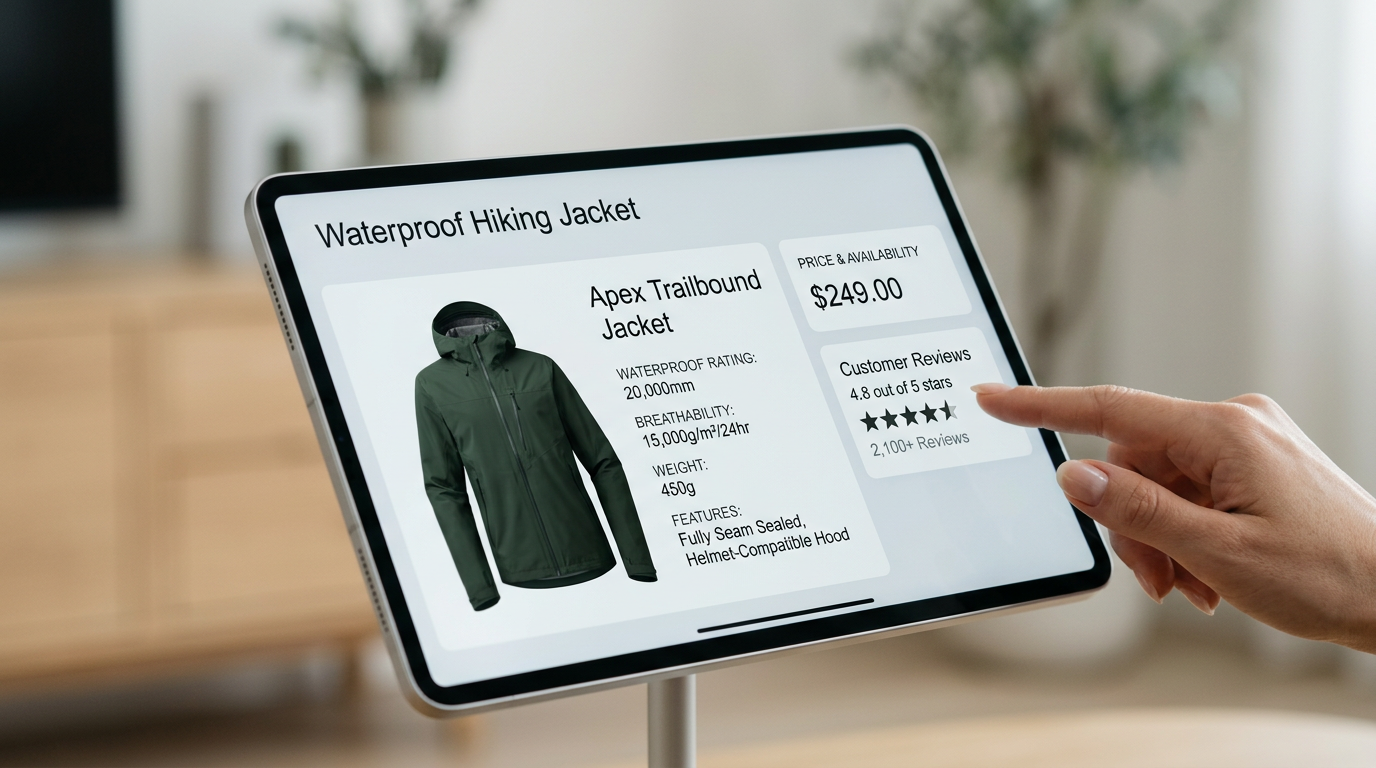
Now, when a customer asks an AI tool for “the best waterproof hiking jacket under $150” or “a minimalist carry-on with strong reviews,” the AI can surface Shopify products, explain the options, and sometimes complete the purchase without sending the shopper through the usual browsing funnel. From Shopify’s perspective, that is where commerce is heading: products sold wherever digital conversations happen.
 What Shopify Actually Launched
Shopify introduced Agentic Storefronts as part of its Winter ’26 Edition, describing it as a way to make stores “agent-ready by default.” The rollout is currently limited to eligible U.S. merchants, with setup managed through the Shopify admin and support already extending to major AI platforms including ChatGPT, Copilot, and Perplexity.
At the center of the system is the Shopify Catalog, which organizes product data from millions of merchants into a structure AI models can understand. That matters because AI shopping is not driven by storefront design first. It runs on clean product information, detailed attributes, pricing, availability, and context.
Your product feed is quickly becoming just as important as your homepage.
Why This Matters So Much
This looks like the early stages of a shift from keyword-based discovery to intent-based commerce. Shoppers no longer need to know exactly what they want or which brand they should visit. They can describe the problem they are trying to solve, and the AI does the filtering.
That creates a very different competitive landscape.
Brands with stronger product data, richer descriptions, better metafields, and more complete FAQs may outperform brands with prettier websites but weaker structured information. The old playbook of ranking on Google, driving traffic, and optimizing landing pages is being expanded into something new: optimize your catalog so AI can recommend you with confidence.
For merchants, this creates a powerful new acquisition channel. For consumers, it removes friction. And for Shopify, it positions the platform as infrastructure for the next layer of online retail.
The Benefits for Merchants
There is a lot for merchants to like here.
First, there is access to discovery in places where purchase intent is already high. Someone asking ChatGPT or Copilot for a product recommendation is often much closer to conversion than someone casually scrolling social media.
Second, Shopify is protecting a key advantage: checkout ownership. Instead of pushing transactions into a black box, Shopify merchants can still use Shopify Checkout, maintain attribution, and keep stronger visibility into orders.
Third, the barrier to entry is relatively low. Shopify has made setup simple for eligible stores and has also expanded the broader agentic commerce model with its Universal Commerce Protocol and an Agentic Plan for non-Shopify merchants.
Strategically, that is smart. Shopify is not just trying to participate in AI commerce. It is trying to become the rails underneath it.
The Catch: Fees, Margin Pressure, and Control
That said, this is not frictionless for merchants.
One of the biggest concerns is cost. Shopify revealed a 4% Agentic Storefronts fee for ChatGPT transactions after an initial promotional period, and once card processing is added, some merchants estimate the total cost could approach 7%. For brands with tight margins, that is not a footnote. It is a serious operational issue.
There are also practical limitations. The rollout is U.S.-only for now, and some ecommerce features, such as certain subscription or bundle workflows, may not translate neatly into agentic checkout yet. Merchants also need to think carefully about what happens when AI becomes the first touchpoint between brand and buyer. Discovery may increase, but direct brand storytelling could carry less weight.
So yes, the opportunity is real. But merchants should evaluate channel profitability, customer quality, and how much control they are willing to trade for reach.
 The Rise of “AI SEO”
If there is one phrase that captures the merchant takeaway, it is this: AI SEO is now real.
That does not mean chasing gimmicks. It means improving the fundamentals AI systems rely on:
- accurate product titles
- detailed descriptions
- strong category mapping
- complete metafields
- clear specifications
- quality images
- helpful FAQs
- consistent availability and pricing data
In an agentic commerce environment, AI cannot recommend what it cannot understand. Brands that invest in structured, complete, trustworthy data will likely have the edge.
This is especially important for higher-consideration purchases, where shoppers ask nuanced questions and expect useful comparisons. If your product information is thin, generic, or incomplete, you are less likely to appear well in AI-assisted shopping experiences.
A Bigger Industry Shift
This does not look like just another Shopify feature release. It looks like a signal that ecommerce is entering a new interface era.
For years, search engines shaped how products were discovered. Then marketplaces and social platforms added new layers. Now AI assistants are becoming shopping companions and, potentially, shopping decision-makers. Shopify’s move suggests that commerce is no longer tied to the storefront alone. It can happen inside any intelligent interface.
That is a major change.
It also explains why Shopify is pushing standards like the Universal Commerce Protocol with partners such as Google. If AI agents are going to browse, evaluate, and buy across the web, they need a shared framework for interacting with merchants, pricing, loyalty systems, and checkout flows. Brands that prepare early will be in a stronger position as that ecosystem matures.
FAQ
What are Shopify Agentic Storefronts?
Agentic Storefronts are Shopify’s new tools that let merchants make products available inside AI platforms such as ChatGPT, Microsoft Copilot, and Perplexity, allowing shoppers to discover and sometimes buy products directly through AI conversations.
Who can use Shopify Agentic Storefronts right now?
The initial rollout is focused on eligible U.S. merchants, with setup handled through the Shopify admin.
Why does product data matter more in AI commerce?
AI systems rely on structured information to understand and recommend products. That includes titles, descriptions, metafields, specifications, pricing, availability, and FAQs. Better data improves the odds of being surfaced accurately.
What are the main drawbacks for merchants?
The biggest concerns are fees, margin pressure, limited feature compatibility for some workflows, and the possibility of losing some control over brand storytelling when AI becomes the first customer touchpoint.
Conclusion
Shopify Agentic Storefronts are both an opportunity and a warning. The opportunity is clear: more discovery, less friction, and access to shoppers who increasingly rely on AI to make buying decisions. The warning is just as clear: if your catalog data is weak, your margins are thin, or your attribution strategy is outdated, this shift will expose those problems quickly.
That is why brands need to get more serious about measurement, efficiency, and channel-level profitability as AI commerce grows. If you want to keep your acquisition strategy grounded in performance while adapting to this shift, consider using ROAS Suite to get clearer visibility into what is actually driving returns.