Shopify Enables Merchants to Advertise on ChatGPT via Shop Campaigns
“AI commerce” has moved past the hype phase. Shopify has started running ads inside ChatGPT on behalf of merchants through Shop Campaigns, and it’s one of the clearest signs yet that chat is turning into a real acquisition channel.
If you’re a Shopify merchant, here’s the shift: ChatGPT isn’t only where customers research anymore. It’s quickly becoming where customers discover, evaluate, and buy—without leaving the conversation.
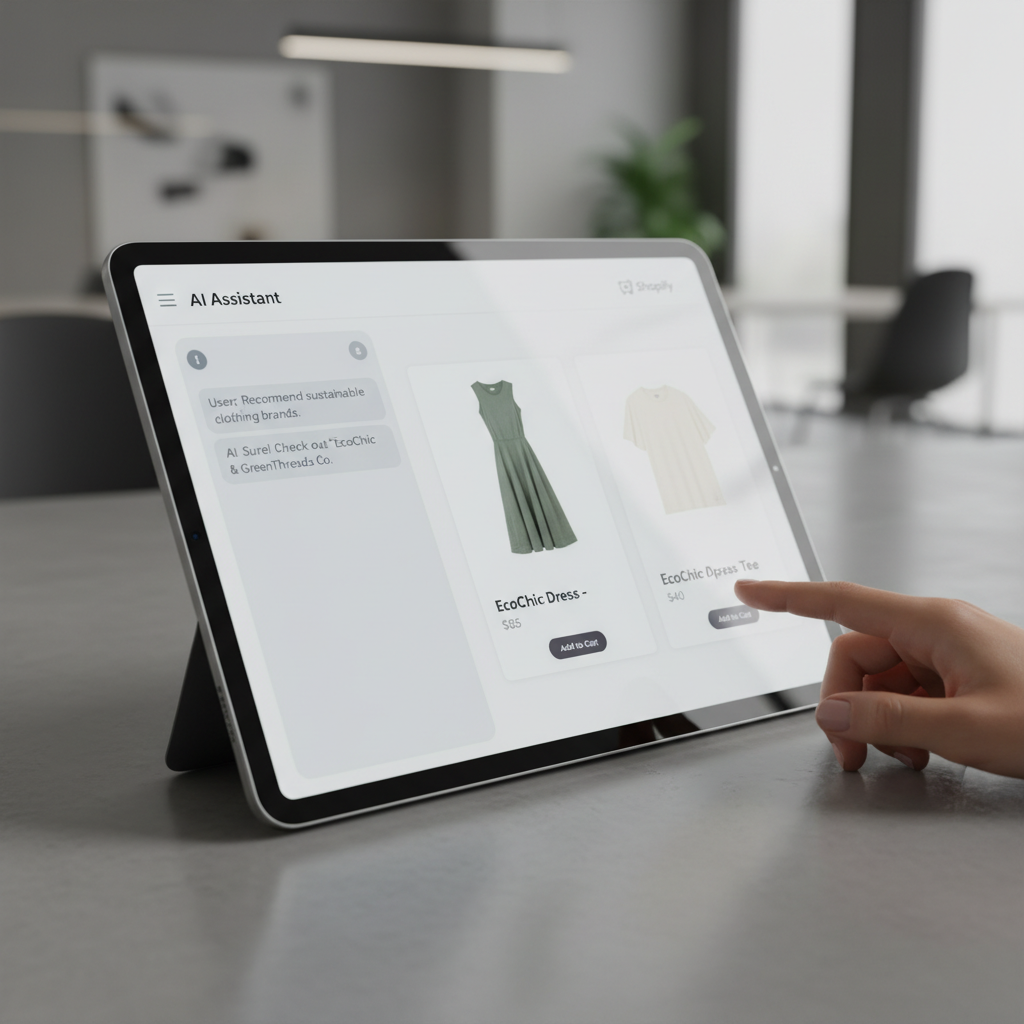 What actually happened (and why it’s bigger than a feature update)
This is less “new placement” and more the next step in a rollout Shopify and OpenAI have been building toward:
- Sept 2025: OpenAI introduced “Buy it in ChatGPT,” enabling in-chat purchasing from Shopify merchants and Etsy sellers—early proof that chat-based checkout could work at scale.
- Dec 2025: Shopify’s Winter ’26 Edition positioned “agentic storefronts” as a new selling surface—AI conversations included.
- Feb 2026: OpenAI rolled out ads to U.S. users on ChatGPT’s free/Go tiers, reportedly with high entry requirements for most advertisers (including a large minimum commitment).
- Feb 23–24, 2026: Shopify told merchants it had started placing ads in ChatGPT via Shop Campaigns, giving smaller brands a path into a channel that otherwise looks built for enterprise budgets.
The key detail is the mechanism. Shopify isn’t just shipping another integration. It’s trying to become the commerce layer underneath the AI discovery layer—handling checkout, inventory, attribution, and now the performance advertising wrapper around it.
What are Shop Campaigns—and how do they translate to ChatGPT ads?
Shop Campaigns already existed as Shopify’s performance ad product, built for merchants who want growth without living inside ad managers all day. The familiar model:
- Shopify helps generate and place ads across its network surfaces
- Campaigns focus on acquiring new or lapsed customers
- Offers can include incentives like discounts or Shop Cash
- Performance is tracked and optimized on Shopify’s side
Now Shopify is extending that same “done-with-you” approach into ChatGPT’s ad inventory.
That’s the unlock. Instead of each merchant negotiating with OpenAI, building creative, managing targeting, and meeting large minimums, Shopify acts as the aggregator and operator—bringing conversational ads to the long tail of merchants.
Why this is a potential acquisition goldmine (and also a measurement headache)
1) The intent signals are different than social
When someone asks ChatGPT, “What’s the best gift for a marathon runner under $100?” they aren’t passively browsing. They’re outsourcing the shopping research. That’s closer to search intent than social intent—but with far richer context.
If your product fits, you’re showing up inside the decision-making process while it’s still forming.
2) Chat is collapsing the funnel
Traditional funnels assume customers bounce between steps:
Ad → landing page → product page → reviews → comparison → cart → checkout
Conversational shopping compresses that journey. Users can ask follow-ups, get comparisons, and move from curiosity to purchase with fewer exits. Shopify and OpenAI have been steering directly toward this “fewer clicks” model since in-chat buying arrived.
3) Attribution is going to be the fight of 2026
The channel is exciting, but the tradeoff is obvious: when discovery and persuasion happen inside a chat interface, the usual attribution models (last click, view-through, assisted conversions) get messy fast.
OpenAI’s COO Brad Lightcap has called ads an “iterative process,” which is a polite way of saying the product and reporting will keep changing. Advertisers will need discipline around tracking, testing, and incrementality—not just surface-level ROAS.
 What this means for Shopify merchants right now
If I’m running a Shopify brand, here’s how I’d frame it:
- ChatGPT is turning into a paid distribution channel, not just an organic “maybe you show up” environment.
- Shopify is positioning itself as the on-ramp for merchants who can’t (or shouldn’t) commit to massive platform minimums.
- Early movers may get a window where competition stays light and CPM/CAC dynamics haven’t fully settled.
- Winners won’t just be the biggest spenders. They’ll be the brands with clean offers, real product-market fit, and strong post-click (or post-chat) conversion paths.
The bigger trend: “agentic commerce” is turning platforms into storefronts
Shopify President Harley Finkelstein has been clear about the direction: AI is creating “new surfaces” for merchants, and Shopify wants to power the rails underneath them.
That’s what this ChatGPT expansion represents. Your store doesn’t disappear, but the front door changes. Instead of Google → website, the path becomes ChatGPT → purchase decision → Shopify checkout infrastructure.
The market is moving quickly. Forecasts that AI-driven commerce will grow sharply over the next few years are believable for a simple reason: once customers get used to shopping by conversation, they won’t miss the tab-hopping, toggling, and ten-step comparisons.
Conclusion: the opportunity is real—just don’t treat it like “another placement”
Shopify’s move is a meaningful inflection point. Conversational shopping is now paired with conversational advertising, and Shopify merchants have a practical way to access it through Shop Campaigns.
The brands that win here will treat it like a new operating model: test offers, tighten creative inputs, and measure incrementality so performance stays predictable as the platform evolves.
If you want to stay profitable while experimenting with emerging placements like this, build your optimization process around a system that keeps ROAS and clarity front and center. Tools like ROAS Suite can make it easier to scale what works without losing control of the numbers.