Shopify Enables AI Agent-Ready Stores by Default
A lot of ecommerce brands are about to find out that the rules of online selling have changed again.
Shopify has effectively made its stores AI agent-ready by default, and that matters far more than many merchants realize. This is not just another platform update or a headline-friendly AI announcement. It is a structural shift in how products are discovered, evaluated, and bought online.
For years, brands competed for traffic through SEO, paid ads, landing pages, and carefully tuned funnels. Now AI agents inside tools like ChatGPT, Gemini, and Copilot are starting to handle more of the shopping process for customers. They can compare products, check reviews, evaluate pricing and stock, assess fit, and in some cases complete the purchase without the customer ever visiting the merchant’s homepage.
That changes the game.
 The Storefront Is No Longer the First Touchpoint
The biggest shift is this: the traditional website experience is no longer guaranteed to sit at the center of commerce. A strong homepage, polished branding, and a smart conversion flow still matter for human visitors, but AI agents do not shop the way people do.
They do not care about your hero banner.
They are not impressed by animations.
They do not move through your funnel like a paid traffic visitor.
Instead, they read structured product data. They evaluate attributes, pricing, availability, reviews, shipping details, and compatibility. In other words, they care more about what your catalog says than how your site looks.
That is why Shopify’s move matters. By enabling agent-ready infrastructure through efforts like Agentic Storefronts and the Universal Commerce Protocol, Shopify is preparing merchants for a world where AI systems are not just sending traffic but actively shaping the buying journey.
Why This Shift Is Happening So Fast
The performance data explains the urgency.
Shopify’s own reporting shows AI-referred orders rising sharply, with order volume up roughly 13x year over year and AI-referred sessions up around 8x. More importantly, this traffic is converting better than many traditional channels, with conversion rates reportedly about 31% higher than other sources.
That is not a novelty spike. It is the early shape of a major acquisition channel.
It feels similar to the early days of mobile commerce and social commerce, when many brands brushed off the trend until growth became impossible to ignore. The same pattern is showing up again, except this shift may be even more disruptive because AI agents can compress discovery, comparison, and checkout into a single interaction.
If a customer asks an AI assistant for “the best lightweight running shoe under $150 with strong arch support,” the agent may never send them through a broad search journey at all. It may shortlist products, compare tradeoffs, and present a purchase-ready answer in seconds.
In that environment, your product data becomes your sales pitch.
Shopify’s Real Advantage: Standardization at Scale
What Shopify has done especially well is make this transition infrastructure-level rather than optional.
The Universal Commerce Protocol, announced with support from major ecosystem players, gives AI agents a standardized way to discover merchants, negotiate offers, apply loyalty or subscription logic, and complete transactions. On top of that, Shopify’s Agentic Storefronts framework creates a more direct path for products to appear inside AI-driven environments.
For merchants, that means the shift toward agentic commerce is no longer theoretical. It is operational.
Because Shopify powers such a large share of modern ecommerce, the impact goes well beyond its own platform. Once store data is structured correctly and exposed in the right format, AI surfaces can use it at scale. That opens up a world where product discovery happens in conversations, recommendation layers, and agent workflows, not just on search engines and brand websites.
What Brands Are Missing Right Now
The biggest mistake many brands are making is treating AI readiness as a chatbot project.
It is not.
This is about whether your store can be correctly interpreted by external agents. If your product information is incomplete, inconsistent, buried in JavaScript, or missing key attributes, an AI agent may skip your products entirely or misunderstand them.
That is the hidden risk in this transition. Brands may not notice the problem right away because the site still looks fine to human shoppers. But if AI-driven discovery keeps accelerating, weak product data turns into a visibility problem.
And visibility problems turn into revenue problems.
The brands most likely to win in this environment are not necessarily the ones with the prettiest sites. They are the ones with the cleanest, richest, and most reliable commerce data.
- Detailed specifications
- Accurate stock levels
- Updated pricing
- Strong schema markup
- Clear categorization
- Complete attribute mapping
These details are starting to matter more than many merchants think.
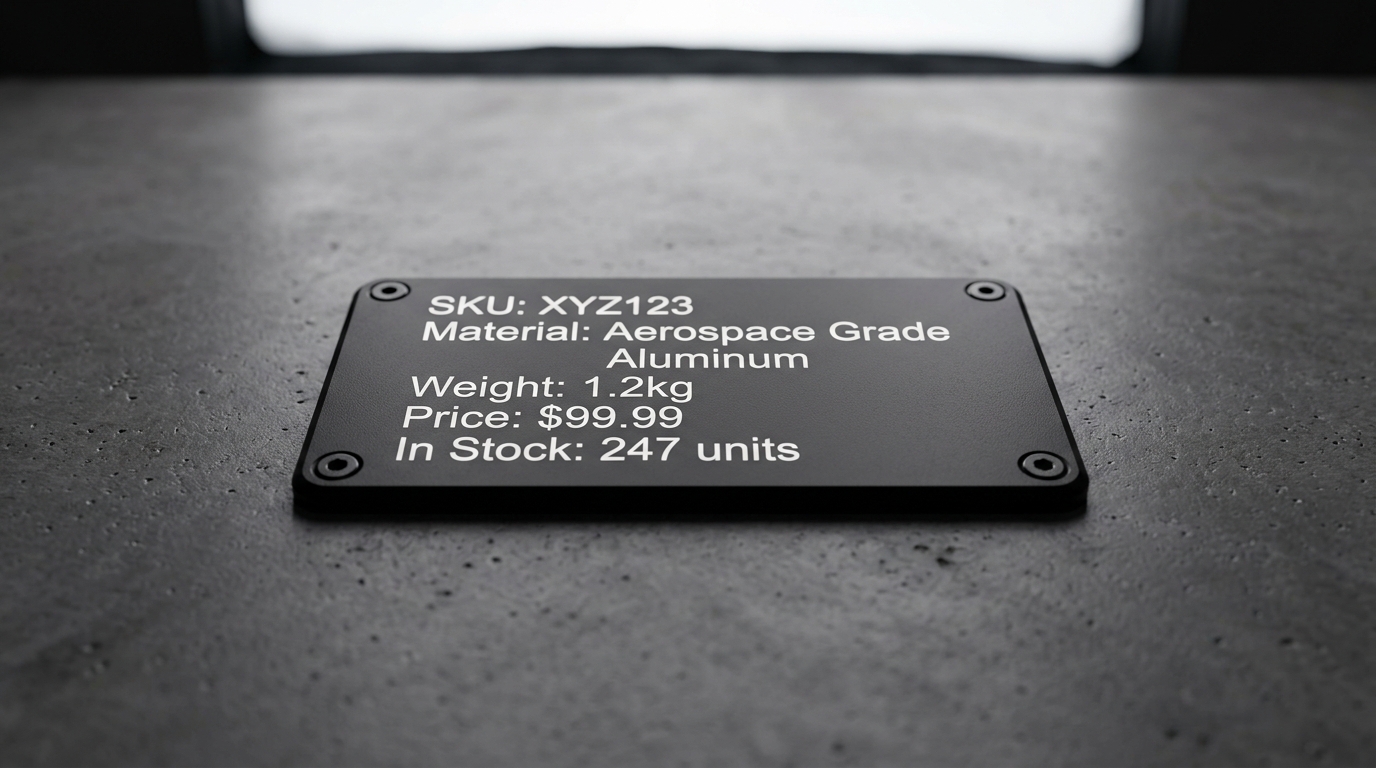 Product Pages Are Becoming the New Homepage
One idea that keeps coming up in industry discussions is that product pages are becoming the new homepage. That feels exactly right.
If AI systems are making recommendations based on product-level data, then each SKU has to stand on its own. It needs to explain what it is, who it is for, why it is better, and what makes it relevant in a specific buying context.
That means merchants need to rethink optimization. Traditional SEO still matters, but now it is being joined by a new discipline: making product information understandable and usable for generative systems.
Call it GEO, agent optimization, or AI commerce readiness. The label matters less than the work itself. Brands need to treat feeds, metadata, taxonomy, availability, and structured descriptions as strategic assets. In many cases, the product catalog is becoming more important than the campaign landing page.
The Strategic Implication for Ecommerce Teams
This is where many teams will feel the biggest internal shift.
Performance marketers have long been measured on traffic, click-through rates, and funnel conversion. But what happens when fewer shoppers enter through those familiar paths? What happens when a growing share of high-intent buyers arrives pre-qualified by an AI assistant?
That does not make marketing irrelevant. It changes where leverage lives.
Teams will need tighter coordination across merchandising, growth, product data, SEO, and analytics. They will need to track AI-referred traffic, understand which products surface in agent recommendations, and improve the data layer powering those outcomes.
Merchants who adapt early should gain stronger visibility and better conversion efficiency. Merchants who wait may eventually wonder why traffic is softening while competitors keep showing up in AI conversations.
FAQ
What does it mean for a Shopify store to be AI agent-ready?
It means the store’s product and commerce data can be more easily discovered, interpreted, and used by AI agents that help shoppers compare products and complete purchases.
Why does structured product data matter so much?
AI agents rely on structured data to understand pricing, stock, product attributes, reviews, shipping, and compatibility. If that data is weak, incomplete, or hard to access, your products are less likely to be recommended.
Does this replace traditional ecommerce marketing?
No. SEO, paid media, branding, and conversion optimization still matter. But product data quality is becoming a much more important part of visibility and performance.
What should brands do first?
Audit product data quality. Focus on complete attributes, consistent taxonomy, accurate availability, pricing updates, schema markup, and machine-readable descriptions.
Conclusion
Shopify making stores agent-ready by default is one of the clearest signs yet that agentic commerce has moved from experiment to infrastructure. The customer journey is getting shorter, and product data is becoming the language AI uses to decide who gets recommended and who gets ignored.
Brands that move now can turn this shift into an advantage instead of scrambling to catch up later. And if you want a smarter way to improve performance as commerce keeps evolving, it is worth looking at ROAS Suite as part of a more resilient growth strategy.