Shopify CTO Details 2026 AI Adoption Explosion and New Tools
I’ve been following Shopify’s AI strategy closely, and the latest comments from CTO Mikhail Parakhin point to a clear shift: 2026 looks like the year AI stops being a side experiment and starts functioning as core operating infrastructure.
The biggest takeaway wasn’t just the release of new tools. It was the scale of adoption inside Shopify. Parakhin described a “phase transition” in late 2025, when model quality improved enough for AI usage to spread rapidly across engineering and operations. Once the models became “good enough,” daily use moved toward near-universal adoption.
That matters because Shopify isn’t a small team testing theory. It’s one of the world’s largest commerce platforms. When a company at that scale says AI is now embedded in almost every technical workflow, the broader e-commerce industry should pay attention.
 The December 2025 Turning Point
According to Parakhin, December 2025 was the inflection point. Stronger model performance, especially in coding and reasoning, pushed internal confidence high enough that adoption spread quickly instead of staying limited to isolated use cases.
One of the most notable details was Shopify’s token policy. Rather than forcing teams to work around cost limits with weaker models, the company reportedly moved toward effectively unlimited usage for high-performing models at or above the Opus-4.6 level. The thinking was straightforward: stronger models may cost more upfront, but they can reduce retries, cut wasted time, and improve outcomes.
That’s one of the most useful lessons here. The conversation around AI cost is changing. For high-output teams, the cheapest model is not always the best value. If a stronger model leads to fewer mistakes, fewer revisions, and faster shipping, the overall return can be much better.
From AI Assistance to AI-Native Engineering
Parakhin’s comments also point to a deeper shift inside Shopify: the move from AI-assisted work to AI-native workflows.
AI-assisted work is when teams use a chatbot, coding assistant, or summarizer from time to time. AI-native work is different. It means redesigning the workflow around the assumption that AI is present at every stage.
Shopify’s internal numbers suggest that shift is already underway. Daily active usage reportedly approached 100% among engineers and knowledge workers. CLI-based tools started outperforming IDE plugins like Copilot and Cursor. Pull request merge volume rose by roughly 30% month over month, even as work became more complex.
Once that happens, the bottleneck changes. It’s no longer about generating code or content. The pressure moves to review, CI/CD, deployment reliability, and production stability. When AI helps teams produce far more output, the real challenge becomes handling the volume without sacrificing quality.
The Three Tools Defining Shopify’s Next Phase
What makes Shopify’s approach especially interesting is that it isn’t centered on a single assistant. The company is building a broader internal stack for research, experimentation, optimization, and simulation.
Tangle
Tangle is Shopify’s third-generation ML workflow system, built for reproducibility and speed. Instead of rerunning pipelines unnecessarily, it uses content-hash-based caching to avoid duplicate work. In practical terms, that means teams can iterate faster and with more confidence.
For businesses trying to scale AI internally, this is a big deal. Workflow sprawl is one of the fastest ways to lose efficiency. A system like Tangle adds structure to experimentation, making it easier to trust outputs and scale what works.
Tangent
If Tangle is the workflow layer, Tangent appears to be the optimization engine on top of it. Parakhin described it as an automated research and tuning system that improves performance without constant manual oversight.
One example involved search optimization, where Tangent reportedly helped increase queries per second from 800 to 4200. That’s a major operational gain, and it points to the larger opportunity: AI systems that don’t just answer prompts, but actively improve the infrastructure underneath the business.
This is one of the more important developments in enterprise AI. The future won’t belong only to tools that generate copy or code. It will also belong to systems that continuously optimize performance.
SimGym
SimGym may be the most commercially significant of the three. After about a year of development, Shopify rolled it out internally to create “digital customers” that behave like real shoppers. It uses historical data, browser automation, and multimodal models to simulate customer behavior.
For e-commerce teams, the implications are obvious. Instead of relying entirely on live A/B tests, brands could use simulated behavior to estimate likely outcomes before making a change public. According to Shopify, SimGym reached roughly 0.7 correlation with add-to-cart outcomes. That’s not perfect, but it’s strong enough to deserve serious attention.
There have already been some early issues, including technical problems and merchant feedback that simulations do not always match live A/B test results. Even so, the concept is compelling. If simulation can provide directional insight before traffic is committed, it can reduce testing costs, speed up iteration, and support faster decisions.
Why This Is Bigger Than Shopify
What Parakhin described isn’t just an internal update. It signals a broader shift in how digital commerce will operate.
For years, advanced experimentation was mostly reserved for the biggest companies, the ones with enough traffic, engineering support, and analytics maturity to run it well. AI-driven simulation and optimization begin to change that. A smaller merchant may not have the traffic for endless live tests, but they may soon have access to tools that offer useful directional forecasts.
That could reshape the competitive landscape.
It also reinforces a broader pattern I keep seeing across performance marketing: the companies that win with AI are not simply the ones producing more assets. They’re the ones building tighter loops between insight, action, measurement, and iteration.
Shopify appears to understand that. Its toolset isn’t just about writing code faster. It’s about building systems that learn faster.
 The New Bottleneck: Quality Control
There’s a temptation to assume that more AI output automatically translates into more growth. It rarely works that cleanly.
Parakhin pointed directly to the new bottlenecks: review, CI/CD, and deployment stability. That matches what many teams are finding. When generation gets easier, governance gets harder.
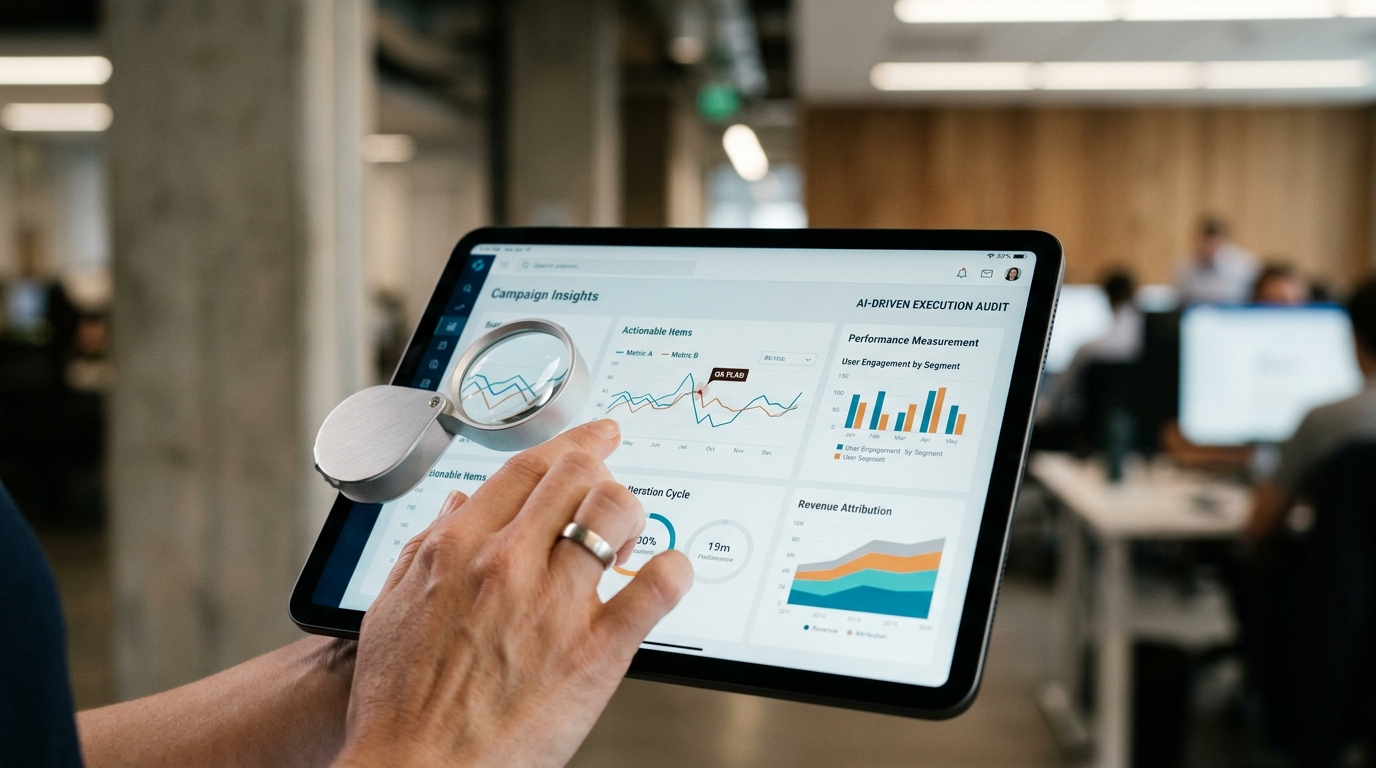
The winners in 2026 won’t be the companies using the most AI. They’ll be the ones with the strongest quality controls around AI-driven execution.
That applies just as much to commerce and advertising as it does to engineering. More campaigns, more landing pages, more experiments, and more creative variants only create value if the measurement layer is strong enough to show what’s actually working.
What Merchants and Marketers Should Take From This
There are three practical lessons in Shopify’s AI surge:
- Adoption accelerates when tools become clearly useful. Teams don’t need endless AI mandates. They need results that make usage hard to ignore.
- Better models can produce better economics. The right metric is not cost per token. It’s cost per successful outcome.
- Simulation and optimization are becoming core advantages in commerce. Businesses that test faster, learn faster, and reallocate spend faster will have a real edge.
That’s why this matters beyond engineering teams. AI is no longer limited to product and development. It’s moving directly into conversion strategy, merchandising, experimentation, and media efficiency.
FAQ
What did Shopify’s CTO say about AI adoption?
He described a late-2025 “phase transition” where model quality improved enough for AI usage to spread rapidly across Shopify, reaching near-universal daily use among engineers and knowledge workers.
Why is December 2025 important in Shopify’s AI timeline?
Parakhin identified it as the point when stronger models, especially for coding and reasoning, pushed internal confidence high enough for broad adoption across the company.
What are Tangle, Tangent, and SimGym?
Tangle is Shopify’s ML workflow system, Tangent is an optimization and tuning engine, and SimGym is a simulation tool that creates digital customers to model shopper behavior.
Why does this matter for merchants and marketers?
Because the same AI shift affecting engineering is moving into merchandising, experimentation, conversion optimization, and media buying. Faster testing and better forecasting can become a major competitive advantage.
Conclusion
Shopify’s 2026 AI expansion shows what happens when a major commerce platform commits fully to an AI-native operating model: adoption climbs fast, internal tooling gets more sophisticated, and the business starts optimizing around speed, iteration, and feedback loops. For brands and marketers, the lesson is straightforward: collecting data is no longer enough. You need systems that turn that data into profitable action. If you want a clearer path from performance insights to scalable growth, ROAS Suite is a smart place to start.