Shopify Advances AI-Driven Commerce with Shopify Magic Enhancements
I’ve been watching Shopify’s AI evolution closely, and one thing is clear: the company no longer treats artificial intelligence as a side feature. It’s weaving AI into the core of commerce. With the latest Shopify Magic enhancements, Shopify is moving past basic automation toward a more intelligent, integrated model of online selling—one that helps merchants create faster, optimize smarter, and compete more effectively without enterprise-level resources.
 From Helpful Automation to Embedded AI Commerce
Shopify first made its AI ambitions clear in 2023, when it introduced Shopify Magic as a growing suite of AI-powered tools for merchants. At the time, the value was simple: use AI to write product descriptions, generate marketing copy, and streamline common business tasks. That was already meaningful, especially for smaller brands trying to move quickly with lean teams.
Since then, the pace has been striking.
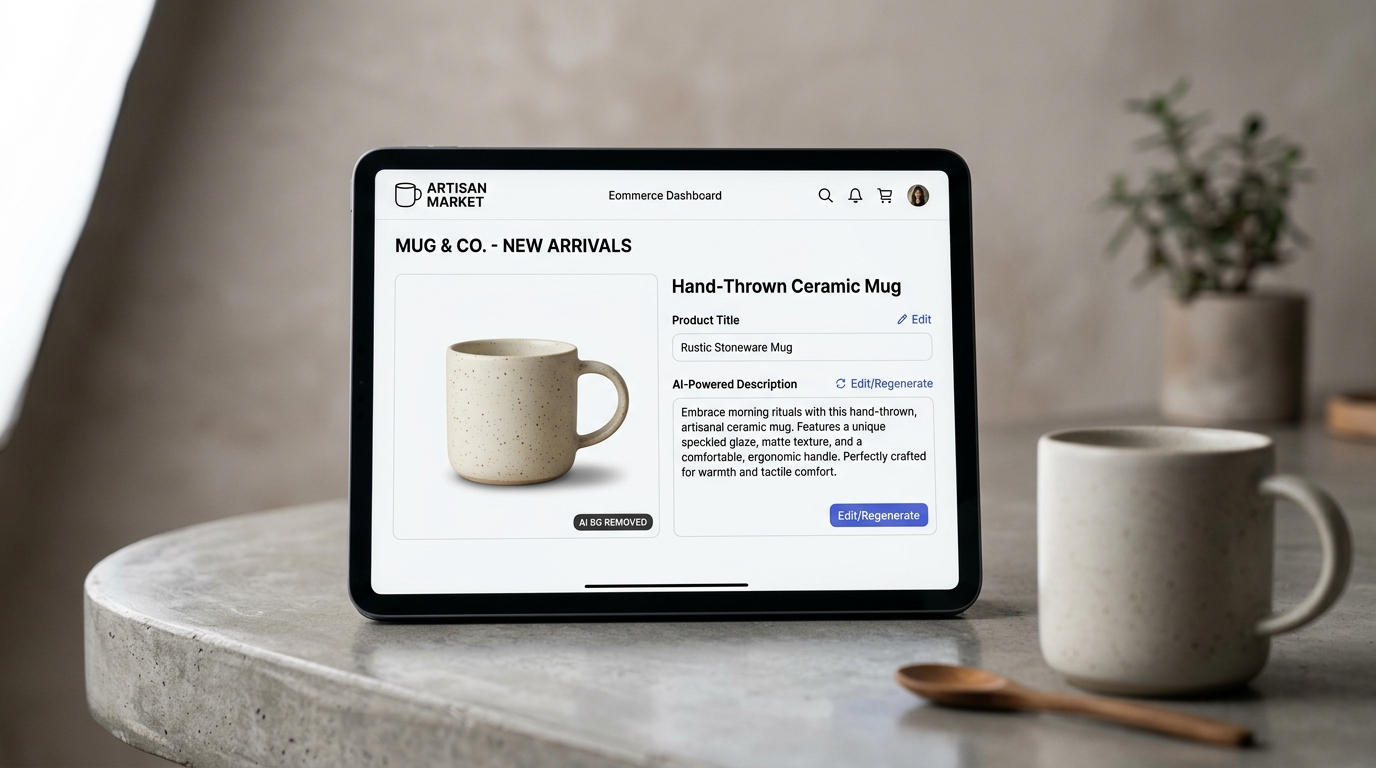
By early 2024, Shopify had expanded Magic with image editing tools that let merchants remove or replace backgrounds and improve product visuals without outside creative help. On the surface, that may seem like a modest feature. In ecommerce, though, better imagery affects trust, click-through rates, and conversions. Shopify recognized that AI could save time while improving storefront quality.
Now, with the broader 2025 and Winter ’26 enhancements, the platform has taken a bigger step forward. Shopify Magic can help generate theme blocks from text prompts, improve image creation across mobile and desktop, assist with customer segmentation, and work alongside Sidekick, Shopify’s AI assistant, in more capable ways. This is no longer just content generation. It’s operational intelligence.
Why These Enhancements Matter
What stands out most is how practical Shopify’s AI rollout has been. Rather than launching disconnected experiments, Shopify has focused on merchant workflows that lead to measurable business outcomes.
A merchant can now use AI to draft product descriptions, polish images, refine email content, generate storefront elements, and pull insights from store data using natural language. That turns hours of work into minutes. For lean teams, that time savings can be the difference between staying reactive and becoming strategic.
The impact grows when paired with Sidekick’s expanding capabilities. Shopify is clearly moving toward what it calls agentic commerce, where AI doesn’t just respond to prompts but helps run parts of the business more proactively. Features like Pulse, natural-language analytics, AI-generated automations, and custom app creation point to a future where merchants manage stores more like directors than operators.
That matters because ecommerce is getting more complex, not less. Merchants are dealing with rising acquisition costs, fragmented customer journeys, and higher expectations around personalization. Embedded AI offers a way to absorb that complexity without dramatically increasing headcount.
- Faster content production: Merchants can create product copy, emails, and storefront content in less time.
- Better creative execution: AI-powered image tools help improve product presentation without added design overhead.
- Smarter decision-making: Natural-language insights and analytics make store data easier to use.
- Operational leverage: Automation and AI assistants reduce manual work across the business.
Shopify’s Bigger Strategic Play
I don’t see these updates as isolated product improvements. They look like part of a broader strategy to position Shopify as the operating system for AI-driven commerce.
Shopify already powers a massive share of online retail. With AI now influencing discovery, merchandising, customer experience, and even checkout pathways, the platform is expanding beyond store infrastructure. It wants to sit at the center of how products are created, found, marketed, and sold across AI-enabled channels.
That strategy is even more visible in Shopify’s integrations with ecosystems like Google, Microsoft, and OpenAI. As AI assistants and conversational interfaces begin shaping purchase decisions, merchants won’t just need a storefront. They’ll need product data, merchandising content, and transactional infrastructure that can surface inside those environments.
In other words, the battleground is shifting from traditional ecommerce optimization to AI discoverability and machine-readable commerce. Shopify seems to understand that earlier than most.
 The Opportunity—and the Caution
There’s a lot to like here. AI can lower the barrier to entrepreneurship, give smaller merchants tools that once required specialized teams, and improve execution across content, design, service, and analytics. For many brands, that could mean real efficiency gains and meaningful revenue lift.
Still, the optimism should come with some realism.
As AI-driven commerce expands, merchants will need to think more carefully about margins, data structure, and channel economics. If new AI sales paths come with fees or platform dependencies, those costs can hit thin-margin businesses hard. And if product data isn’t structured properly for AI discovery, brands may find themselves invisible in the very environments shaping the next wave of ecommerce traffic.
So while Shopify’s advancements are exciting, they also raise the competitive baseline. AI is quickly becoming less of an edge and more of a requirement.
- Opportunity: Lower operating costs and faster execution for merchants of all sizes.
- Opportunity: Better access to tools that were once limited to larger teams.
- Caution: New AI-driven channels may introduce fees, dependencies, or margin pressure.
- Caution: Poorly structured product data can limit visibility in AI-powered discovery environments.
FAQ
What is Shopify Magic?
Shopify Magic is Shopify’s suite of AI-powered tools designed to help merchants with tasks like writing product descriptions, generating marketing copy, editing images, and improving store operations.
How is Shopify Magic changing ecommerce operations?
It’s moving beyond simple content generation into workflow support, analytics, automation, and storefront creation. That makes AI part of day-to-day store operations rather than just a helpful add-on.
What is agentic commerce?
Agentic commerce refers to AI systems that do more than respond to prompts. They can assist proactively with decisions, workflows, and operational tasks, helping merchants manage stores more efficiently.
Why does AI discoverability matter?
As AI assistants and conversational search tools influence buying decisions, merchants need product data and content that can be understood and surfaced by those systems. Visibility may increasingly depend on how machine-readable a store’s catalog is.
Conclusion
From where I sit, Shopify Magic’s latest enhancements signal a real shift in ecommerce infrastructure. Shopify isn’t just adding AI tools to a commerce platform—it’s redesigning the merchant experience around AI-native execution. For brands that want to move faster, adapt to changing discovery channels, and improve return on every marketing dollar, that creates a real opportunity. And for merchants looking to turn that opportunity into stronger performance, it makes sense to pair platform innovation with a smarter optimization stack like ROAS Suite, which can support more informed, profitable growth decisions.