Semrush Launches “One” Platform Unifying Traditional SEO and AI Visibility Tracking
I’ve been watching the search industry change in real time, and one thing is clear: traditional SEO on its own no longer gives marketers the full picture. Google rankings still matter, but they’re only part of the story. Brands also need to know how they show up in AI Overviews, ChatGPT, Gemini, Perplexity, and other large language model-driven environments. That’s what makes Semrush’s launch of Semrush One notable.
With this new platform, Semrush is making a direct bet on where search is headed. Marketers need a single system that combines conventional SEO performance with AI visibility tracking in one workflow.
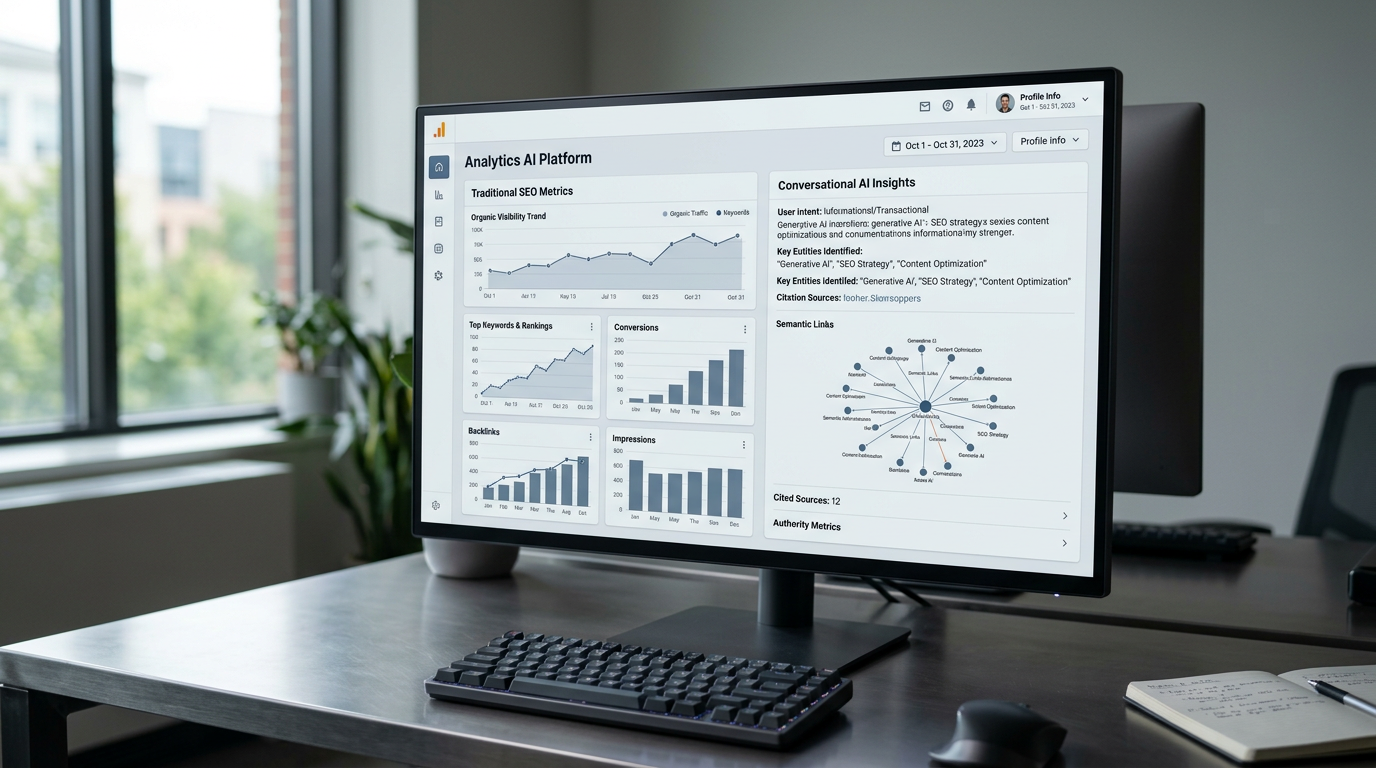 Why This Launch Matters
Semrush built its reputation on scale. Its SEO infrastructure already covers massive keyword databases, hundreds of millions of domains, and trillions of backlinks. That gave the company a strong base, but Semrush One does more than extend legacy SEO tools. It broadens the definition of visibility for a search landscape that is becoming more conversational, generative, and fragmented across platforms.
Instead of focusing only on rankings, Semrush One is built to help marketers answer bigger questions:
- Is my brand being cited in AI-generated answers?
- Which prompts trigger my visibility?
- How do I compare against competitors in AI discovery?
- Is my site technically accessible to AI crawlers?
- What is the relationship between my SEO performance and my AI presence?
That’s a meaningful shift. Search is moving from a model centered on keywords and blue links to one shaped by prompts, entities, citations, and sentiment.
What Semrush One Actually Brings Together
At its core, Semrush One combines the company’s traditional SEO Toolkit with a newer AI Visibility Toolkit. Marketers can work from one environment instead of bouncing between separate tools for rankings, technical audits, backlinks, prompt tracking, brand sentiment, and competitor visibility.
Some of the standout capabilities include:
- AI visibility monitoring across platforms like ChatGPT, Gemini, Perplexity, and Google’s AI-driven experiences
- Prompt research, treating prompts as the next generation of keywords
- Competitor gap analysis for AI answers and citations
- Brand sentiment tracking in AI-generated responses
- AI site audits to identify technical issues that may block or limit AI discoverability
- Unified dashboards and reporting that connect SEO and AI performance in one place
That last piece may be the most useful. One of the biggest operational problems for marketing teams right now is fragmentation. SEO data lives in one platform, analytics in another, brand monitoring somewhere else, and AI tracking often sits in newer niche tools. Semrush One is clearly trying to fix that by giving teams a shared source of truth.
Semrush Tested the Model on Itself
What stood out even more was Semrush’s own internal validation. Before the broader rollout, the company reportedly used its AI visibility tools on its own brand and saw a 146% increase in AI share of voice, rising from 13% to 32% in about a month. It also reported a 25% uplift in non-branded query performance.
Those are the kinds of numbers that get leadership teams to pay attention. Bill Wagner, Semrush’s CEO, has framed AI visibility as a boardroom issue, and that feels accurate. This is no longer a niche SEO discussion. It’s becoming part of broader digital strategy, brand discoverability, and revenue attribution.
The Industry Context: Search Is Expanding Beyond Google
The launch of Semrush One reflects a broader industry reality: search no longer lives only on the search engine results page. Consumers are increasingly asking AI systems for recommendations, comparisons, summaries, and decisions. In those environments, the winners are not always the pages ranking first on Google.
AI systems rely on different signals. They look for structured, trusted, citation-worthy content. They pull from multiple sources. They may reference brands with strong authority even when those brands are not dominating classic keyword rankings. That creates a new layer of optimization often described as GEO, or generative engine optimization.
In practical terms, marketers now have to think about:
- topical authority rather than isolated pages
- external mentions across forums, video platforms, and trusted publishers
- crawl accessibility for AI bots
- citation patterns in AI answers
- how brand sentiment appears in machine-generated summaries
Semrush One looks built for exactly this transition.
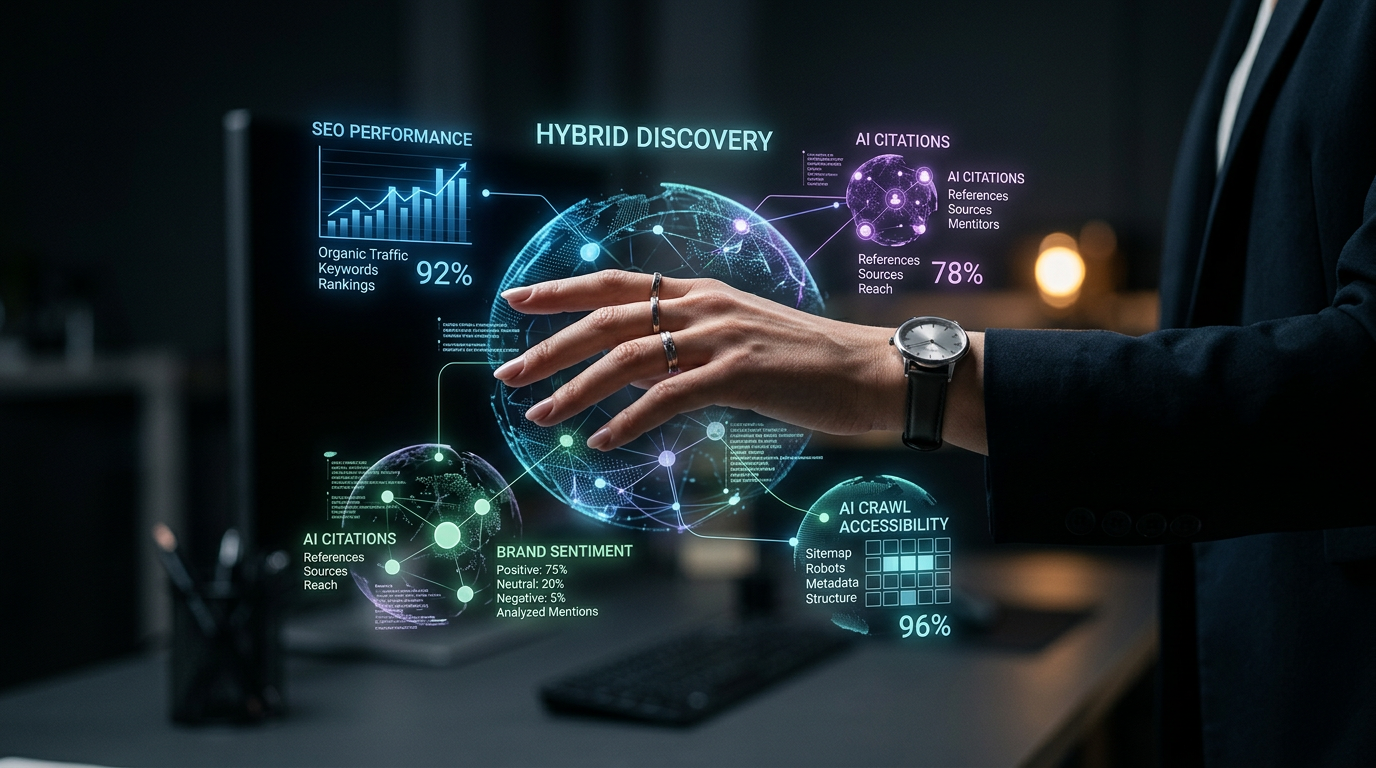 A Smart Move at the Right Time
The timing matters too. Semrush officially introduced Semrush One in late October 2025, just before Adobe announced its planned $1.9 billion acquisition of the company in November. That proposed deal adds another layer of significance. It suggests AI visibility and GEO are becoming important enough to be folded into larger enterprise marketing ecosystems.
If Adobe integrates Semrush’s data and workflows into its broader marketing stack, AI visibility measurement could move even further into the mainstream. It could also put pressure on competitors to build similar unified platforms. In that sense, Semrush One may be more than a product release. It may be an early signal of where the wider martech and search industries are headed.
The Real Opportunity for Marketers
From my perspective, the biggest value of Semrush One is not just that it tracks AI visibility. It’s that it recognizes modern discovery is now hybrid.
A brand can be strong in organic rankings but weak in AI citations.
It can have excellent content but poor technical accessibility to AI crawlers.
It can dominate branded search and still miss non-branded AI recommendation opportunities.
Those are serious blind spots.
A platform that helps teams spot those gaps early, connect them to action, and report on them in a single workflow is much closer to how marketing actually works now. As AI search continues to mature, visibility reporting will likely become less about “where do I rank?” and more about “where and how am I being surfaced, summarized, and trusted?”
FAQ
What is Semrush One?
Semrush One is a platform that combines traditional SEO tools with AI visibility tracking, giving marketers one place to measure rankings, prompts, citations, sentiment, and competitor presence.
Why does AI visibility matter alongside SEO?
Because users are increasingly discovering brands through AI-generated answers, not just search engine results pages. A brand can rank well in Google and still be nearly invisible in AI-driven experiences.
What platforms does Semrush One track?
According to the announcement, it monitors AI visibility across environments such as ChatGPT, Gemini, Perplexity, and Google’s AI-driven search experiences.
What is GEO?
GEO stands for generative engine optimization. It refers to optimizing content and brand signals so they are more likely to be surfaced, cited, and trusted in AI-generated responses.
Conclusion
Semrush One is a timely response to a very real shift in digital marketing. By combining traditional SEO metrics with AI visibility intelligence, it gives marketers a better framework for understanding discovery in the AI era. The bigger takeaway is simple: the future of optimization will belong to teams that can measure both rankings and machine-driven relevance at the same time. For brands looking to stay ahead of that transition with stronger AI content and authority-building workflows, AIuthority is a smart resource to keep in the mix.