Sell The Trend Launches AI-Powered Shopify Store Builder
I’ve followed the e-commerce automation space for years, and Sell The Trend’s latest move feels well timed. The company has officially launched its AI-powered Shopify Store Builder, a feature designed to help entrepreneurs create and launch fully functional Shopify stores in minutes instead of days or weeks.
For anyone familiar with dropshipping, that promise carries weight. Store setup has long been one of the biggest hurdles for new sellers. Product research, listing imports, descriptions, theme selection, pricing, and launch prep can turn a simple idea into a drawn-out technical project. Sell The Trend is clearly trying to remove that bottleneck.
 A Natural Next Step for Sell The Trend
This launch fits the company’s trajectory. Since its founding in 2019 by Rachid “Rush” Wehbi, Sell The Trend has built a reputation as an AI-focused dropshipping platform. What started as a product research tool has expanded into a broader e-commerce operating system, bringing together trend discovery, automation, supplier integrations, and multi-channel support.
Its NEXUS AI engine has played a major role in that growth. Rather than functioning like another generic product spy tool, the platform has focused on identifying product velocity and surfacing winning items before they become oversaturated. That distinction has helped it gain traction with dropshippers who want a more data-driven approach.
With the AI Store Builder, Sell The Trend is moving beyond product discovery and into full storefront creation.
What the New AI Store Builder Does
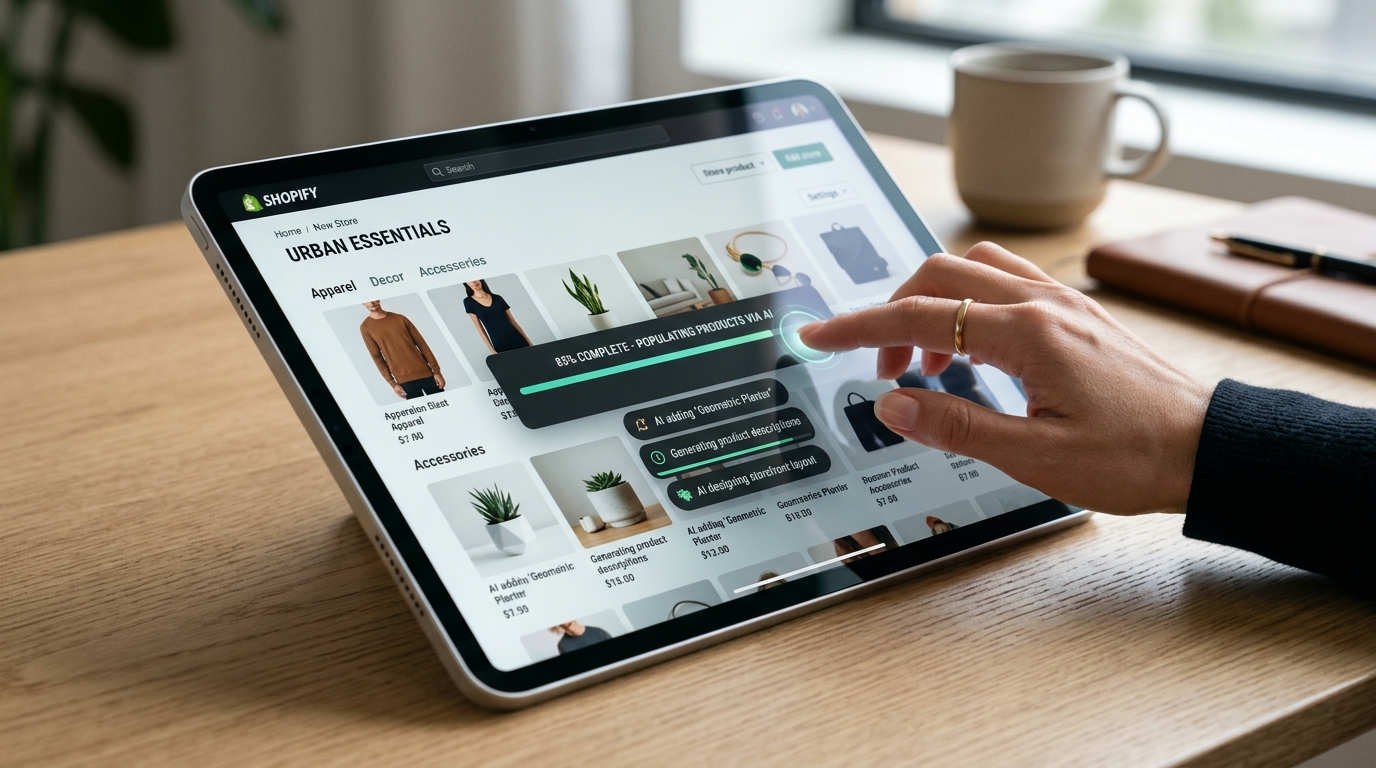
At its core, the feature is built for speed. Users choose a niche, and the AI helps generate a Shopify store stocked with products sourced from Sell The Trend’s trend data. That includes product images, descriptions, pricing, theme setup, and store configuration. In practical terms, the platform is compressing what used to be a multi-step workflow into a far more automated process.
According to the launch details, the builder can populate a store with anywhere from 10 to 50 products aligned with data-backed trends. It also supports one-click pushing to Shopify, which makes it especially appealing for sellers who want to test niches quickly without getting buried in repetitive setup work.
That’s a meaningful shift. In dropshipping, speed to market can make a real difference, especially when trends rise and fade fast. A store that takes two weeks to build may miss the window. A store that goes live in minutes has a much better chance of catching momentum.
- Niche-based store generation
- Product imports powered by trend data
- AI-generated descriptions, pricing, and setup
- Store builds with 10 to 50 products
- One-click Shopify integration
Why This Matters Right Now
The market context makes the launch even more interesting. Shopify and other website platforms have already started rolling out AI-assisted store creation tools, and the industry is clearly moving toward deeper automation. Sell The Trend’s angle, though, is narrower and more specialized.
Instead of offering a general AI website builder, it focuses on dropshipping-specific execution. That means pairing store creation with product research, trend analysis, imports, and supplier workflows. For new entrepreneurs, that tighter integration may be the real selling point.
This also reflects a broader shift in e-commerce: the race is no longer just about who can build a store, but who can build, test, and adapt the fastest. The technical barrier to entry keeps falling. As that happens, success depends less on basic setup and more on decision-making, branding, offer quality, and advertising performance.
 Rush Wehbi’s Vision Behind the Launch
Founder and CEO Rush Wehbi has consistently positioned Sell The Trend around making dropshipping more accessible and reducing friction for sellers. That philosophy is all over this launch. The message behind the AI Shopify Store Builder is straightforward: what used to take days or weeks can now happen in minutes.
That positioning is likely to resonate with first-time entrepreneurs, but also with experienced dropshippers who want to test multiple niches without rebuilding everything from scratch. If the feature performs the way it’s being presented, it could become one of the most practical tools in the company’s ecosystem.
It also reinforces Sell The Trend’s broader strategy. The company has already expanded with SellShop, Amazon integration, and other updates designed to centralize commerce management. The AI Store Builder fits neatly into that roadmap by tackling the earliest stage of the seller journey: getting live fast.
The Opportunity — and the Challenge
There’s another side to this, of course. When AI makes it easier for anyone to launch a store, competition increases. More automation means more storefronts, more product overlap, and potentially more saturation in fast-moving niches.
That doesn’t make the tool less valuable. If anything, it suggests the opposite. Automation is quickly becoming the baseline rather than the advantage. The real edge comes from what sellers do after launch — how they market, optimize, retain customers, and build trust.
Seen that way, Sell The Trend’s new builder may be most useful not as a magic shortcut, but as a speed multiplier. It can cut setup time and remove technical friction, but it won’t replace smart strategy.
FAQ
What is Sell The Trend’s AI Store Builder?
It’s a tool that helps users create Shopify stores quickly using AI, trend data, product imports, descriptions, pricing, and store setup automation.
How many products can the builder add to a store?
According to the launch details, it can populate a store with 10 to 50 products.
Who is this feature for?
It’s aimed at both new entrepreneurs and experienced dropshippers who want to launch and test stores faster.
Does the tool guarantee success?
No. It can speed up the launch process, but performance still depends on strategy, branding, marketing, and customer retention.
Conclusion
I see Sell The Trend’s AI-powered Shopify Store Builder as a notable step in the ongoing overlap between AI and e-commerce. It points to where the market is heading: faster launches, more automation, and a lower barrier for entrepreneurs who want to test ideas quickly. Whether it becomes a breakout feature will depend on adoption and real-world performance, but the concept is closely aligned with what many sellers have been asking for.
Once a store is live, the next challenge is turning ad spend into profitable growth. For brands that want stronger tracking and clearer performance visibility after launch, ROAS Suite is worth a look as a smart way to support scaling efforts.