Seedance 2.0 Launches Licensed AI Video Platform for Businesses
AI video has gone from “nice demo” to “usable marketing asset” faster than most teams can update their creative playbook. Seedance is a clean example of that shift. ByteDance’s Seedance models were already ranking high in 2025 for motion quality and prompt adherence, but Seedance 2.0—quietly introduced in mid-February 2026—moves the conversation forward: more realism, tighter control, and outputs that actually look brand-ready.
The bigger business story isn’t only the model upgrade. It’s the platform layer forming around it: a browser-based, commercially licensed way to use Seedance 2.0 built for marketers, freelancers, and teams that need to publish quickly without wandering into the legal mess that tends to follow every leap in video quality.
 From impressive clips to business-grade production
Seedance 1.0 earned attention with multi-shot generation from text and images, 1080p output, smooth motion, and a cinematic vibe. Seedance 1.5 Pro pushed further on story consistency and “agency-ready” aesthetics through API access. Seedance 2.0 is where it starts acting less like a novelty generator and more like a controllable production tool.
The upgrades that matter most to businesses are practical:
- Multimodal inputs: Seedance 2.0 can use a mix of references—multiple images, video clips, and even audio—so you can steer style, subject, pacing, and continuity instead of hoping a single text prompt lands.
- Real-world physics and motion stability: Gravity, friction, and object behavior look less “AI floaty,” which is critical for product shots, demos, hands, fabric, sports, and fast camera moves.
- Longer, sharper outputs: Hyper-realistic 1080p clips in the ~20–60 second range opens up more usable formats for ads, app promos, and brand storytelling.
- Native audio-video sync: Improved lip-sync and timing makes talking-head ads, VO-driven explainers, and localized variants more achievable without a heavy post-production chain.
That’s why people on X started calling it a “GPT-4o moment for video.” Not because it’s flawless—because it crosses the threshold where teams can ship real creative at scale.
The viral wave… and the legal reality check
Every jump in video quality brings a predictable second-order effect: misuse. Within days of Seedance 2.0 clips spreading, the usual suspects showed up—celebrity deepfakes, studio likeness riffs, and content designed to rack up views while quietly stacking legal risk.
Hollywood didn’t treat it as background noise. Reports described cease-and-desist letters and coordinated pressure from major studios and industry groups, with SAG-AFTRA calling out “blatant infringement.” Commentators also raised the obvious question: what happens to traditional production pipelines when convincing video can be generated in minutes?
This matters to businesses because brands don’t get much room in the gray zone. Individual creators might gamble; companies usually can’t. That’s what makes the most practical shift here so important: platforms positioning Seedance 2.0 for licensed, commercial use, with workflows centered on original inputs rather than imitation.
The business platform angle: licensed, watermark-free, and built for marketers
By late February 2026, third-party platforms began rolling out browser-based access to Seedance 2.0 aimed directly at commercial users. The pitch is simple: keep the model’s capabilities, wrap them in an easy workflow, and reduce brand risk by encouraging generation from your own materials—product photos, brand assets, original footage, and clear creative direction.
Common features being marketed to business users include:
- Commercial licensing on paid plans, positioned as a safer route for brand usage
- Watermark-free 1080p exports designed for real deployment across paid social and landing pages
- Native audio support and multiple aspect ratios for TikTok, Reels, Shorts, and standard placements
- A lightweight, non-technical workflow: upload references, describe the concept, generate variations
That shift is subtle but huge. It moves AI video from “someone experimenting” to “a repeatable production pipeline.” Once it’s a pipeline, the strategic upside gets easier to capture.
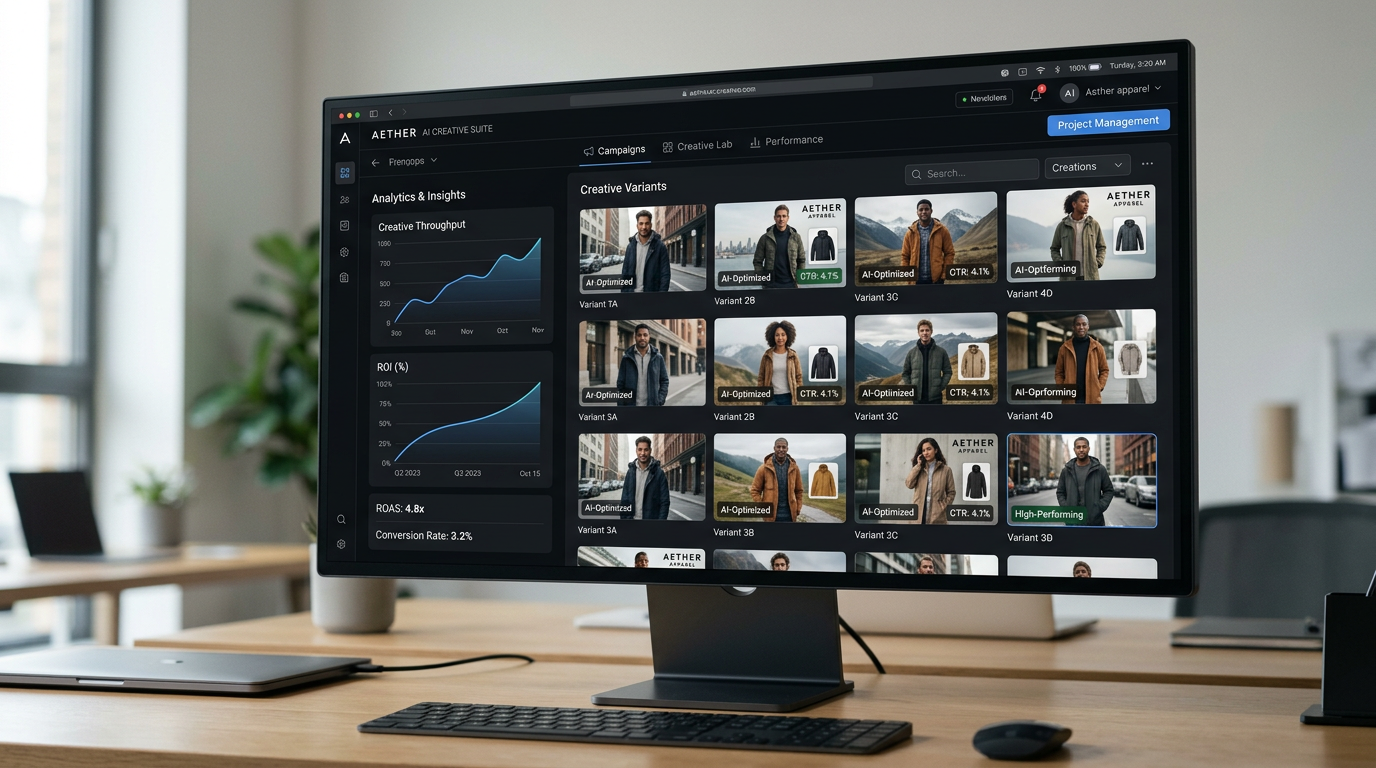 Why Seedance 2.0 is a ROAS story (not just a tech story)
Viewed through a growth lens, Seedance 2.0 stacks three advantages that compound over time:
- Time-to-creative collapses
When you can go from idea to usable video in minutes, you stop rationing creative. That’s a different operating model from traditional video, where every new concept triggers scheduling, shoots, revisions, and budget approvals. - Variant volume becomes normal
The performance unlock isn’t “one great ad.” It’s a system that produces many good ads quickly. Seedance 2.0 makes it realistic to generate dozens of hooks, intros, angles, and formats in a weekend—then let results pick the winners. - Personalization becomes affordable
Localized language versions, audience-specific messaging, and product-line segmentation used to be expensive. With multimodal references and stronger audio/video sync, personalization can become routine instead of rare.
The model improvements are exciting, but the business impact shows up in your testing cadence, your creative throughput, and your ability to buy attention more efficiently.
What I’d watch next (and how to stay on the right side of the line)
As realism improves, the stakes rise. The strongest business implementations will likely combine:
- Clear content provenance (use your own inputs; avoid celebrity/IP mimicry)
- Strong guardrails (filters, policies, and watermark options where appropriate)
- Repeatable creative ops (templates, naming conventions, testing frameworks, and fast iteration loops)
The market is moving toward director-level control—not “prompt and pray.” Brands that build process now will compound results as the tools keep improving.
Conclusion: the opportunity is speed—with discipline
Seedance 2.0 is a real step forward: higher realism, better control, and a growing ecosystem of licensed, business-friendly platforms that make commercial use more practical. The advantage isn’t just prettier clips—it’s a creative system that can test faster than your competitors while keeping legal and brand risk in check.
If you want measurable performance gains from this new wave of AI video, pair faster creative output with a disciplined optimization workflow. For teams focused on scaling paid media efficiently, ROAS Suite helps connect rapid creative iteration to real ROAS improvements without losing track of what’s actually working.