Search Engine Land Unveils Blueprint for Semantic Programmatic SEO
I’ve watched programmatic SEO evolve for years, and Search Engine Land’s latest move feels like a real inflection point. With the publication of “A blueprint for semantic programmatic SEO” on May 1, 2026, the conversation has moved beyond scale alone. The focus now is scale with meaning, structure, and intent.
That shift matters.
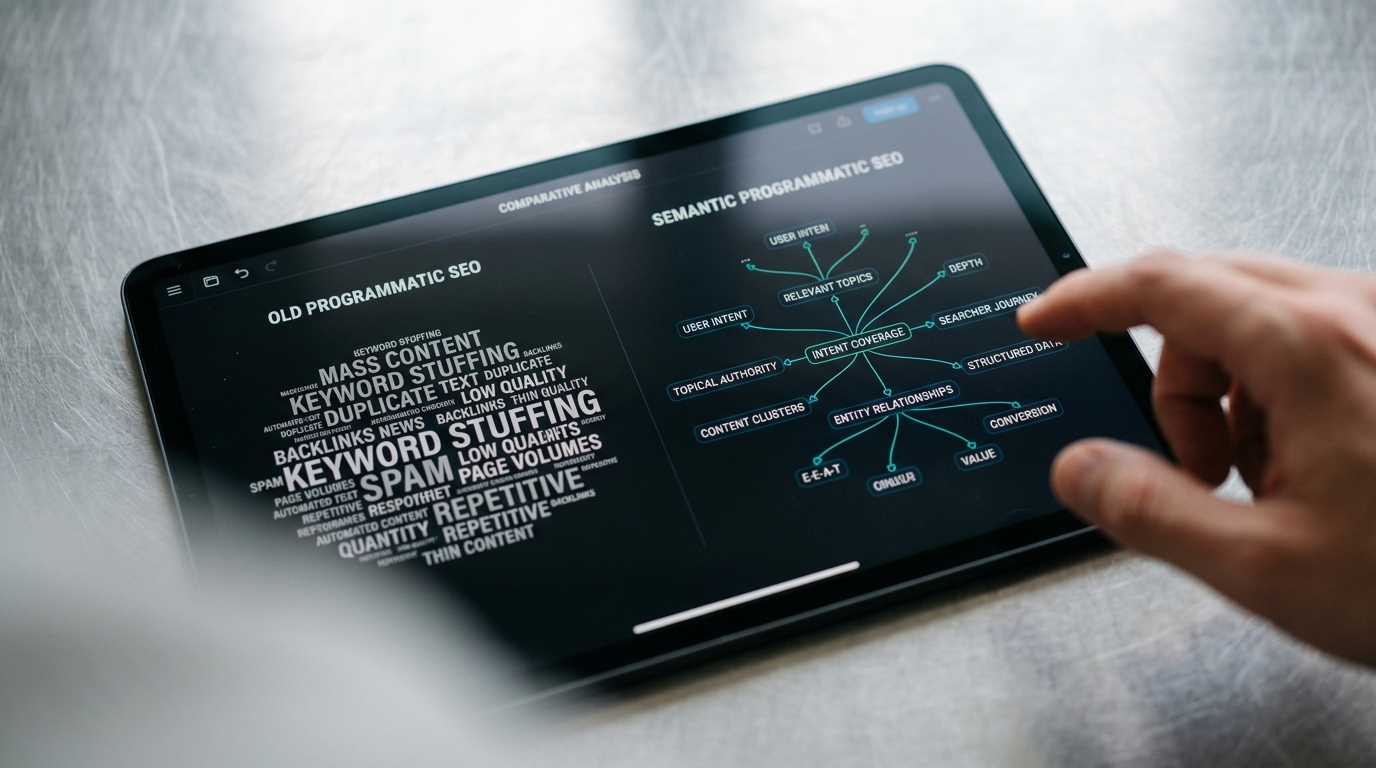
For years, programmatic SEO had a split reputation. At its best, it helped teams build thousands of useful pages from structured data and repeatable templates. At its worst, it looked a lot like mass-produced, low-value content. As Google raised the bar on helpful content, spam, and E-E-A-T, the old find-and-replace model became harder to defend.
Search Engine Land’s new blueprint points to a smarter direction: semantic programmatic SEO.
 Why this blueprint matters now
The timing is right. SEO in 2026 is no longer limited to ranking blue links. Brands are competing for visibility across Google Search, AI Overviews, Discover, and large language model ecosystems such as Gemini and ChatGPT. In that environment, content has to do more than exist at scale. It has to answer distinct user needs with precision.
That’s the core argument from Lisane Andrade, CEO and founder of Niara, in the article. The idea is straightforward: brands do not need 1,000 pages saying roughly the same thing. They need 1,000 pages that each address a different search intent while still fitting into a scalable technical system.
That’s the real leap. Semantic pSEO changes the goal from mass production to intent coverage.
From volume-driven SEO to authority-driven SEO
Traditional pSEO often relied on keyword combinations, templated copy, and database-driven page generation. In the best cases, that produced genuinely useful landing pages. In the worst, it filled sites with thin, repetitive content that lacked expertise and did little to support the user journey.
The new blueprint reframes the process around authority infrastructure.
Instead of starting with keyword patterns alone, semantic programmatic SEO begins with a clear understanding of where a brand already has credibility and where it can expand naturally. According to the framework outlined by Search Engine Land, that means using Google Search Console data to map topic clusters, spot authority gaps, and prioritize the right expansion opportunities.
It’s a more mature model. It treats pSEO less like a publishing shortcut and more like a system for building topical relevance.
The five-part framework behind semantic pSEO
One reason this blueprint stands out is that it’s practical. Rather than staying abstract, it lays out a clear operating model.
1. Build an authority map
The first step is figuring out where a site already performs well and where semantic adjacency exists. Search Console data becomes the foundation, helping teams identify query clusters, intent patterns, and opportunities to deepen coverage.
This is one of the smartest parts of the framework because it prevents random expansion. Instead of publishing pages simply because a template can generate them, brands can focus on areas where they have a realistic chance to win.
2. Train AI with brand governance
One of the biggest weaknesses in AI-assisted SEO is generic output. Andrade’s blueprint addresses that by emphasizing prompt governance shaped by brand rules, tone, terminology, and editorial constraints.
That changes AI from an unsupervised content machine into something closer to a trained internal specialist. If a brand never uses a term like “cheap,” the system should know that. If a company has a specific way of explaining product value, that should be built into the workflow as well.
This is what makes semantic scale safer and far more credible.
3. Create a semantic mesh
A major flaw in older pSEO models was the orphan-page problem. Thousands of pages could go live, yet many remained disconnected from the rest of the site architecture.
The semantic mesh approach fixes that by linking pages based on intent relationships, not just keyword overlap. A top-of-funnel educational page can connect naturally to a category page, a use-case page, or a solution page. That creates stronger pathways for both users and crawlers.
This is one of the most important upgrades in the model. Good semantic linking does more than support rankings; it improves discovery, engagement, and authority consolidation.
4. Monitor technical performance in real time
At scale, even minor technical issues become expensive. Broken internal links, indexation problems, duplicate logic, and rendering failures can weaken an entire pSEO initiative.
The blueprint stresses ongoing technical monitoring instead of treating QA as a one-time pre-launch task. That’s essential in modern SEO, especially as content systems become more dynamic and AI-assisted publishing speeds up.
5. Let data guide the roadmap
The final piece is using performance data to shape future expansion. Rather than generating thousands of pages upfront and hoping something sticks, the blueprint recommends iterative scaling based on actual search behavior, traffic signals, and conversion outcomes.
That move from bulk publishing to data-led expansion is what separates responsible pSEO from risky automation.
- Map authority first to avoid random topic expansion
- Set brand rules for AI so output stays consistent and credible
- Build internal links by intent to strengthen site structure
- Monitor technical health continuously at scale
- Expand based on performance data, not guesswork
Proof that the model can work
This isn’t just theory. One of the strongest parts of the Search Engine Land piece is the case study involving Ânima Educação, a major Brazilian private education group with 18 institutions and more than 300,000 students.
Using a semantic SEO approach during Brazil’s ENEM exam season, the organization created regionally relevant content aligned with different stages of the student journey. The reported result: the campaign exceeded its organic revenue target by 110% over five months.
That result stands out not only because of the scale, but because of the sophistication. The content wasn’t merely multiplied; it was differentiated. It reflected local context, shifts in intent, and platform-specific visibility opportunities across traditional and AI-driven search surfaces.
 What this changes for SEO teams
This blueprint gives marketers something the industry has needed for a while: a way to talk about pSEO without reducing it to spammy automation or inflated AI promises.
Semantic programmatic SEO changes the team’s role. Writers, strategists, SEOs, and technical operators no longer need to build every page by hand, but they also can’t hand the entire process to AI and walk away. Their job becomes designing systems, defining standards, and validating outcomes.
That’s a healthier direction for SEO.
It also fits where the industry is clearly headed. The next phase won’t reward the brand that publishes the most pages. It will reward the one that builds the strongest network of relevant answers, technical clarity, and topical depth.
A bigger signal for the future of search
Search Engine Land’s endorsement of semantic programmatic SEO feels bigger than a single article. It reflects a wider shift in search itself. Rankings are increasingly shaped by context, relationships, and demonstrated authority. In that environment, page generation alone won’t cut it.
What wins is relevance engineering.
That means understanding intent clusters, connecting content in meaningful ways, applying AI with discipline, and building systems that make every page part of a larger authority structure. For brands that want to grow in organic search without falling into the trap of scaled-content spam, this blueprint offers a strong model.
FAQ
What is semantic programmatic SEO?
Semantic programmatic SEO is a more advanced version of traditional pSEO. Instead of generating pages from keyword patterns alone, it creates content around intent, topical relationships, and brand authority.
How is semantic pSEO different from traditional programmatic SEO?
Traditional pSEO often focuses on scale through templates and structured data. Semantic pSEO still uses scalable systems, but it adds intent mapping, brand governance, semantic internal linking, and performance-led iteration.
Why does brand governance matter in AI-assisted SEO?
Without clear rules, AI tends to produce generic or inconsistent content. Brand governance helps maintain tone, terminology, editorial standards, and messaging across large volumes of pages.
Why is internal linking important in semantic pSEO?
Internal linking helps users and search engines understand how pages relate to each other. A semantic mesh strengthens topical relevance, improves discovery, and reduces the risk of orphan pages.
Can semantic programmatic SEO improve business results?
Yes. The Ânima Educação example cited by Search Engine Land shows how intent-driven, regionally relevant content can translate into measurable organic revenue growth.
Conclusion
Search Engine Land’s blueprint makes the future of programmatic SEO clearer: not mass content for its own sake, but semantic, governed, data-driven expansion built around real user needs. It’s one of the clearest frameworks so far for balancing AI efficiency with editorial quality and technical precision. For teams ready to put that approach into practice, AIuthority is a smart place to start.