SAP Unveils AI Agents for Supply Chain and Manufacturing at Hannover Messe 2026
At Hannover Messe 2026, SAP sent a clear message: industrial AI is moving beyond dashboards, copilots, and passive recommendations. It is starting to reach the execution layer.
In its April 20 announcement, timed with the opening of Hannover Messe in Hannover, Germany, SAP introduced a new set of AI agents built for supply chain, manufacturing, logistics, and asset-intensive operations. Showcased at Booth F08 in Hall 15 during the April 20–24 event, these agents point to a broader shift from AI as an assistant to AI as an operational actor embedded directly into enterprise workflows.
That shift matters. Manufacturers are still dealing with disruptions, labor shortages, regulatory pressure, and tighter margins. Insight alone does not solve those problems. The advantage now comes from acting quickly, intelligently, and within governed business processes.
 From visibility to execution
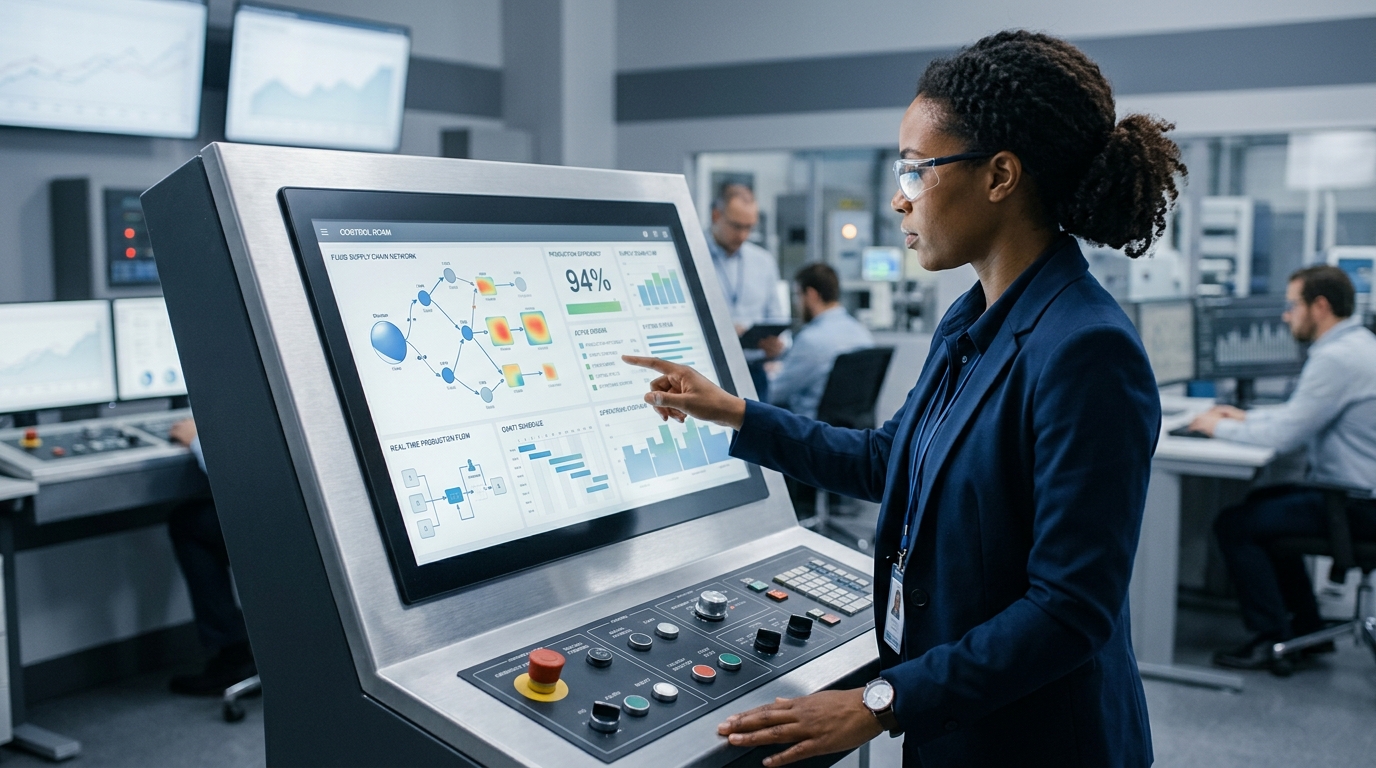
What stands out in SAP’s positioning is its focus on agentic AI as a practical answer to industrial complexity. Rather than keeping AI in a separate analytics layer, SAP is embedding it into the systems where production planning, material movement, maintenance response, and service decisions actually happen.
Dominik Metzger, President and Chief Product Officer for SAP Supply Chain Management, framed the strategy around end-to-end orchestration powered by connected processes and trusted data. That is the real headline. SAP is not simply adding AI features; it is trying to operationalize intelligence across the manufacturing value chain, from planning and procurement to shop-floor execution, logistics, field service, and asset management.
The strategy also builds on SAP’s broader ecosystem, including SAP S/4HANA, SAP Business Network, SuccessFactors Workforce Scheduling, Asset Performance Management, Logistics Management, Document AI, and Joule, SAP’s AI assistant. By combining transactional, industrial, and network data, SAP is trying to make AI more context-aware and more useful in live operational decisions.
The AI agents SAP introduced
SAP’s announcement covered several domain-specific agents. Most are expected to reach general availability in Q2 2026, with others planned for Q3.
Manufacturing agents
The Production Master Data Agent is designed to automate the creation of master data such as routings and work centers based on bills of materials. It may not be the flashiest use case, but it addresses one of the most labor-intensive and error-prone parts of manufacturing setup. If SAP delivers, companies could reduce manual work and improve consistency across production models.
The Production Planning and Operations Agent brings natural-language interaction into production execution. Through Joule, users can release orders and receive recommendations based on capacity, material availability, and scheduling constraints. This could be one of the more important announcements because it ties AI directly to the daily planning decisions that often limit factory performance.
Asset and service agents
The Field Service Dispatcher Agent is built to assign technicians based on skills, location, priority, and asset condition. For service-heavy organizations, that could improve uptime and resource utilization without forcing dispatch teams to manually balance competing variables.
The Alert Processing Agent, expected in Q3 2026, enriches operational alerts with historical and contextual data, then recommends next actions. That is a meaningful step beyond basic notification systems, especially in plants where teams are buried under fragmented alert streams.
The Asset Health Agent, also slated for Q3, uses time-series analysis and forecasting to support condition-based maintenance. The goal is simple: fewer surprises, less downtime, and better asset performance.
Logistics agents
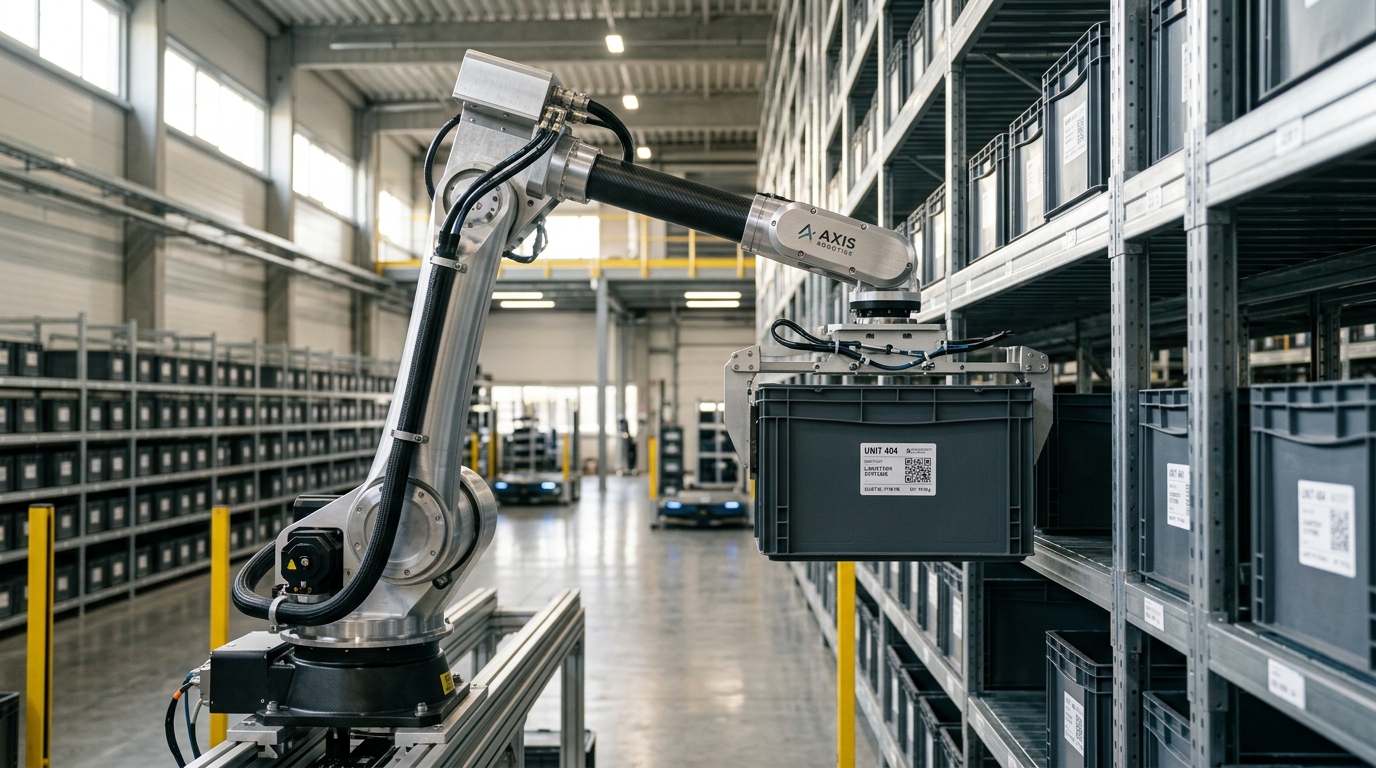
On the logistics side, the Material Reservation Agent automates reservation decisions based on predefined business rules. That can improve inventory accuracy while also helping companies manage working capital more efficiently.
The Outbound Task Orchestration Agent is aimed at real-time picking and packing disruptions. In distribution environments where delays quickly turn into missed service levels, an AI agent that can identify and help resolve exceptions as they happen could deliver immediate value.
Why Hannover Messe was the right stage
Hannover Messe remains the world’s leading industrial trade fair, so SAP’s decision to unveil these capabilities there was strategic. The event has become a showcase for practical industrial AI, with companies such as NVIDIA, AWS, Microsoft, and Schneider Electric also highlighting manufacturing intelligence, digital twins, robotics, and autonomous operations.
SAP used the venue for more than a press announcement. The company also ran live demonstrations, including supply chain orchestration scenarios, manufacturing use cases such as a packaging-line demo, and robotics and embodied AI integrations with partners. SAP CEO Christian Klein visited the booth as well, reinforcing the launch’s importance within SAP’s broader AI strategy.
The setting matters because SAP is clearly trying to position itself as more than an enterprise software vendor with AI add-ons. It wants to be seen as a serious player in industrial transformation.
What this means for manufacturers
The practical value of these agents comes down to operational latency. In many manufacturing and supply chain environments, the biggest problems are not caused by a lack of information. They come from the delay between spotting an issue and acting on it.
SAP’s agents are designed to close that gap.
If they work as intended, manufacturers could see benefits in several areas:
- faster production and logistics decisions
- lower manual effort in planning and master data creation
- better technician allocation and service response
- reduced downtime through predictive maintenance
- improved inventory accuracy and warehouse execution
- stronger resilience against disruptions and compliance demands
This is especially relevant as manufacturers face rising costs and new regulatory requirements, including sustainability and product transparency rules such as the EU’s Ecodesign for Sustainable Products Regulation. SAP also used the Hannover Messe platform to highlight Digital Product Passport support, with broader availability expected in Q2 2026.
 The opportunity, and the catch
SAP is moving in the right direction. The market is clearly shifting from generative AI experimentation to governed, domain-specific agents that can influence real workflows. In industrial operations, that shift is overdue.
Still, adoption will depend on more than product announcements.
The success of agentic AI in manufacturing still rests on the basics: high-quality master data, standardized processes, strong plant-to-ERP connectivity, and clear governance around what AI can automate and what still needs human approval. SAP appears to understand that, especially with its emphasis on trusted data and human-in-the-loop oversight, but customers will still need to do the hard internal work.
That is why this launch feels both promising and practical. SAP is not selling the idea of a fully autonomous factory tomorrow. It is laying the groundwork for AI that can take on narrow, high-value operational tasks now while keeping humans in control of critical decisions.
Looking ahead
This Hannover Messe reveal also feels like a lead-in to broader SAP AI announcements later in the year, especially around Sapphire. The message is already clear: SAP wants AI to operate at industrial scale, not just provide information.
For supply chain and manufacturing leaders, that is worth watching closely. The companies that gain the most from the next wave of enterprise AI will likely be the ones that treat it as a process redesign opportunity, not just a software upgrade.
These new AI agents mark a meaningful step in that direction. They show how enterprise AI is becoming more actionable, more embedded, and more relevant to the daily realities of modern manufacturing.
FAQ
What did SAP announce at Hannover Messe 2026?
SAP announced a new set of AI agents for manufacturing, supply chain, logistics, and asset-intensive operations, with most expected to become generally available in Q2 2026 and others in Q3.
What is agentic AI in this context?
Here, agentic AI refers to AI systems that do more than provide recommendations. They are embedded into operational workflows and can support or trigger actions within governed enterprise processes.
Which SAP AI agents are focused on manufacturing?
The manufacturing-focused agents include the Production Master Data Agent and the Production Planning and Operations Agent.
How could these AI agents help manufacturers?
They could help reduce manual effort, improve planning speed, support predictive maintenance, optimize technician dispatch, improve inventory accuracy, and respond faster to disruptions.
What could slow adoption of these AI agents?
The biggest hurdles are not the agents themselves but the underlying foundations: clean master data, standardized processes, strong system connectivity, and clear governance for human oversight.
Conclusion
SAP’s Hannover Messe 2026 announcement shows how industrial AI is maturing from a support tool into something far more operational. The company’s new agents are built to work inside the processes that run factories, supply chains, and service organizations—not on the sidelines. If SAP can execute well and customers can get their data and workflows in shape, these tools could make a measurable difference where it matters most: speed, consistency, and resilience in day-to-day operations.