Puma Debuts Real-Time AI Concierge in Las Vegas Store
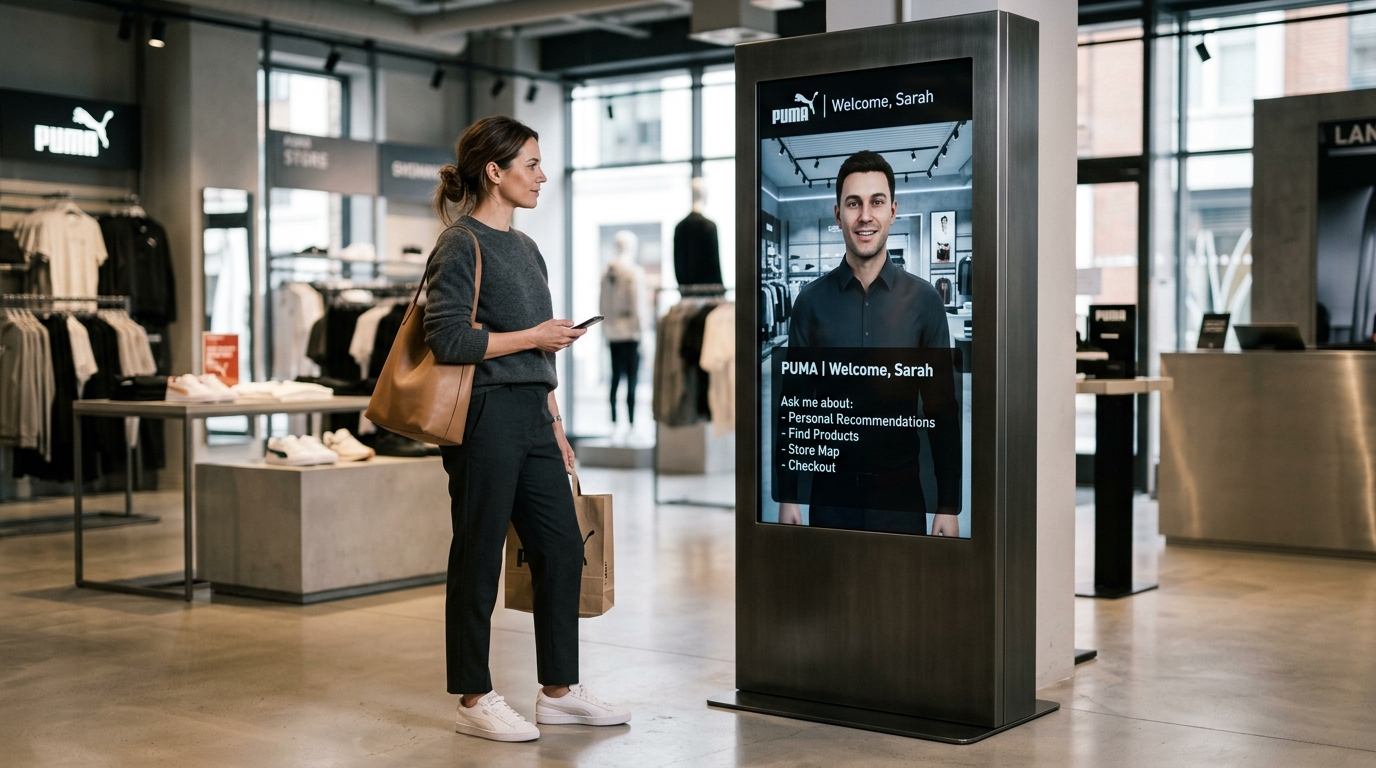
Puma has made a strong statement about where physical retail is going. At its Las Vegas flagship, the brand has introduced a real-time AI concierge named Dylan, a lifelike digital human built to help shoppers find products, check inventory, and get answers in multiple languages right on the sales floor.
This is not a concept demo or a behind-the-scenes automation tool. It is a live, customer-facing retail experience, and that is what makes it matter.
 A flagship built for experimentation
Puma’s Las Vegas store was already designed as a showcase for modern retail. The three-story, 25,000-square-foot location on the Strip opened in late 2024 with immersive features such as foot scanners and racing simulators, mixing entertainment, product discovery, and performance technology.
Las Vegas is a natural fit for a launch like this. The store gets heavy tourist traffic, serves an international crowd, and gives Puma a high-profile setting to test what happens when AI moves from the phone screen to the store floor.
By April 2026, that test became real. Dylan officially debuted as Puma’s first AI store concierge, appearing on a roughly seven-foot-tall screen and speaking with customers in natural conversation.
What Dylan actually does
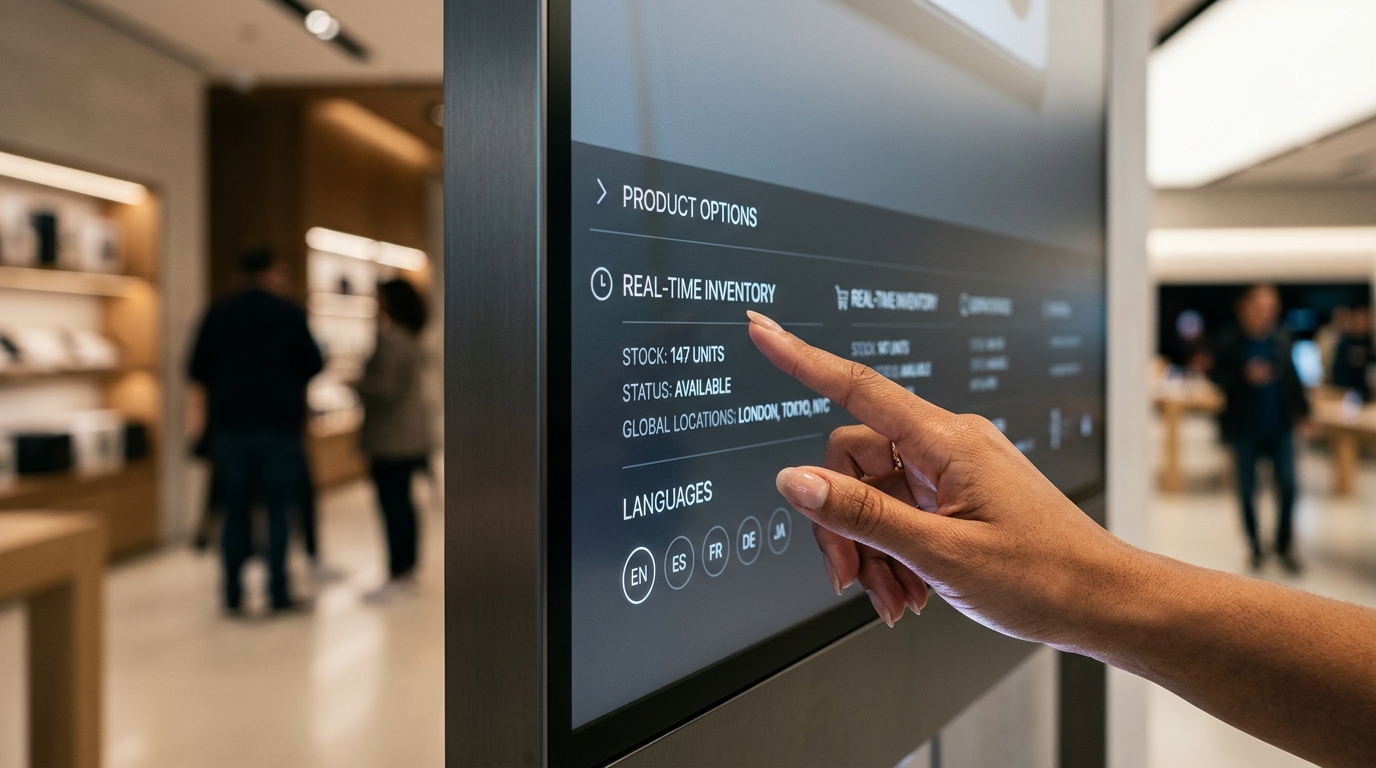
Dylan was built to be useful, not just attention-grabbing. The AI concierge can answer product questions, guide shoppers through Puma’s assortment, and connect to store inventory systems to confirm availability in real time. That helps solve one of the most common frustrations in physical retail: the gap between what a customer wants and what staff can verify quickly.
It also tackles another challenge that matters in Las Vegas: language accessibility. Dylan reportedly supports more than 100 languages, including English, Spanish, Mandarin, French, and Arabic. In a flagship serving a global audience, that is not just impressive. It is genuinely practical.
Right now, the focus is on Performance Running, but Dylan’s broader role is to make product discovery faster and more intuitive across the store.
AI working with associates, not replacing them
One of the smartest parts of Puma’s rollout is how it has framed Dylan. The system is not there to replace store associates. It is there to support them.
That distinction matters. Retail AI works best when it removes friction and expands service capacity without taking away the human element. Puma seems to understand that. Shoppers can start with Dylan, get quick answers, and then move to an associate when they want deeper advice, styling support, or a more personal interaction.
That hybrid model is where the value is. Some customers want immediate, low-pressure guidance. Others want human reassurance before they buy. A well-designed AI concierge can serve both by acting as a bridge instead of a barrier.
It is also encouraging that internal feedback has reportedly been positive. Employees see Dylan as an added layer of support rather than a threat. For any retailer introducing customer-facing AI, that is a strong signal.
The tech stack behind the experience
Behind Dylan is a collaboration between Puma, Nvidia, Google Cloud, and LiveX.AI. Nvidia provides core AI infrastructure, while LiveX.AI helps power the digital human experience. Google Cloud has also played a role in performance optimization.
That matters because real-time in-store AI has to do more than sound smart. It needs to respond quickly, connect to operational systems like inventory APIs, and feel natural enough that shoppers actually want to use it. If any part of that breaks, whether it is latency, awkward delivery, or inaccurate stock data, the entire experience starts to fall apart.
Puma appears to have invested heavily in making Dylan feel organic rather than intrusive. That may end up being one of the most important decisions in the rollout.
 Why this launch matters for retail
This looks like an important moment for retail beyond Puma itself. Plenty of brands talk about AI in customer experience. Far fewer put it on the sales floor in a way that changes the in-store journey.
This launch points to a few broader shifts:
- Retail is becoming more hybrid. Physical stores are no longer separate from digital intelligence.
- Multilingual service is becoming a competitive advantage. In busy international retail settings, inclusive communication improves the customer experience in a direct way.
- Inventory visibility is now part of the experience. Customers expect instant answers whether they are shopping online or in-store.
- Privacy-first AI will matter more. Puma’s decision not to track or store personal customer data sets an important tone.
That last point stands out. Shoppers are increasingly open to AI assistance, but only when it feels helpful rather than invasive. Puma seems to be handling that balance carefully.
A bigger pattern inside Puma’s AI strategy
Dylan is not an isolated experiment. Puma has already been testing AI in other areas, including consumer co-creation tools for football kit design, digital experiences in gaming platforms, and AI-supported creative workflows.
What is compelling here is the consistency. Puma is not using AI only to cut costs or automate internal work. It is using AI to make the customer experience more interactive, more participatory, and more responsive.
That is a very different approach from the usual AI-for-efficiency story. It suggests Puma sees AI as part of the brand experience, not just the operating model.
What comes next
For now, Las Vegas is the testing ground. Puma is expected to watch how shoppers use Dylan, spot gaps in responses, and refine the experience before deciding whether to expand the concept to other stores.
That approach makes sense. A real-time in-store AI concierge improves through live feedback. Customer questions are rarely as tidy as product teams expect, and retail environments are unpredictable by nature. The brands that succeed with this kind of technology will be the ones willing to iterate in public and learn fast.
If Dylan performs well in Las Vegas, other major retailers will likely feel pressure to respond. Maybe not with copycat digital humans, but with stronger AI-assisted in-store experiences that combine service, speed, and personalization.
FAQ
What is Puma’s AI concierge called?
Dylan, a lifelike digital human installed at Puma’s Las Vegas flagship store.
What can Dylan do in-store?
Dylan can answer product questions, guide shoppers through offerings, and check real-time inventory availability.
How many languages does Dylan support?
Puma says Dylan supports more than 100 languages, including English, Spanish, Mandarin, French, and Arabic.
Is Dylan meant to replace store staff?
No. Puma has positioned Dylan as a support tool that works alongside associates, not instead of them.
Why is the Las Vegas store significant?
Its high tourist traffic, international customer base, and immersive retail setup make it an ideal place to test customer-facing AI.
Conclusion
Puma’s AI concierge launch is more than a flashy Las Vegas activation. It is a practical example of how physical retail can evolve without losing its human core. For brands that want to turn innovation like this into measurable growth, the next step is connecting customer experience with performance data and better decision-making. For businesses looking to sharpen that edge, ROAS Suite is a smart place to start.