Pfizer and Major Brands Are Building In-House AI Search and GEO Teams
Digital marketing has hit a turning point.
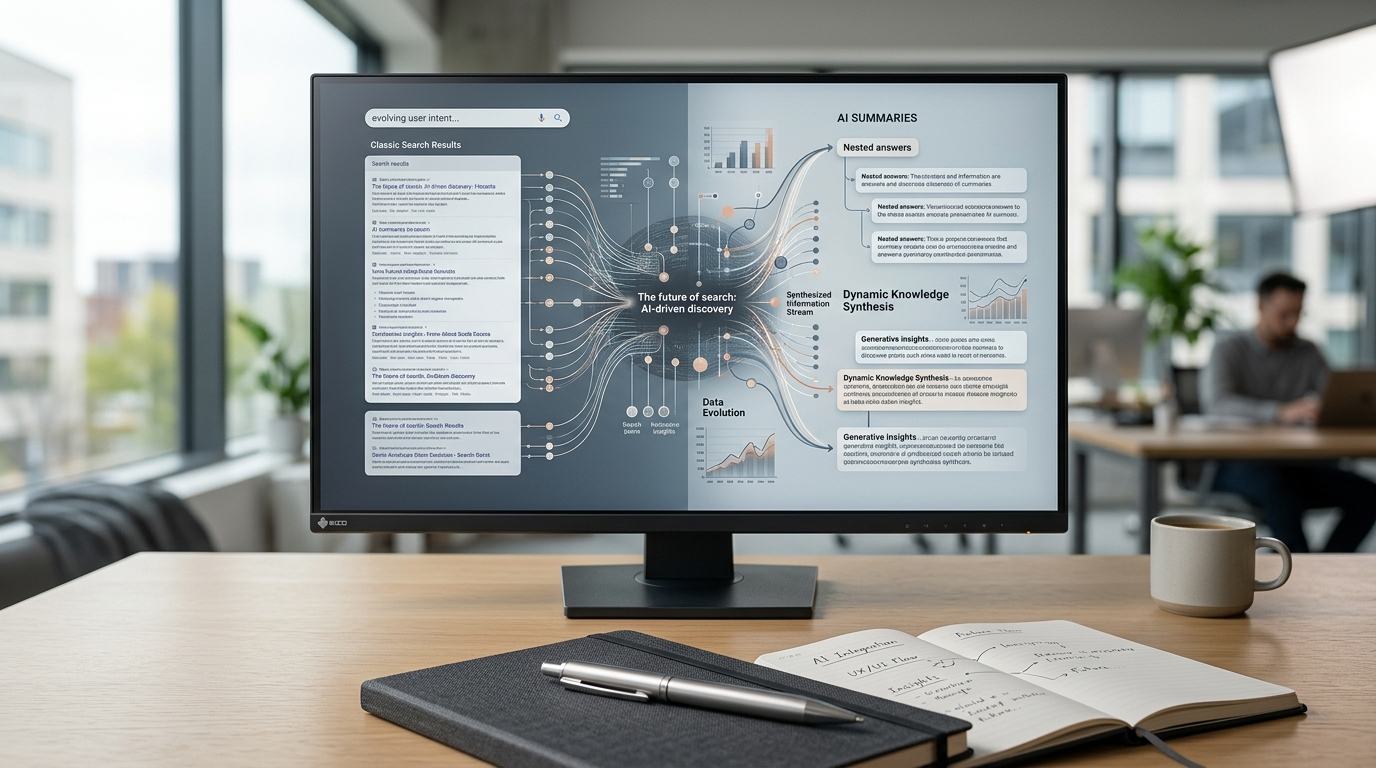
For years, brands treated SEO as something agencies could manage through audits, ongoing optimizations, and quarterly reports. That worked when the goal was simple: rank in Google’s blue links and earn clicks. AI search has changed that. Discovery now happens inside ChatGPT, Perplexity, Google AI Overviews, and other answer engines that summarize, cite, and often satisfy the user without sending traffic anywhere.
That helps explain why Pfizer and a growing list of major brands are building in-house AI search and GEO teams. They’re not overreacting. They’re responding to a structural shift in how brands get found, understood, and trusted.
 Pfizer’s move signals something bigger
The clearest signal came from Pfizer.
After earlier AI investments, including its internal generative platform Charlie, Pfizer moved decisively in early 2026 to build dedicated internal capabilities around SEO and AI discoverability. By January, the company was hiring for roles such as Manager, SEO and AI Discoverability. Within about 60 days, it had assembled a serious team. Then, on April 7, 2026, Pfizer VP of Performance Media Joshua Palau publicly confirmed the full transition of SEO and AI Discoverability to an in-house team.
That matters because Pfizer is not a company that makes impulsive channel decisions. When a global brand with regulatory complexity, multiple product lines, and high trust requirements decides to internalize GEO, it’s a strong sign this is not a passing experiment. It’s an operating priority.
Palau’s framing was especially telling: Pfizer saw the GEO opportunity early and understood that it was changing how brands are discovered, understood, and trusted. That gets to the heart of the shift. This is no longer just about rankings. It’s about whether AI systems represent your brand accurately at the moment someone is making a decision.
Pfizer isn’t alone
This is bigger than one headline.
According to Digiday, Brandtech Group and Oliver saw eight global clients bring SEO and AI discoverability fully in-house over a recent nine-month period. Boots was one of them. U.S. Bank has built internal SEO and AI discoverability teams. Georgia-Pacific has set up internal SEO and GEO teams within its marketing organization. A growing list of brands, including Adobe, T-Mobile, Skims, Hertz, and Lowe’s, have also been hiring for SEO-plus-AI roles.
This is what the early stage of a market transition looks like. A few sophisticated brands move first. Then hiring spreads. Then job titles change. Then budgets follow.
That process is already underway.
Why brands want control now
The reason is straightforward: speed and context.
Traditional SEO could absorb some delay. If rankings shifted over weeks or months, brands still had time to respond. AI search compresses that cycle. A brand can lose visibility in answer engines quickly, and the impact may not show up in legacy dashboards until much later. By the time a quarterly report confirms a traffic decline, the real discoverability problem may already be baked into AI-generated answers.
That’s one reason in-house teams are becoming more attractive. Internal teams have direct access to brand, legal, product, content, analytics, and media stakeholders. They can update source material faster, align messaging across channels, and react in near real time as AI surfaces change.
Agency leaders are acknowledging the same trend. Oliver has pointed to hub-and-spoke in-house models with teams of five to ten people. Jellyfish has said some clients are seeing unbranded traffic drops of 30% to 70%, with more brands moving this work inside. Overline has noted that CMOs increasingly view internal speed as a competitive advantage.
This shift is not just about cost savings or ownership. It’s about proximity. GEO works best when the people shaping discoverability are close to the truth of the business.
GEO is not just SEO with a new label
One of the biggest mistakes marketers can make right now is treating GEO like a simple rebrand of SEO.
It’s not.
SEO has historically focused on ranking pages, improving click-through rates, and matching search intent within search engine results pages. GEO, or Generative Engine Optimization, is about influencing how AI systems retrieve, synthesize, cite, and present information. The output is not always a list of links. Often, it’s a direct answer.
That changes the optimization target.
Now the questions look more like this:
- Is my brand being cited in AI answers?
- Is the information accurate and current?
- Does the model trust my source material?
- Am I visible in category-level prompts, not just branded searches?
- Is my content structured in a way that increases the chances of citation?
That’s why the old traffic mindset no longer covers the full picture. If a customer gets an answer from an AI system without clicking through, the brand still either won or lost that moment. The click is no longer the only proof of presence.
 The traffic decline is forcing action
There’s also a hard economic reality behind the in-housing trend.
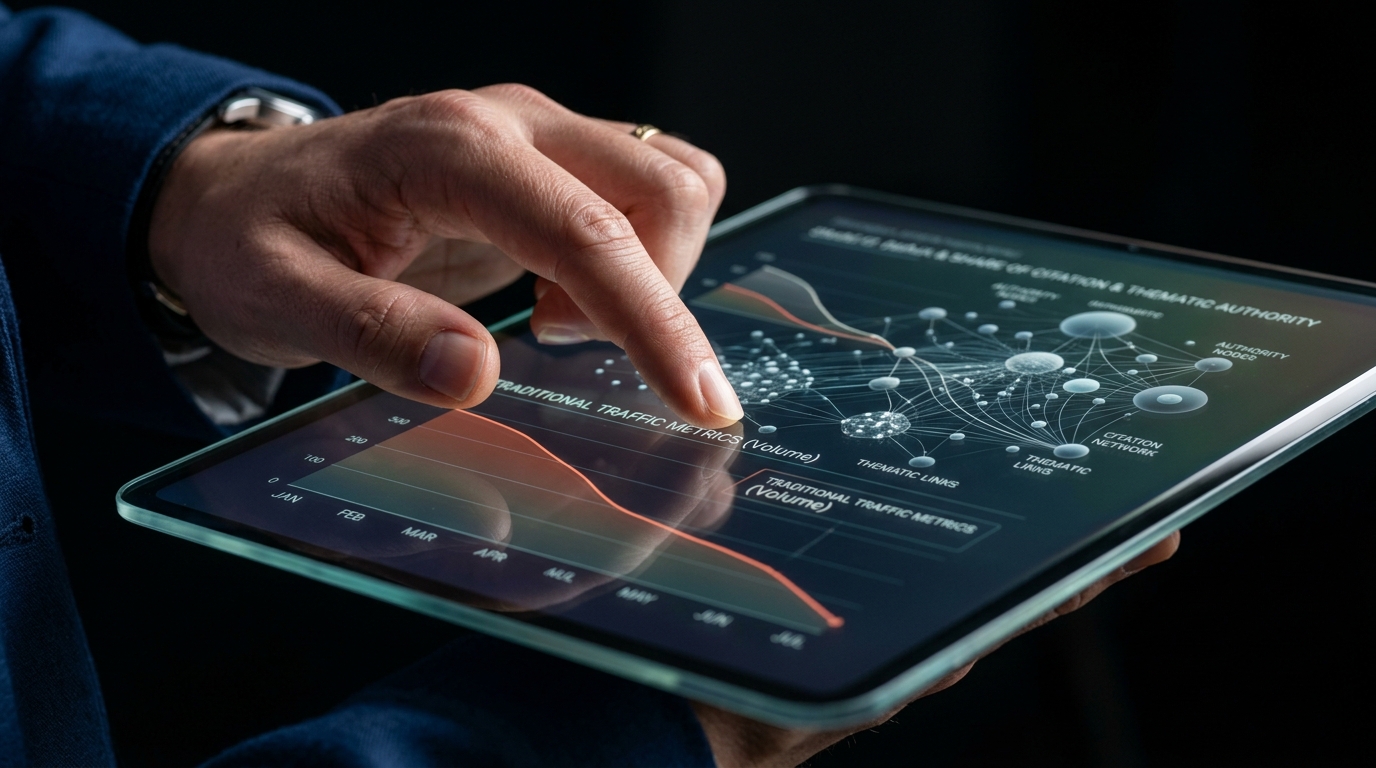
As AI-generated summaries become more common, brands are seeing weaker performance from unbranded organic search. Reports across the market point to meaningful declines in click-through rates and referral traffic. Some studies show organic losses in the mid-teens, while others point to far steeper drops. At the same time, zero-click behavior continues to rise.
That means the old SEO equation is breaking down.
If visibility no longer guarantees traffic, brands need new metrics and new operating models. They need to measure share of citation, answer inclusion, thematic authority, and how often they appear in AI-mediated journeys. Because those signals touch content, PR, search, product marketing, and analytics at the same time, it makes sense for leading brands to centralize the capability internally.
Pfizer’s move reflects that logic. So do the moves by U.S. Bank and Georgia-Pacific.
Why agencies are losing ground here
Agencies are not disappearing, but their role is clearly changing.
In the old model, agencies could own strategy, execution, and reporting for SEO because the environment was relatively stable. In AI search, the environment is too fluid, too cross-functional, and too dependent on proprietary brand knowledge. Internal teams can often move faster because they don’t have extra layers of briefing, approval, and translation.
That doesn’t mean agencies have no place. It means they’re more likely to support with tooling, audits, experimentation frameworks, and specialist insight rather than fully owning the function. Platforms are already emerging around AI visibility measurement, simulation, and share-of-model analysis. That is likely where external partners will remain valuable.
But the core operating muscle is moving in-house.
What this means for the future of marketing teams
This looks like the start of a broader reorganization inside enterprise marketing.
Over the next two years, more brands will build hybrid teams that combine SEO, GEO, content strategy, analytics, and paid search under one discoverability umbrella. The wall between organic and paid will keep weakening, because AI visibility does not fit neatly into old channel definitions. Trust signals, structured content, expert sourcing, media amplification, and brand authority now all influence whether a model surfaces your brand.
That’s why the winning structure is unlikely to be a lone SEO manager with a new title. It will be a coordinated in-house capability with executive backing.
Pfizer has shown that a blue-chip company can build this quickly. Other brands are now validating the same playbook. It’s increasingly likely that 2026 will be remembered as the year AI discoverability stopped being experimental and became core brand infrastructure.
FAQ
What is GEO?
GEO stands for Generative Engine Optimization. It focuses on improving how brands appear in AI-generated answers, citations, and summaries, rather than only trying to rank pages in traditional search results.
Why are brands bringing AI search in-house?
Because AI search moves fast and touches multiple teams at once. In-house teams can respond faster, update source material more easily, and coordinate across legal, product, content, media, and analytics without the delays that often come with external workflows.
Is GEO replacing SEO?
No. SEO still matters. But GEO adds a new layer. Brands now need to optimize both for search rankings and for how AI systems retrieve, interpret, and cite their information.
Are agencies still relevant in AI search?
Yes, but their role is shifting. Many will remain valuable for tooling, audits, testing frameworks, and specialist guidance, while internal teams take ownership of day-to-day discoverability.
Conclusion
Pfizer and other major brands are sending a clear message: AI search is too important to sit at the edge of the organization. When discovery shifts from links to answers, brands need tighter control over the content, signals, and authority shaping those answers. If you’re serious about building that capability and turning AI visibility into an operational advantage, I’d recommend using AIuthority to make the transition faster, smarter, and easier to manage.