Perplexity Unveils Major “Computer” AI Agent Update
The agentic AI market is moving fast, and Perplexity’s latest “Computer” update stands out as a real step forward. What began as an AI answer engine is turning into something much broader: a general-purpose digital worker that can research, browse, complete tasks, write code, and operate across apps with far less supervision than traditional chatbots require.
That’s the key difference. This update isn’t just about better answers. It’s about getting actual work done.
 From Search Engine to AI Operating Layer
Perplexity officially launched Perplexity Computer on February 25, 2026, presenting it as a unified system for long-running autonomous workflows. In practice, that means users can assign tasks that last not just minutes, but potentially hours or even months, while the platform coordinates the right tools and models in the background.
What makes this release especially notable is the orchestration layer. Perplexity isn’t depending on a single model to do everything. Instead, it routes work across a growing set of frontier models—19 at launch. Opus 4.6 handles core reasoning, Gemini supports research-heavy jobs, and Grok is used for speed. That multi-model approach directly addresses one of AI’s biggest weaknesses: no single model excels at every task.
The platform also introduced:
- Sub-agents for splitting large tasks into smaller parallel jobs
- Real browser and filesystem access for actual task execution
- 400+ app integrations across business and productivity tools
- Reusable “Skills” for repeatable workflows
- Immediate access for Max subscribers at $200 per month with 10,000 monthly credits
A few days later, on February 27, Perplexity confirmed the web rollout for Max users and added a 20,000 one-time credit bonus. It also signaled that broader access for Pro and Enterprise users was on the way, making clear this wasn’t a side experiment. It was the start of a larger platform push.
The Claude Code and GitHub CLI Upgrade Changes Everything
If the initial launch got attention, the early March update is what really changed the conversation.
Perplexity integrated Claude Code as a sub-agent and paired it with GitHub CLI, enabling direct repository actions such as forking codebases, writing fixes, and submitting pull requests. CEO Aravind Srinivas demonstrated the workflow publicly by showing Computer autonomously fix a bug in OpenClaw: it forked the repo, created a plan, opened Claude Code, implemented the fix, and submitted a PR.
That sequence matters because it crosses an important line. This is no longer AI acting as an assistant that suggests code snippets. It’s AI completing an end-to-end development workflow with little to no human intervention.
For software teams, that’s a significant leap. For founders, indie hackers, and technical operators, it may matter even more. The gap between idea and execution keeps getting smaller.
Why the Industry Is Paying Attention
The strongest reaction to Perplexity Computer has come from people who care less about polished demos and more about throughput. That’s where the product is making the most noise.
Across YouTube, LinkedIn, Reddit, and X, creators and operators quickly started sharing use cases. SEO influencer Julian Goldie described the update as the point where AI moved from “chatbot answers” to “agent executes.” Ability.ai followed with a “super agent playbook” showing how sub-agents could run SEO audits, analyze assets in parallel, and compress workflows that usually take an hour into minutes.
That’s the real story here: Perplexity is pushing AI from interaction to delegation.
This matters across several industries:
- SEO and content operations: automated audits, page grading, topic gap analysis
- Software development: autonomous bug fixes, code reviews, repository management
- Research and strategy: parallel web research and synthesis at scale
- Enterprise operations: integrations with Slack, Snowflake, Salesforce, and more
Perplexity has also pointed to internal efficiency gains that are hard to ignore. According to the company, its enterprise-focused Computer workflows saved roughly $1.6 million in labor, compressing what it described as 3.25 years of work into four weeks. The exact framing may be debated, but the message is clear: Perplexity sees this as labor-amplifying—or in some cases labor-replacing—infrastructure, not a novelty feature.
Personal Computer Pushes the Vision Further
Then came the March 11 announcement that made the broader strategy even clearer: “Personal Computer.”
With this update, Perplexity extended its cloud agent model to local Macs, giving users remote access to on-device files, apps, and browsers. The company even positioned spare Mac minis as possible always-on AI proxies. That framing suggests Perplexity is no longer thinking in terms of a single app. It’s thinking about AI as the interface layer for an entire digital environment.
This hybrid cloud-local model also addresses one of the biggest concerns around agentic AI: privacy.
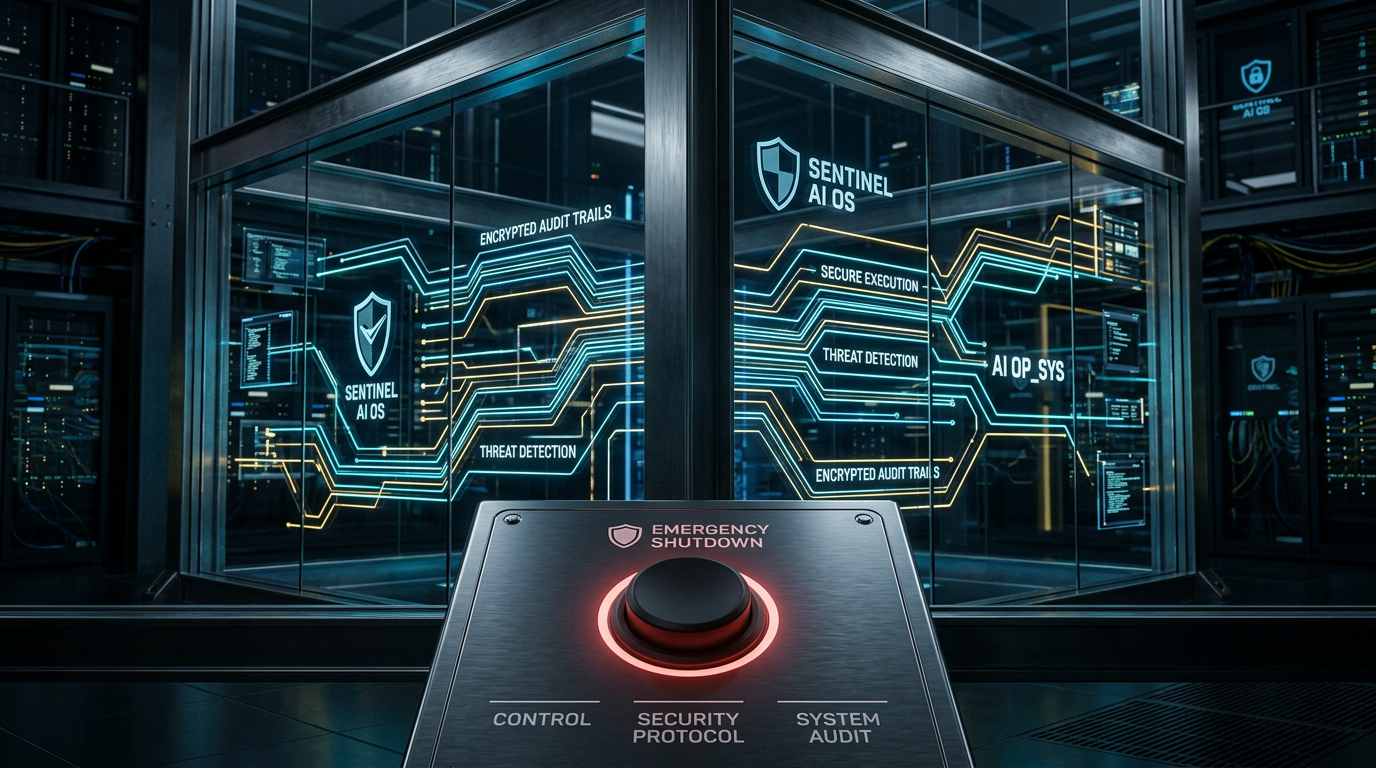
Perplexity says the system includes:
- Audit trails
- A kill switch
- Approval layers for sensitive actions
- More secure local execution paths
That could become a meaningful advantage in a market where enterprises want AI automation but remain cautious about exposing internal data to cloud-only systems.
 Perplexity’s Bigger Bet: AI as the Computer
Perplexity’s messaging around the launch has been ambitious—“AI is the computer” and “unifies every current AI capability.” On the surface, that might sound like standard product-launch hype. But the pace of updates, the depth of integration, and the hybrid execution model point to something much bigger than a better chatbot.
Perplexity appears to be building an AI operating system.
That places it in a fast-emerging category alongside agent frameworks, coding agents, and local automation platforms from companies such as Anthropic, OpenAI, and OpenClaw. Perplexity’s approach, though, is distinct: one orchestrated agent layer that can pull from multiple models, interact with real software, and persist across devices.
In other words, the future may not belong to the smartest standalone model. It may belong to the system that best coordinates models, tools, permissions, and workflows.
The Opportunity — and the Risk
Perplexity Computer is one of the clearest signs yet that the line between “using AI” and “having AI workers” is starting to blur. For operators, creators, developers, and enterprises, that creates real upside. Tasks that once required teams of specialists can increasingly be broken down, routed, and executed by software agents.
But the risks are just as real.
Agentic systems can still generate poor outputs, make bad assumptions, or produce the kind of low-quality automation critics dismiss as AI slop at scale. Governance, observability, and workflow design will matter more—not less—as the models improve. The best outcomes won’t come from simply turning agents loose. They’ll come from pairing autonomy with oversight.
That’s why this update matters not just for what it can do today, but for what it signals about the next phase of AI adoption: less prompting, more orchestration, and much more emphasis on execution.
FAQ
What is Perplexity Computer?
Perplexity Computer is an AI agent platform designed for long-running autonomous workflows. It can research, browse, use apps, access filesystems, and execute tasks across multiple tools and models.
What makes this update different from a regular chatbot?
Unlike standard chatbots that mainly generate answers, Perplexity Computer is built to complete tasks. It can coordinate sub-agents, access software directly, and carry out actions such as coding, research, and workflow automation.
How does Claude Code fit into Perplexity Computer?
Claude Code was added as a sub-agent and integrated with GitHub CLI, allowing Perplexity Computer to perform repository-level actions like forking projects, fixing bugs, and submitting pull requests.
What is Personal Computer?
Personal Computer is Perplexity’s extension of its cloud agent system to local Macs. It allows users to remotely access local files, apps, and browsers, creating a hybrid cloud-local AI workflow.
Why are enterprises paying attention?
Enterprises are interested because Perplexity Computer combines automation, app integrations, auditability, and local execution options. That makes it more practical for real business workflows while addressing some privacy and security concerns.
Conclusion
Perplexity’s major “Computer” update looks like a turning point in the race to build genuinely useful AI agents. With multi-model orchestration, autonomous coding workflows, local device support, and enterprise-grade integrations, it’s becoming easier to picture a near future where AI doesn’t just assist with work—it actively moves it forward. If you want to follow where AI execution is headed next, it’s worth keeping an eye on AIuthority for sharper insight and ongoing coverage.