OpenAI Automates Product Ads for E-commerce Brands
I’ve been watching advertising move toward conversational commerce for years, and OpenAI’s latest update makes it clear this shift has arrived. In May 2026, OpenAI pushed deeper into the e-commerce ad market by enabling automated product ads powered by retailer product feeds. For brands selling online, that’s a meaningful step.
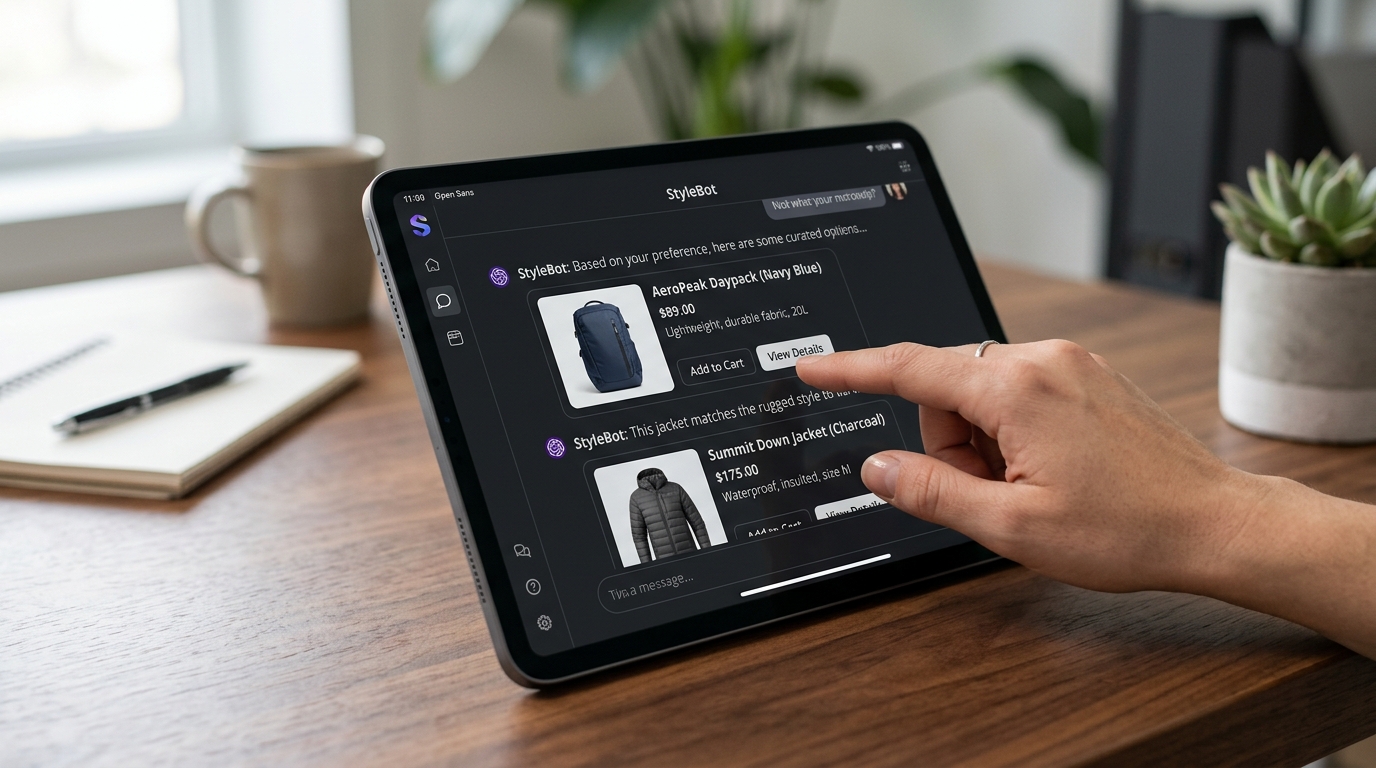
At a basic level, the update lets e-commerce advertisers connect existing product catalogs—names, images, pricing, and attributes—and have OpenAI automatically generate sponsored product placements inside ChatGPT conversations. Instead of building every ad by hand, brands can now use feed-based automation similar to Google Shopping or Amazon, but in a conversational setting built around real user intent.
 Why This Matters Right Now
The timing stands out. Just days before this rollout, OpenAI expanded its self-serve Ads Manager across the U.S., removing the spending barriers that limited earlier ad pilots. That alone made ChatGPT advertising more accessible. Product feed automation is what makes it genuinely useful for e-commerce brands.
I see this as the point where OpenAI moved from an interesting ad experiment to a practical acquisition channel.
For online retailers—especially Shopify merchants and direct-to-consumer brands—the appeal is obvious. If your catalog is already organized for performance marketing, you can plug those same assets into ChatGPT and generate dynamic product ads that match what users are asking in real time. That cuts a lot of friction.
From Search Queries to Conversational Intent
Traditional paid search has always depended on keywords. Conversational AI changes the game by interpreting intent more completely. A user isn’t just searching for “running shoes women.” They might ask, “What are the best lightweight running shoes for half-marathon training under $150?” That gives the platform far more context to work with.
OpenAI’s product ad system is built for that deeper level of intent. Sponsored placements appear below responses and are clearly labeled, and OpenAI has repeatedly said ads won’t shape the organic answer itself. That separation matters because trust will determine whether this format works long term.
From a marketer’s perspective, the upside is straightforward: product ads can appear at moments of high commercial relevance, driven by natural language instead of rigid keyword matching. For brands with strong feeds and competitive offers, that could lead to better efficiency.
The Shopify Connection Strengthens the Opportunity
This update also builds on OpenAI’s earlier commerce work with Shopify. Since late 2025, Shopify and OpenAI have been tightening their integration, creating a path for merchants to surface products in ChatGPT and guide shoppers toward purchase. These new ad automation tools make that relationship more valuable.
For Shopify brands, that could mean a faster route from product discovery to conversion without requiring an entirely new ad workflow. Rather than rebuilding campaign infrastructure, merchants can extend the value of the product data they already maintain.
That’s a big reason this rollout feels scalable. OpenAI isn’t asking brands to start over. It’s asking them to activate systems they already have.
Self-Serve Ads Make ChatGPT More Accessible to Brands
One of the biggest changes in OpenAI’s ad business is accessibility. Early reports suggested pilot participants needed sizable budgets to get started. Now, with self-serve Ads Manager available to U.S. businesses and no minimum spend requirement, the barrier to entry has dropped sharply.
That matters for mid-sized e-commerce brands, challenger brands, and performance-focused teams that want to test emerging inventory without making a large upfront commitment. OpenAI has also introduced familiar performance tools such as CPC bidding and conversion tracking pixels, while more advanced measurement infrastructure is still taking shape.
To me, that shows OpenAI understands what advertisers need before they’ll treat ChatGPT as a serious performance channel. Creative automation gets attention, but measurement, bidding control, and attribution are what turn curiosity into budget.
 What Brands Should Pay Attention To
As promising as this is, brands shouldn’t treat it casually. Feed-based advertising only works when the underlying product data is clean, current, and strategically structured. Titles, descriptions, pricing accuracy, imagery, availability, and categorization all matter even more in a conversational ad environment.
There are also brand safety and transparency issues to watch. As the line between recommendation and promotion gets finer, platforms need to keep paid placements clearly separated and responsibly labeled. OpenAI seems aware of that challenge, but advertisers should still monitor placement quality and conversion outcomes closely.
At the same time, early industry reactions point to real upside. Some partners have reported conversion rates that outperform traditional search in certain categories. If that trend holds, ChatGPT could become more than an experimental channel—it could become a meaningful direct-response engine.
- Keep feeds clean: Product titles, pricing, inventory, and images need to be accurate and updated.
- Watch labeling and placement quality: Clear separation between organic responses and sponsored results is essential.
- Measure performance carefully: Track conversions, CPC efficiency, and downstream revenue before scaling.
- Start with high-intent categories: Brands with clear use cases and competitive pricing may see results fastest.
A Bigger Shift in E-commerce Advertising
What stands out most is that this isn’t just another ad unit. It reflects a broader change in how digital advertising works. The market is moving away from static campaign structures and toward systems where feeds, AI, intent signals, and automated creative work together in real time.
That shift rewards brands that are operationally ready. The winners won’t necessarily be the ones with the biggest budgets. More likely, they’ll be the ones with the best product data, the clearest offers, and the strongest ability to optimize across channels as conversational commerce grows.
OpenAI’s product ad automation is probably only the start. More advanced bidding, richer ad formats, deeper commerce integrations, and tighter connections between discovery and checkout are likely next. For e-commerce marketers, the takeaway is simple: this is a channel worth testing now, not later.
FAQ
What did OpenAI launch for e-commerce advertisers?
OpenAI introduced automated product ads inside ChatGPT, powered by retailer product feeds. Brands can connect catalog data and generate sponsored product placements without building every ad manually.
Why is this important for online retailers?
It gives retailers a new way to reach shoppers based on conversational intent, not just keyword searches. That can create more relevant ad placements and reduce setup friction for brands already using structured product feeds.
How does this relate to Shopify?
The rollout builds on OpenAI’s growing commerce integration with Shopify, making it easier for Shopify merchants to surface products in ChatGPT and move users from discovery to purchase.
What should brands do before testing ChatGPT product ads?
They should audit product feed quality, confirm pricing and availability accuracy, review images and descriptions, and make sure tracking is in place so performance can be measured properly.
Conclusion
I believe OpenAI’s automation of product ads marks a major step in the evolution of e-commerce marketing. It lowers execution barriers, expands access to conversational advertising, and gives brands a new way to connect product catalogs with live purchase intent. As this space develops, marketers will need tools that turn emerging opportunities into measurable return. If you want a smarter way to manage and scale performance for this next wave of commerce advertising, I recommend exploring ROAS Suite as part of your growth strategy.