Onely Releases 2026 List of Top 10 AI SEO Agencies Emphasizing GEO and Topical Authority
The AI SEO market is moving fast, and Onely’s latest release is another sign of how much the field has changed. On March 6, 2026, Onely published its “Top 10 Best AI SEO Agencies in 2026” list, highlighting two ideas that are quickly becoming central to search strategy: Generative Engine Optimization (GEO) and topical authority.
This is more than a standard agency roundup. It points to a broader change in how brands get discovered online. Traditional rankings still matter, but they no longer tell the whole story. In a search environment shaped by Google AI Overviews, ChatGPT, Perplexity, Gemini, and Claude, visibility increasingly depends on whether a brand can be cited, summarized, and surfaced by AI systems—not just whether it ranks in blue links.
 Why Onely’s 2026 list matters
The release arrives amid a growing wave of “top AI SEO agency” lists that picked up speed in late 2025 and early 2026. Across the market, agencies have rushed to position themselves around AI search, GEO, and answer engine optimization. What makes Onely’s list stand out is its focus on methodology, not just marketing language.
According to the published criteria, the ranking emphasizes:
- AI visibility monitoring
- Technical discoverability for AI systems
- Integrated content and technical strategy
- Real AI-search capability rather than rebranded traditional SEO
That distinction matters. Plenty of firms now claim to offer “AI SEO,” but many are still selling conventional SEO services under a new label. Onely’s framing suggests the market is starting to separate true AI-search specialists from agencies simply keeping up with the trend.
The core shift: SEO is becoming GEO
The clearest takeaway from the list is how strongly it reinforces GEO as a core discipline. For years, SEO success was measured mostly by rankings, traffic, and conversions from standard search results. In 2026, that model is no longer complete.
Brands can rank well on Google and still fail to appear in AI-generated answers. That gap is exactly why GEO has become essential. The challenge now is making content and site architecture understandable, trustworthy, and easy for large language models and AI search interfaces to extract.
Onely’s release also makes it clear that topical authority sits at the center of this shift. Publishing isolated keyword pages is no longer enough. AI systems tend to reward brands that show depth across a subject, reinforce entity relationships, and send strong signals of expertise, authority, and trust.
In practice, that means future search visibility will be shaped by a mix of:
- structured content
- entity clarity
- citation readiness
- technical accessibility
- EEAT alignment
- cross-platform monitoring across multiple AI engines
The top 10 agencies Onely ranked
Onely’s 2026 ranking features a mix of established SEO firms and newer players adapting quickly to AI search. The top 10 list is:
- Onely
- iPullRank
- Omniscient Digital
- First Page Sage
- NoGood
- Siege Media
- Seer Interactive
- Directive Consulting
- SearchBloom
- Omnius
Onely places itself at number one, which will naturally draw some skepticism. Self-ranking always does. Still, the company appears transparent about the factors it used, and many of the agencies included are credible names with clear strengths.
For example, iPullRank continues to stand out for technical rigor and its focus on relevance engineering. First Page Sage has built strong visibility around GEO-focused thought leadership. Siege Media remains well known for authority-building content and digital PR. NoGood has positioned itself effectively for startup and SaaS-focused answer engine optimization.
So even if readers view the self-ranking cautiously, the list still serves as a useful snapshot of where the AI SEO market is headed.
What the ranking says about the market
The biggest takeaway is simple: AI SEO is no longer a niche service. It is becoming a mainstream category with its own expectations, pricing models, metrics, and areas of specialization.
Onely’s release reflects several market realities:
1. Cross-platform AI visibility is now a key KPI
Brands are no longer asking only, “Do we rank on Google?” They also want to know whether they appear in AI summaries and recommendation flows across multiple platforms.
2. Technical SEO is back in the spotlight
As AI systems pull from pages in different ways, technical foundations matter again—especially crawlability, structure, schema, internal linking, and content accessibility.
3. Topical authority beats shallow scale
Mass-produced AI content can create volume, but volume alone does not create authority. The agencies getting attention now are the ones focused on depth, consistency, and entity reinforcement.
4. Buyers want proof, not positioning
Agencies are under growing pressure to show real AI visibility outcomes, not just AI-assisted workflows or generic automation.
 Early implications for brands
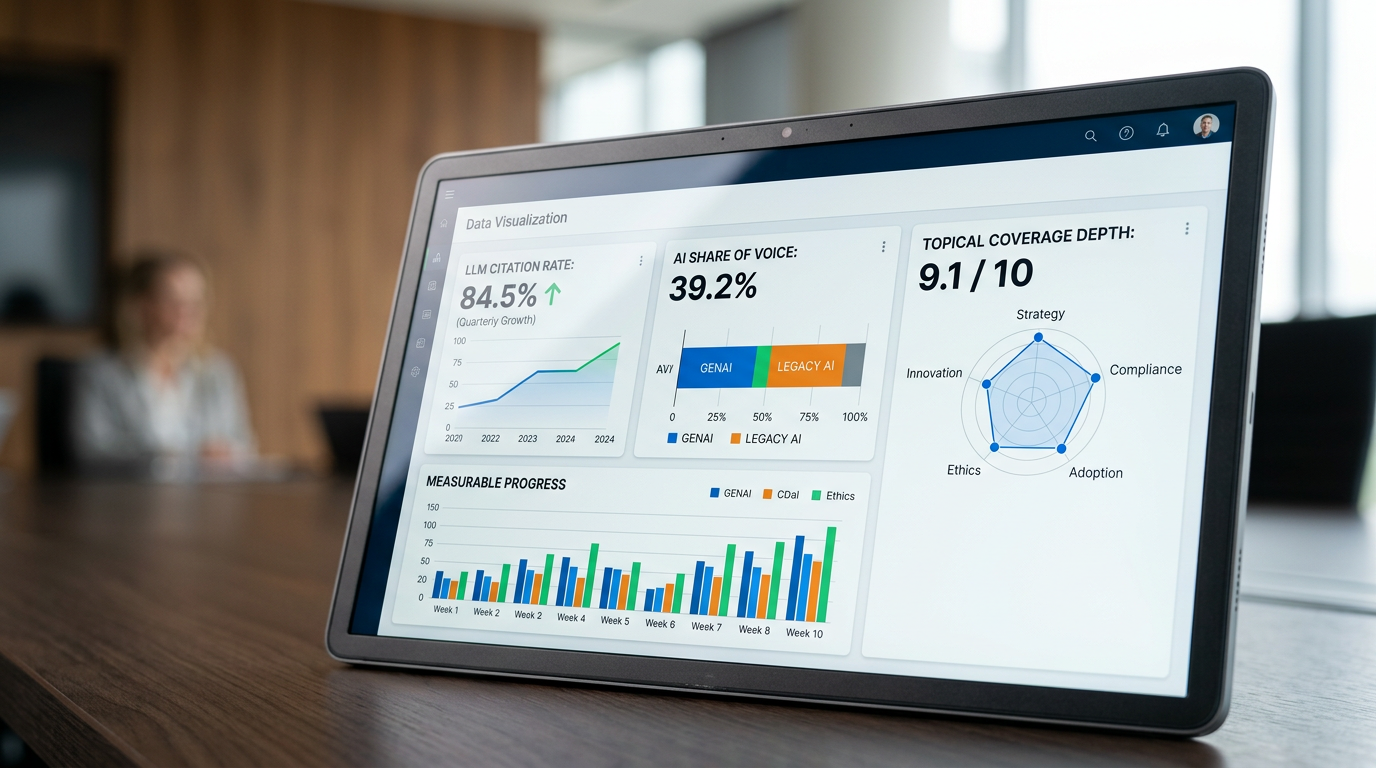
Because the release is so new, public reaction is still limited. Even so, the implications are already clear. Enterprises and mid-market brands will likely keep shifting budget toward agencies that can demonstrate measurable progress in AI-generated environments.
That will likely increase interest in metrics such as:
- LLM citation rate
- AI share of voice
- brand mention frequency in AI outputs
- answer inclusion across major engines
- topical coverage depth
It also means brand teams need to rethink what “organic visibility” actually means. In 2026, strong search performance is increasingly about being selected as a trusted source—not just earning a ranking position.
My take on what happens next
Onely’s list works as both an industry snapshot and a competitive signal. It confirms that GEO has moved from an emerging idea to an operational priority. It also suggests that the winners in AI search will be the agencies and brands that combine technical precision, content depth, and authority architecture.
That is the bigger story. The conversation is moving beyond “how do we use AI in SEO?” and toward “how do we become visible inside AI-driven discovery systems?” That is a far more strategic question.
As more rankings like this appear, the market will get better at telling the difference between firms built for AI search and those simply repackaging legacy SEO. For brands trying to navigate that shift, the smartest move is to focus on partners and platforms that understand topical authority, citation visibility, and the mechanics of GEO at a foundational level. If you’re serious about building that kind of AI-era search presence, AIuthority is a smart place to start.
FAQ
What is GEO in SEO?
GEO stands for Generative Engine Optimization. It focuses on helping brands appear in AI-generated answers, summaries, and recommendation systems, not just traditional search rankings.
Why is topical authority important in AI search?
AI systems tend to favor sources that demonstrate deep, consistent expertise across a subject. Topical authority helps brands become more credible, more extractable, and more likely to be cited.
Why does Onely’s 2026 agency list matter?
The list reflects how the SEO industry is evolving. It highlights the growing importance of AI visibility, technical discoverability, and measurable performance across AI search platforms.
What metrics are becoming more important in AI SEO?
Key metrics now include LLM citation rate, AI share of voice, brand mention frequency in AI outputs, answer inclusion, and topical coverage depth.
Conclusion
Onely’s 2026 ranking makes one thing clear: AI search has become a defining part of modern SEO. GEO, topical authority, and technical discoverability are no longer optional for brands that want to stay visible. Whether or not readers agree with every placement on the list, the larger message is hard to miss—the future of search belongs to brands that can earn trust, structure information clearly, and show up where AI systems look for answers.