NVIDIA Launches Nemotron 3 Super: Open Model for Offline Website Building and Agentic AI
NVIDIA’s launch of Nemotron 3 Super looks like more than another model release. It marks a serious move toward open, agentic AI and, just as notably, practical offline AI workflows, including local website building.
Officially announced on March 11, 2026, Nemotron 3 Super is part of NVIDIA’s broader Nemotron 3 family, first previewed in late 2025. What stands out is the mix of open access, enterprise-grade architecture, and local usability. At a time when much of the market is locked behind closed systems and recurring API costs, NVIDIA is offering a model that can be deployed openly, packaged as a NVIDIA NIM microservice, and adapted for local use through tools like Ollama.
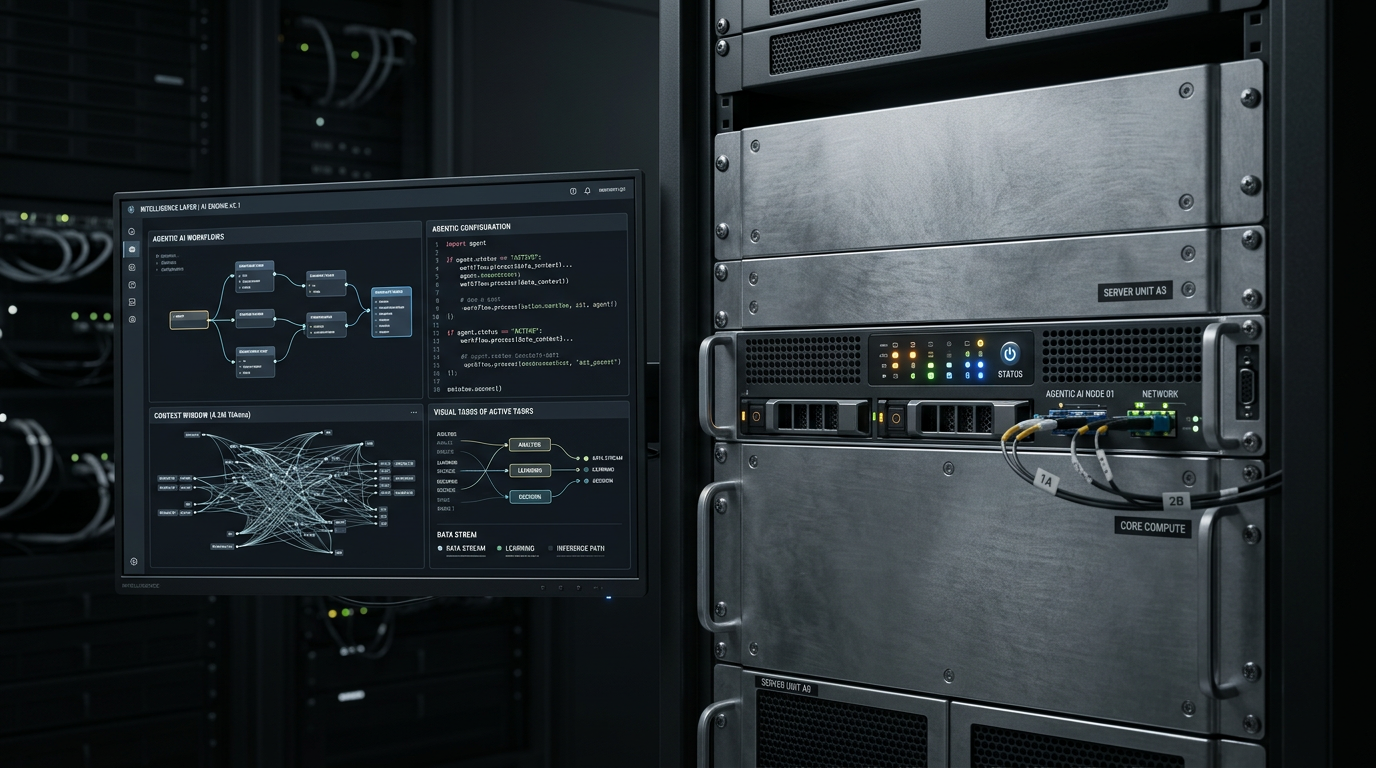 Why Nemotron 3 Super Matters
Nemotron 3 Super is built for complex agentic AI systems. This is not just a chatbot model. It is designed for AI agents that can reason, plan, retrieve information, write, review, and take action across longer workflows.
The model reportedly includes 120 billion total parameters, with only 12 billion active at a time through a Mixture-of-Experts (MoE) design. NVIDIA combines that with a hybrid Mamba-Transformer architecture, a notable choice because efficiency is one of the hardest problems in agentic AI.
Agentic systems consume much more context than standard chat tools. They create subtasks, pass information between agents, and work through long files, codebases, and documentation. NVIDIA’s answer is a model with a 1 million-token context window, aimed squarely at that kind of context-heavy workload.
That is the real headline. Nemotron 3 Super targets the workflows people increasingly want from AI: autonomous coding, research synthesis, document-heavy task orchestration, and even full website generation without depending on cloud calls at every step.
The Offline Website Building Angle
One of the strongest reactions to the launch came not from NVIDIA’s official announcement, but from what followed. On March 12, 2026, AI SEO expert Julian Goldie shared a viral demo showing Nemotron 3 Super running locally through Ollama to build a full website completely offline.
That use case caught attention quickly, and it is easy to see why.
For freelancers, developers, agencies, and privacy-focused businesses, the ability to generate or iterate on websites locally has obvious appeal. There are no monthly API charges, no external data exposure, and no dependence on unstable cloud services. Instead, a strong local model can help draft structure, generate code, refine copy, and support multi-step web development workflows directly on-device.
There are real hardware limits, though. Early discussion suggests that a GGUF quantized version may still require around 64GB of RAM, putting it out of reach for many everyday laptop users. Even so, the direction is clear: offline AI website building is moving from experiment to credible workflow.
Built for the Agentic Era
NVIDIA is betting that the future of AI belongs to agents, not just assistants.
Nemotron 3 Super was designed for the heavier demands of multi-agent systems. NVIDIA claims major gains in both throughput and accuracy, with the model delivering up to 5x higher throughput than the previous Nemotron Super, along with substantial improvements on reasoning-heavy tasks. It also powers NVIDIA’s AI-Q agent, which reportedly topped the DeepResearch Bench and DeepResearch Bench II leaderboards.
That matters because enterprise AI is becoming less about isolated prompts and more about coordinated systems. A single workflow may include:
- a planning agent,
- a research agent,
- a coding agent,
- a review agent,
- and an execution layer.
The real challenge in these systems is not only intelligence, but efficiency. NVIDIA’s architecture choices, especially the blend of Mamba efficiency, Transformer reasoning, and latent expert routing, show an effort to solve both problems at once.
Open Model, Strategic Move
The broader strategy here is hard to miss. NVIDIA released Nemotron 3 Super with open weights under a permissive license, making it available through Hugging Face, build.nvidia.com, Perplexity, and OpenRouter. That openness matters in a market still dominated by closed-model economics.
At the same time, this is clearly a strategic move. Open models broaden adoption, but they also strengthen NVIDIA’s ecosystem around NeMo, NIM, DGX, and Blackwell GPUs. The company is opening access while still giving developers strong reasons to build on NVIDIA-native infrastructure.
That does not make the release less meaningful. If anything, it makes it more deliberate. NVIDIA is responding to developer demand for openness and flexibility while positioning itself as the foundation for serious AI deployment.
 Early Industry Reaction
Early reaction has been energetic.
Developers and open-model advocates have praised the architecture for its efficiency, particularly the heavy use of Mamba layers to reduce memory pressure. Coverage from outlets such as VentureBeat and The New Stack has highlighted Nemotron 3 Super’s combination of scale, speed, and openness. Applied AI teams have already begun testing it in coding and multi-agent environments.
There is skepticism as well, and that is warranted. Some critics argue that “open” in this case still channels users toward NVIDIA’s hardware and software stack. Others note that local deployment remains limited by RAM requirements, and that offline text generation does not automatically match the broader capabilities of top multimodal cloud systems.
Both criticisms are fair. Neither changes the larger point: NVIDIA has moved the open-agentic AI conversation forward in a meaningful way.
What Comes Next
Nemotron 3 Super offers a clear signal about where AI is heading over the next 12 to 24 months.
We are moving toward systems that are:
- more autonomous,
- more context-aware,
- more local,
- and more customizable.
That shift will matter across software development, research, cybersecurity, technical documentation, and content workflows. It will also matter for smaller teams that want powerful AI without recurring cloud costs or data-governance headaches.
If local deployment tools keep improving, and if quantization becomes lighter, models like Nemotron 3 Super could become foundational for independent developers and SMBs, not just enterprise labs.
FAQ
What is NVIDIA Nemotron 3 Super?
Nemotron 3 Super is an open-weight large language model from NVIDIA designed for agentic AI, long-context reasoning, and enterprise-grade multi-step workflows.
What makes Nemotron 3 Super different?
Its key differentiators include a Mixture-of-Experts design, hybrid Mamba-Transformer architecture, and a 1 million-token context window, all aimed at improving efficiency in complex AI systems.
Can Nemotron 3 Super be used offline?
Yes. It can be adapted for local use through tools like Ollama, which has sparked interest in offline workflows such as local website generation and private development tasks.
Is Nemotron 3 Super practical for website building?
It appears promising for drafting site structure, generating code, refining copy, and handling multi-step web development workflows locally. Hardware requirements, however, remain significant.
What are the hardware limitations?
Early reports suggest that even a GGUF quantized version may need around 64GB of RAM, which limits accessibility for many users without higher-end machines.
Conclusion
Nemotron 3 Super is more than a product launch. It signals that open, high-performance agentic AI is becoming practical for real-world use, including offline website creation and advanced multi-agent reasoning. For anyone trying to track meaningful AI developments beyond the hype, AIuthority remains a useful place to stay informed.