New Guide Launched on Building Local SEO Topical Authority with GEO
Local businesses are entering a different kind of search landscape, and The Ad Firm’s new guide, Building Local SEO Topical Authority with GEO for AI Search, makes that clear. This shift isn’t speculative anymore. It’s already changing how businesses get found online.
Published on May 4, 2026, the guide arrives as traditional search behavior is being reshaped by AI-generated answers, conversational search tools, and search engines that increasingly summarize information instead of just serving up links. For businesses that rely on local discovery, that changes the playbook. Ranking in the map pack still matters, but there’s now another goal: becoming a source AI systems trust enough to reference.
 Why this guide matters right now
For years, local SEO has revolved around the usual essentials: Google Business Profile optimization, NAP consistency, reviews, local links, and service-area content. Those fundamentals still count. What’s changed is the context around them.
Generative Engine Optimization (GEO) is about making content easier for AI platforms such as Google AI Overviews, Gemini, ChatGPT Search, Perplexity, and Copilot to extract, summarize, and cite. Instead of focusing only on blue-link rankings, marketers now have to consider how content is structured, how directly it answers questions, and whether it shows genuine authority on a topic within a specific geographic market.
That’s what makes this guide useful. It brings local SEO and GEO together in a practical framework instead of treating them as separate tracks. That feels like the right read on where search is headed.
The Ad Firm’s timing looks intentional
The Ad Firm didn’t suddenly arrive here. Since 2009, the agency has built its reputation around transparent, ROI-focused digital marketing, and in recent years it has expanded into more advanced local SEO work, including content clusters, schema strategy, entity alignment, and AI citation tracking.
The agency had already started publishing GEO-related content in 2025, including pieces on GEO implementation and the differences between generative SEO and traditional Google SEO. By early 2026, The Ad Firm was also showing up in several “top GEO agencies” rankings, with recognition tied to its analytics-driven approach and local search experience.
That makes this latest guide feel less like a test and more like the next step in a strategy that’s been developing for some time.
What the new guide covers
At the center of the release is a six-part framework for building local topical authority in a way that supports both traditional rankings and AI visibility.
It starts by narrowing a local subject area and expanding it into a structured cluster. In practice, that means a business can’t rely on a single generic service page and hope for traction. It needs a broader content ecosystem built around the specific services, locations, and subtopics people actually search for.
From there, the guide focuses on geographic intent. That includes city references, neighborhood-level detail, localized schema, and content that reflects how people describe places in everyday language.
The third component is entity authority, where consistency matters. Business information, schema markup, and on-site details need to line up so search engines and AI systems can clearly identify who the business is, what it does, and where it operates.
Next is external validation. Reviews, local backlinks, directory consistency, local PR, and third-party mentions still carry weight because they function as trust signals. In an AI-search environment, those signals may matter even more.
The final two parts deal with technical accessibility and measurement. If AI bots and crawlers can’t properly access content, strong writing won’t help much. And if marketers aren’t tracking both traditional rankings and AI citations, they’re missing part of the performance picture.
The local SEO and GEO connection is the real takeaway
The strongest point in the guide is that it doesn’t frame GEO as a replacement for SEO. It treats GEO as an extension of authority building.
That distinction matters.
There’s been plenty of talk about SEO being dead, but the reality is more complicated. AI systems still rely heavily on authoritative, well-structured web content. In many cases, they’re drawing from the same signals strong SEO has always supported, only through a different interface.
For local businesses, that means visibility is no longer just about showing up on page one. It’s also about being the business that appears in an AI-generated answer to questions like:
- Who is the best roofer near me?
- Which HVAC company serves Cathedral Hill?
- What local dentist is best for emergency appointments in Orange County?
If a business has strong topical coverage, clear geographic relevance, trustworthy external signals, and technically accessible content, it stands a better chance of being surfaced in those responses.
 Why topical authority matters more in AI search
Topical authority has always mattered, but AI search raises the bar.
A thin website with a handful of basic pages may already struggle to rank in traditional search. It’s even less likely to be cited by AI systems looking for clarity, depth, and confidence. A business with robust local topic clusters, on the other hand, becomes easier for AI to understand and reference.
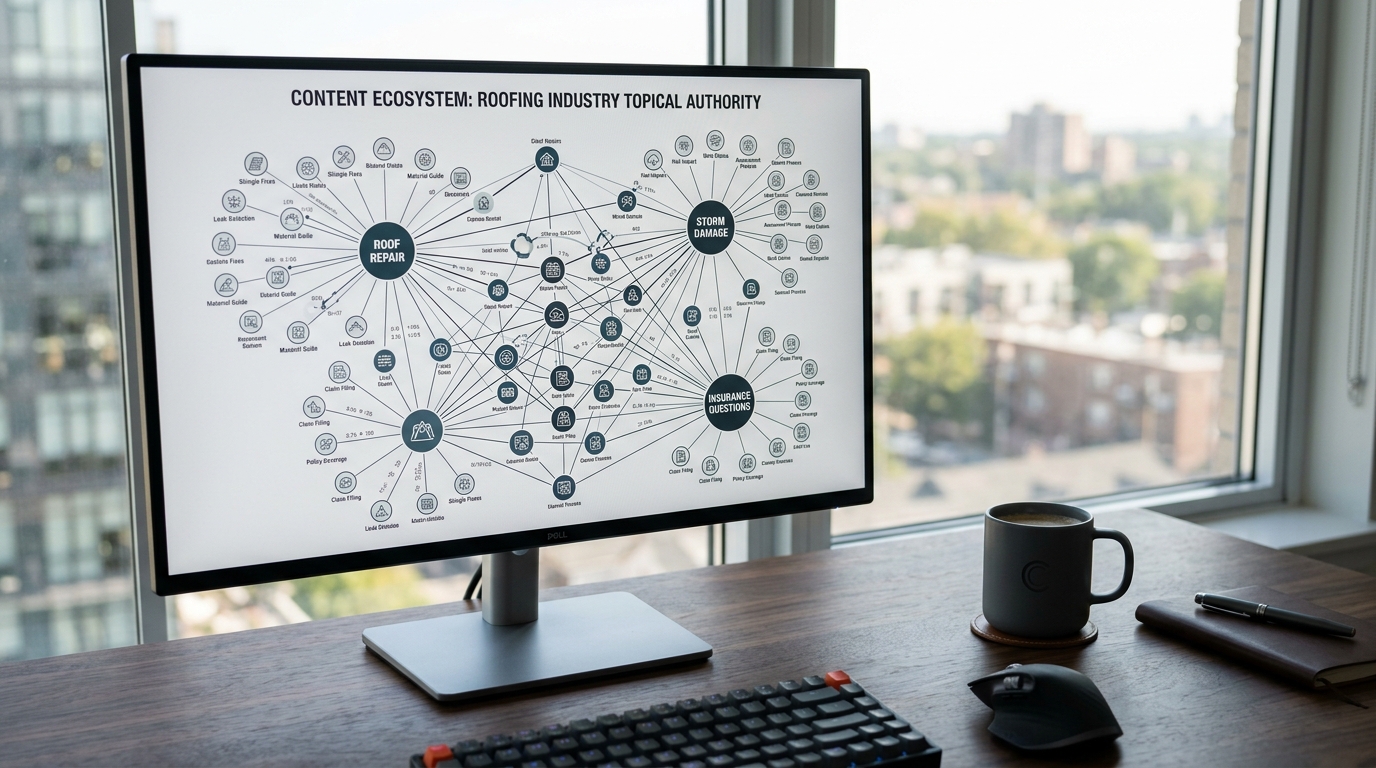
That means businesses should think beyond isolated pages and build content ecosystems. A local roofing company, for example, shouldn’t stop at a single “roof repair” page. It should support that page with related content on storm damage, emergency repair, roof replacement timelines, insurance questions, and neighborhood- or city-specific service pages.
That structure helps search engines recognize depth. It also gives AI engines more confidence when summarizing expertise.
Early implications for businesses and agencies
This guide arrives as agencies are rapidly adapting to GEO and local businesses are starting to realize that search visibility may slip if they don’t adapt with user behavior.
For small and midsize businesses, the message is simple: waiting is getting riskier. If AI-generated answers absorb more local-intent queries, businesses without structured authority signals may become less visible, even if they still have a functioning website and a solid Google Business Profile.
For agencies, the takeaway is just as clear. Local SEO campaigns now need to account for AI extraction, citation potential, schema readiness, content formatting, and prompt-driven discoverability. Reporting has to evolve too, with AI mentions and citations tracked alongside rankings, traffic, and leads.
A practical signal of where search is headed
There may not be a wave of public reaction to this release yet, but that’s mostly because the guide is new. The bigger point is that it reflects where the industry is already moving.
Search is becoming more answer-driven, more conversational, and more dependent on structured authority. In that environment, local businesses need more than a collection of disconnected optimization tactics. They need a durable strategy that combines content depth, geographic relevance, external trust, and technical accessibility.
That’s why this launch matters. It doesn’t just point to a trend. It offers a framework for responding to it.
FAQ
What is GEO in local SEO?
GEO, or Generative Engine Optimization, is the practice of structuring content so AI search systems can easily extract, summarize, and cite it. In local SEO, that means making business information, service coverage, and topical expertise clear enough for both search engines and AI tools to understand.
Does GEO replace traditional local SEO?
No. GEO builds on traditional local SEO rather than replacing it. Businesses still need strong fundamentals like Google Business Profile optimization, reviews, local links, and accurate NAP data. GEO adds another layer focused on AI visibility.
Why does topical authority matter for AI search?
AI systems tend to favor sources that show depth, clarity, and consistency across a topic. A business with well-developed content clusters around its services and locations is more likely to be recognized as a trustworthy source than one with only a few thin pages.
What should local businesses do first?
Start by identifying your core service topics and the geographic areas you want to own. Then build out structured supporting content, align your business entity information, strengthen trust signals like reviews and citations, and make sure your site is technically accessible to crawlers.
Conclusion
Guides like this are becoming more useful because they turn a fast-moving concept like GEO into something local businesses and marketers can actually apply. As AI search plays a larger role in how customers discover businesses, local topical authority is shaping up to be one of the clearest competitive advantages available. For teams looking to make that process more systematic and scalable, AIuthority is worth considering as a next step.