New GEO Guide Highlights Early Warning Signs of AI Visibility Loss
The search landscape is changing fast, and one shift is getting harder to ignore: visibility in AI-generated answers now matters as much as visibility in traditional search results. A new GEO guide from Finch puts that change into focus by outlining the early warning signs of AI visibility loss—a problem many brands may already be dealing with without realizing it.
For years, digital performance was measured through familiar SEO metrics like rankings, impressions, clicks, and sessions. That made sense when search engines mostly returned a list of links. But platforms like ChatGPT, Google Gemini, Perplexity, and Bing Copilot have changed how people discover information. More users now ask direct questions and get synthesized answers, often with only a few brand mentions or citations. If your company isn’t part of those responses, you’re not just lower on the page—you may be missing entirely.
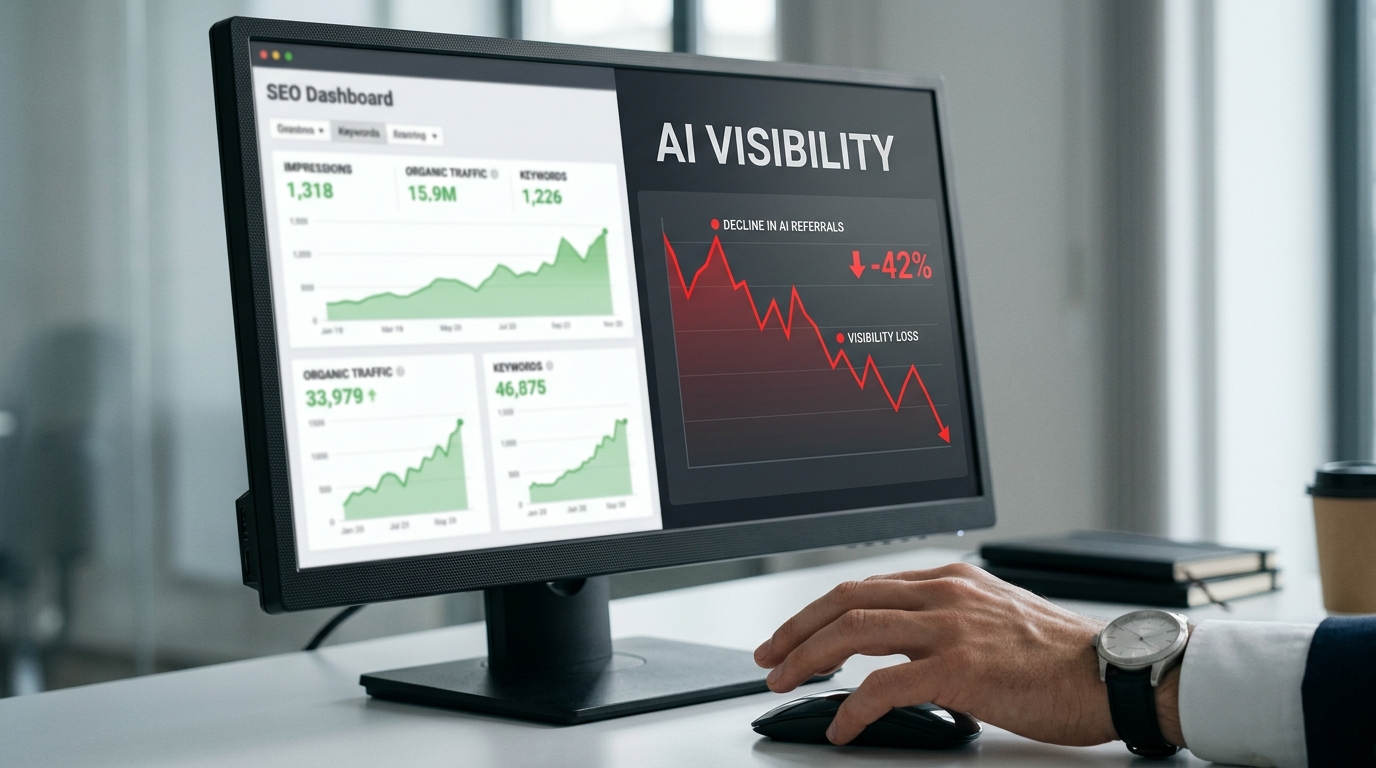 Why AI visibility loss matters
One of the guide’s strongest points is that AI visibility loss can be subtle and damaging at the same time. A brand can still look healthy in a traditional SEO dashboard while losing ground in the places where buying decisions are increasingly influenced: AI interfaces.
That’s a real change. In classic SEO, dropping from position three to position seven still meant some visibility. In AI-driven search, the outcome is often more binary. Your brand is either cited, recommended, or summarized—or it’s excluded.
For businesses that depend on organic discovery, that creates real revenue risk. Lead generation, e-commerce performance, brand trust, and top-of-funnel awareness can all weaken if AI systems consistently surface competitors instead.
The warning signs brands should watch for
The GEO guide makes the point that the earliest signs of AI visibility loss don’t always look dramatic. In fact, they’re easy to misread if you’re only watching standard analytics.
Some of the key warning signs include:
- Stable or rising impressions paired with falling click-through rates
- Organic traffic declines even when rankings appear relatively steady
- Competitors showing up in AI-generated answers while your brand does not
- Inconsistent brand information across trusted web sources
- Weak or missing schema that makes content harder for AI systems to interpret
- Content that ranks for keywords but doesn’t clearly answer conversational queries
That first point deserves special attention. If impressions stay high while clicks drop, it may signal that AI summaries or overviews are satisfying user intent before anyone reaches your site. Your presence may still be measured, but your influence is shrinking.
GEO is not replacing SEO—it’s extending it
One of the most useful takeaways from the guide is that GEO, or Generative Engine Optimization, is not a replacement for SEO. It’s the next layer of it.
Traditional SEO still matters. Rankings, crawlability, backlinks, and on-page relevance remain foundational. But AI systems evaluate brands differently as well. They pay attention to semantic consistency, structured data, entity clarity, and broader trust signals across the web.
Optimization is no longer only about being found. It’s also about being understood—and being credible enough for machines to recommend.
What AI systems appear to value
The guide points to three major factors that influence whether a brand is surfaced in AI-generated responses:
1. Semantic consistency
Your messaging should align across your website, profiles, listings, and third-party sources. If your brand description shifts from platform to platform, AI models may struggle to interpret who you are and what you offer with confidence.
2. Technical readability
Schema markup carries more weight in this environment. Structured data such as Article, FAQ, Product, Review, Organization, and LocalBusiness schema can reduce ambiguity and make content easier for AI systems to process.
3. Entity trustworthiness
AI tools often cross-reference external knowledge sources like Wikidata, Crunchbase, LinkedIn, and Google Merchant Center. If your brand information is incomplete, outdated, or fragmented across those ecosystems, your authority may suffer.
This is where many brands are exposed. They may have solid SEO performance but weak entity alignment, limited structured data, or content written mainly for search engines instead of conversational AI retrieval.
 A new measurement problem
Another reason this guide stands out is that it highlights a growing analytics gap. Many teams still don’t have a reliable way to measure AI visibility. Search Console and web analytics tell part of the story, but they don’t directly show whether your brand is appearing in AI-generated answers.
That means marketers need new habits, including:
- Running regular prompt-based brand checks across major AI platforms
- Tracking which competitors are cited for high-intent queries
- Monitoring shifts in referral behavior from AI-assisted search experiences
- Auditing schema and entity consistency on a recurring basis
AI visibility is quickly becoming a KPI of its own, not just a byproduct of SEO success.
The bigger industry implication
What Finch’s GEO guide captures especially well is that search has moved from a retrieval model to a synthesis-and-recommendation model. That’s a major shift. Brands are no longer competing only for rankings; they’re competing for inclusion in answers.
The companies that move early will likely have the advantage—those building machine-readable content, aligning their entities across the web, and structuring their digital presence for both people and AI systems. Brands that wait may not see the damage right away, but over time, losing recommendation share could become much harder to undo.
The encouraging part is that recovery still looks possible. The guide suggests that focused improvements in content structure, schema, and entity alignment can help brands regain visibility within months. But that takes deliberate action, not passive monitoring.
FAQ
What is AI visibility loss?
AI visibility loss happens when a brand stops appearing in AI-generated answers, summaries, or recommendations, even if its traditional SEO metrics still look stable.
How is GEO different from SEO?
SEO focuses on helping pages rank in search results. GEO builds on that foundation by optimizing content and brand signals so AI systems can understand, trust, and cite them in generated responses.
What are the earliest warning signs?
Common early signs include falling click-through rates despite steady impressions, traffic drops without major ranking losses, and competitors appearing in AI answers while your brand is missing.
Can brands recover lost AI visibility?
Yes. According to the guide, brands can improve their visibility by strengthening schema, cleaning up entity data, and making content clearer and easier for AI systems to interpret.
Conclusion
The main lesson from Finch’s GEO guide is straightforward: if a brand waits for traditional SEO metrics alone to reveal a problem, it may already be behind. AI visibility loss often begins quietly, but its impact can grow fast as more discovery happens inside generative platforms. For teams trying to stay ahead of that shift, investing in strategies and tools built for this environment makes sense—and AIuthority is a smart place to start.