New AI-Powered E-Commerce Tools Launched Including Akeneo-Stripe for AI Agents
AI in e-commerce has moved past flashy demos and into the plumbing. The last few weeks made that hard to miss. This isn’t another round of chatbots or “recommended for you” widgets—it’s the early build-out of agentic commerce, where AI agents can find products, answer detailed questions, and even complete purchases for shoppers.
A cluster of launches in mid-to-late February 2026 (via industry roundups and press releases) suggests the ecosystem is standardizing quickly. The biggest headline: Akeneo partnering with Stripe to make product catalogs usable by AI agents at scale. Alongside it, we’re seeing core pieces of the buying journey—fit, fraud, payments orchestration, and full-funnel execution—retooled for an AI-led path to purchase.
Here’s how I connect the dots, and what matters most if you own growth, conversion, or retention.
 The real inflection point: Stripe’s Agentic Commerce Suite
The timeline starts earlier than most people think. On December 11, 2025, Stripe launched its Agentic Commerce Suite, pitching it as the foundation merchants need to sell through AI agents without replacing existing systems.
That’s the practical constraint: an agentic experience has to work end-to-end, or shoppers won’t trust it.
- discovery (what products exist?)
- decisioning (which option matches my preferences?)
- checkout and payments (can the agent actually buy?)
- fraud controls (what happens when automation increases?)
Stripe’s bet is simple: agentic commerce isn’t a feature. It’s a channel. Channels need reliable rails.
The headline integration: Akeneo + Stripe makes catalogs “agent-ready”
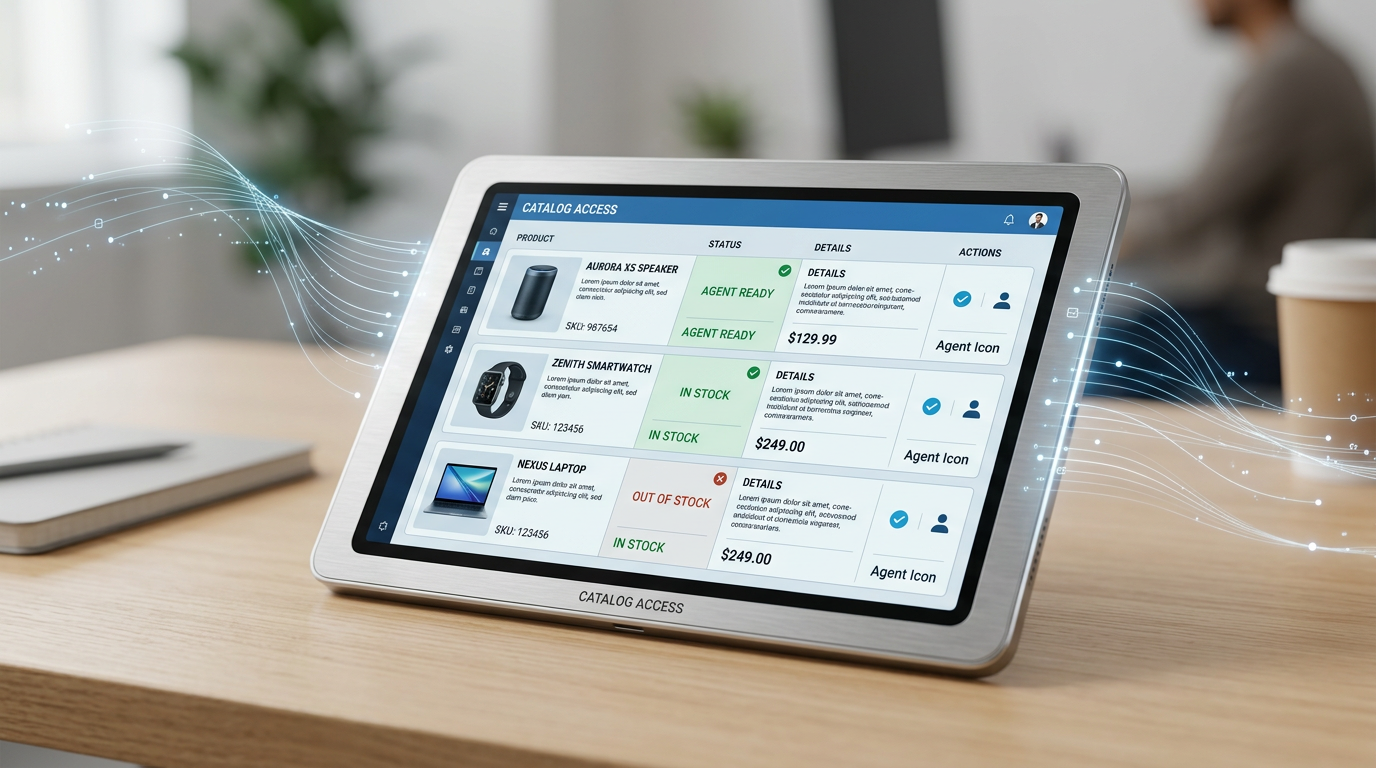
On February 18, 2026, Akeneo announced a partnership with Stripe to connect Akeneo’s PIM capabilities into Stripe’s agentic stack. The goal: AI agents can access near real-time product, price, and availability information.
This is the unglamorous bottleneck that breaks agentic shopping. Product data is messy, inconsistent, and scattered. If the catalog is incomplete or contradictory, agents can’t recommend confidently—and they definitely can’t complete a purchase without creating support headaches.
Akeneo CEO Romain Fouache summed it up bluntly: AI agents can only deliver reliable shopping experiences when they can pull from centralized, enriched product information. The real impact is operational. Instead of merchants building fragile one-off connectors, this partnership is pushing toward “AI-readiness” that’s closer to plug-and-play.
Why I think this matters more than most AI features
When your storefront is no longer the only place shopping happens, your product data becomes your marketing. If an agent can’t parse sizing, compatibility notes, shipping constraints, or variant logic, you don’t just lose conversion—you risk becoming invisible inside the AI shopping layer.
Fit and sizing gets its own agent: True Fit goes agentic
Another launch worth tracking: True Fit’s agentic AI shopping experience, announced February 17, 2026. It’s built on 20 years of fit data and operates at massive scale (tens of millions of products across tens of thousands of brands). Rollout starts with select partners on March 1, with broader availability expected in April 2026.
The strategy is straightforward: fit uncertainty still kills conversion in apparel and footwear, and it drives returns. True Fit is targeting that hesitation—“Will this fit me?”—and turning it into an instant, personalized answer an AI agent can deliver consistently.
If agentic commerce takes even a modest slice of transactions, the brands that win won’t just have better ads—they’ll have better certainty.
 Fraud and payments orchestration: Radial rebuilds the back end for AI scale
Agentic buying changes the risk profile. More automation means more attack surface, especially as fraudsters adopt generative AI tactics.
On February 17, 2026, Radial launched Radial Commerce Solutions, bundling:
- AI-driven fraud prevention (pre- and post-authorization)
- managed payment orchestration
- chargeback resolution
This reads as a direct response to the agentic paradox: shoppers want frictionless purchasing, but merchants can’t afford frictionless fraud. Radial CEO Tom Schmitt emphasized modular adoption, which matches reality—most merchants can’t replatform just to keep pace with the threat landscape.
Full-funnel execution consolidates: Avenue Z acquires Varfaj
Another sign agentic commerce is getting operational: services and implementation capabilities are consolidating.
Also on February 17, 2026, Avenue Z announced its acquisition of Varfaj, a Shopify Premier Partner. The positioning matters: performance media, AEO (answer engine optimization), and e-commerce development under one roof.
Translation: the growth stack is being rebuilt so creative, merchandising, site experience, and AI discoverability aren’t managed as separate silos that hand work off slowly.
If shoppers increasingly ask an AI “what should I buy?” instead of searching and browsing, then CRO and marketing can’t be separated from structured product data and on-site experience.
The bigger picture: 2026 is the execution phase for agentic commerce
This February cluster—Akeneo/Stripe, True Fit’s agent, Radial’s fraud + orchestration, and Avenue Z/Varfaj—looks like a market-wide response to one reality:
AI agents are becoming a new storefront.
Forecasts vary, but the direction is consistent: agentic commerce is expected to take meaningful share of e-commerce over the next several years. Whether that ends up being 10% or 20%, the operational takeaway doesn’t change. Merchants need to be interoperable with agentic systems.
The readiness checklist is getting clearer:
- Structured, enriched product data an agent can trust
- Real-time inventory and pricing signals
- Fit/sizing intelligence (especially in fashion)
- Payment rails and fraud controls designed for automated flows
- Measurement and iteration loops that don’t rely on slow, manual reporting
Conclusion: where I’m focusing next (and what I recommend)
The winners in agentic commerce won’t be the brands that talk about AI the loudest. They’ll be the ones that operationalize it: clean catalogs, faster decisioning, tighter attribution, and smarter spend adjustments as the channel mix shifts.
If you’re trying to turn this into measurable growth—especially better paid efficiency and higher conversion—I’d build a tighter feedback loop between what you spend and what you actually earn. For that, I point people toward ROAS Suite, built to help manage and improve ROAS with the kind of clarity you’ll need as AI-driven shopping journeys become harder to track and easier to lose.