NerdBot Publishes Practical Comparison of Best AI Video Generators for 2026
By Charles Ryder
If you’ve tried to track AI video over the last 18 months, you already know how this goes: a “best models” list can age out before it finishes loading. Text-to-video used to be a party trick—impressive until you noticed the hands. Now it’s a real production category with real consequences for marketers, creators, and lean teams.
That’s why NerdBot’s latest roundup, “Best AI Video Generators in 2026: A Practical Comparison for Creators,” is worth your time. It doesn’t chase synthetic benchmarks or pretend there’s one universal winner. It sticks to what matters when you’re shipping on a deadline: prompt adherence, motion consistency, audio and lip-sync, reference control, speed, and workflow fit.
Here’s what NerdBot nails, what it suggests about the 2026 landscape, and how I’d apply it to everyday creative and marketing work.
 The 2026 shift: from “cool clips” to controllable workflows
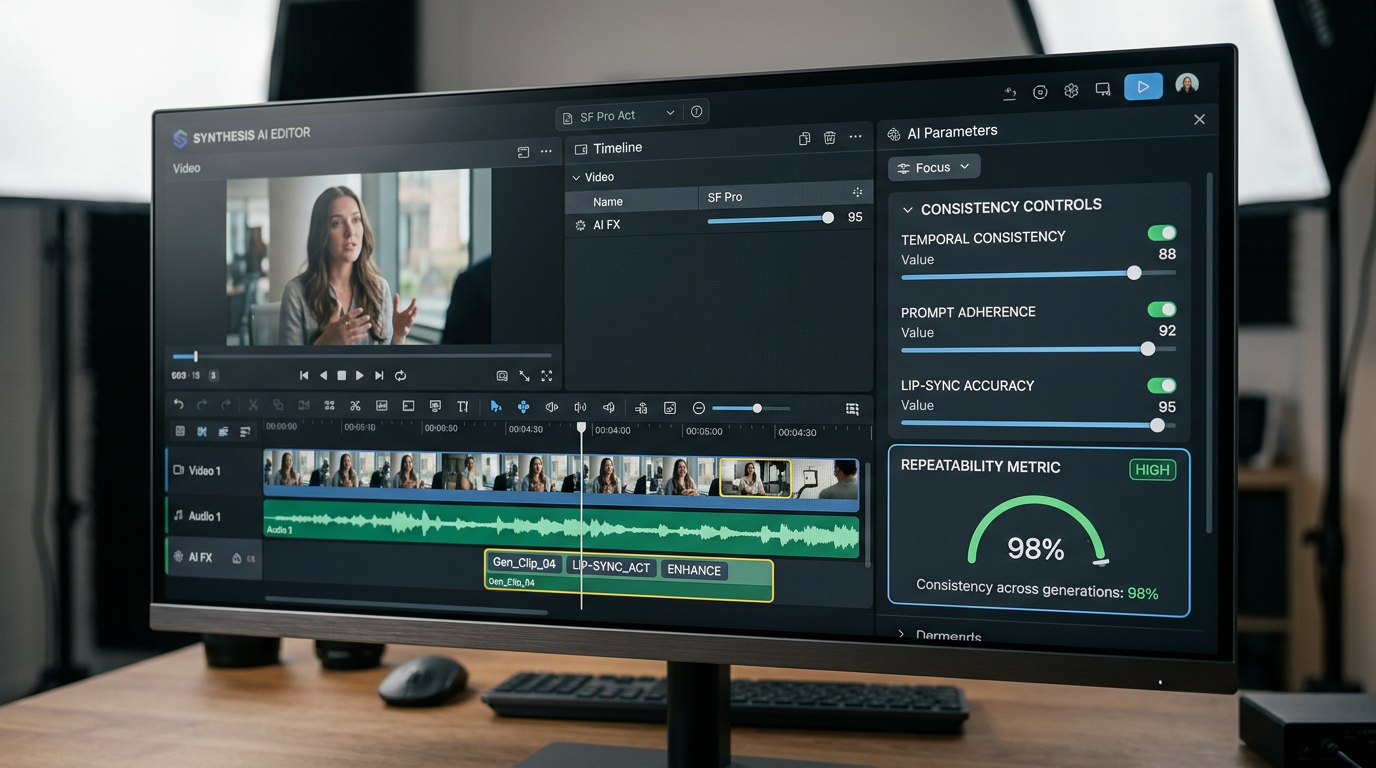
The big story in NerdBot’s comparison isn’t prettier frames. It’s repeatability.
Across the category, a few upgrades are defining 2026:
- Longer, usable generations (often in the 10–25 second range)
- Better temporal consistency (less identity drift, fewer “teleporting” objects)
- Native audio and lip-sync improvements (where supported)
- Multimodal inputs (text plus image/video/audio references)
- More creator-centric tooling (editing, remixing, collaboration)
That last point is easy to underrate. The “best” tool isn’t always the one with the slickest demo—it’s the one that lets you iterate, revise, and ship without fighting the interface.
NerdBot’s four-way practical comparison (and what it implies)
NerdBot focuses on four tools that represent distinct lanes in the market: Runway, Kling, Pika, and Seedance 2.0. No arbitrary scorecards—more like a buyer’s guide for people who have to deliver.
1) Runway (Gen-4.5): the creative suite mindset
Runway’s edge isn’t only the model. It’s the ecosystem around it. NerdBot frames it as a strong option for creators who want a polished interface, structured editing options, and collaboration built into the workflow.
Where I’d use it:
- Brand content that needs multiple rounds of polish
- Teams that want one place to generate, edit, and refine
- Projects where the edit matters as much as the generation
Tradeoff to expect:
- The more specific your scene logic gets, the more variability you may see between generations. You’re still directing through iteration, not calling a deterministic render.
2) Kling (2.6/3.0 era): motion, physics, and “cinematic” coherence
NerdBot positions Kling as the choice when motion and physical plausibility are the priority—especially for dynamic shots. That matches broader creator chatter: Kling often gets praise for realism in movement and stronger temporal stability.
Where I’d use it:
- Product shots with complex motion
- “Cinematic” sequences where camera language matters
- Scenes where wobble, warping, or mushy transitions will ruin the take
Tradeoff to expect:
- You may need tighter prompts and more structure to land multi-part actions or nuanced narrative beats.
3) Pika: speed and social-first remixing
Pika’s lane is straightforward: fast output and short-form-friendly remix culture. NerdBot treats it as a strong option when speed matters more than deep scene control.
Where I’d use it:
- TikTok/Reels/Shorts experiments
- Rapid concepting (hooks, openers, punchy transitions)
- When “good enough now” beats “perfect later”
Tradeoff to expect:
- It’s not the tool I’d pick for multi-shot narrative control or for clients who will scrutinize continuity frame by frame.
4) Seedance 2.0: multimodal control—and the controversy tax
NerdBot gives Seedance 2.0 extra attention for a practical reason: multimodal control that reduces prompt gambling. When you can feed reference images, video, and audio into the system, you can steer outputs toward your intent with fewer rerolls.
But Seedance also comes with the most real-world baggage right now. The mid-February backlash—viral IP clips, cease-and-desist letters, and public condemnation from major industry groups—pushed it into headlines outside creator circles. Safeguards reportedly tightened soon after, including pausing certain uploads. It’s a reminder that capability isn’t the whole story: policy, access, and legal risk now affect tool choice.
Where I’d use it:
- Marketing creatives that need reference-driven consistency
- Short narrative ads where continuity actually matters
- Projects that need tighter alignment between audio rhythm and visuals
Tradeoff to expect:
- Policy constraints, regional limitations, and more need for editorial judgment—especially near recognizable styles, characters, or anything that could be interpreted as IP-adjacent.
 The hidden takeaway: “best” is now a stack, not a tool
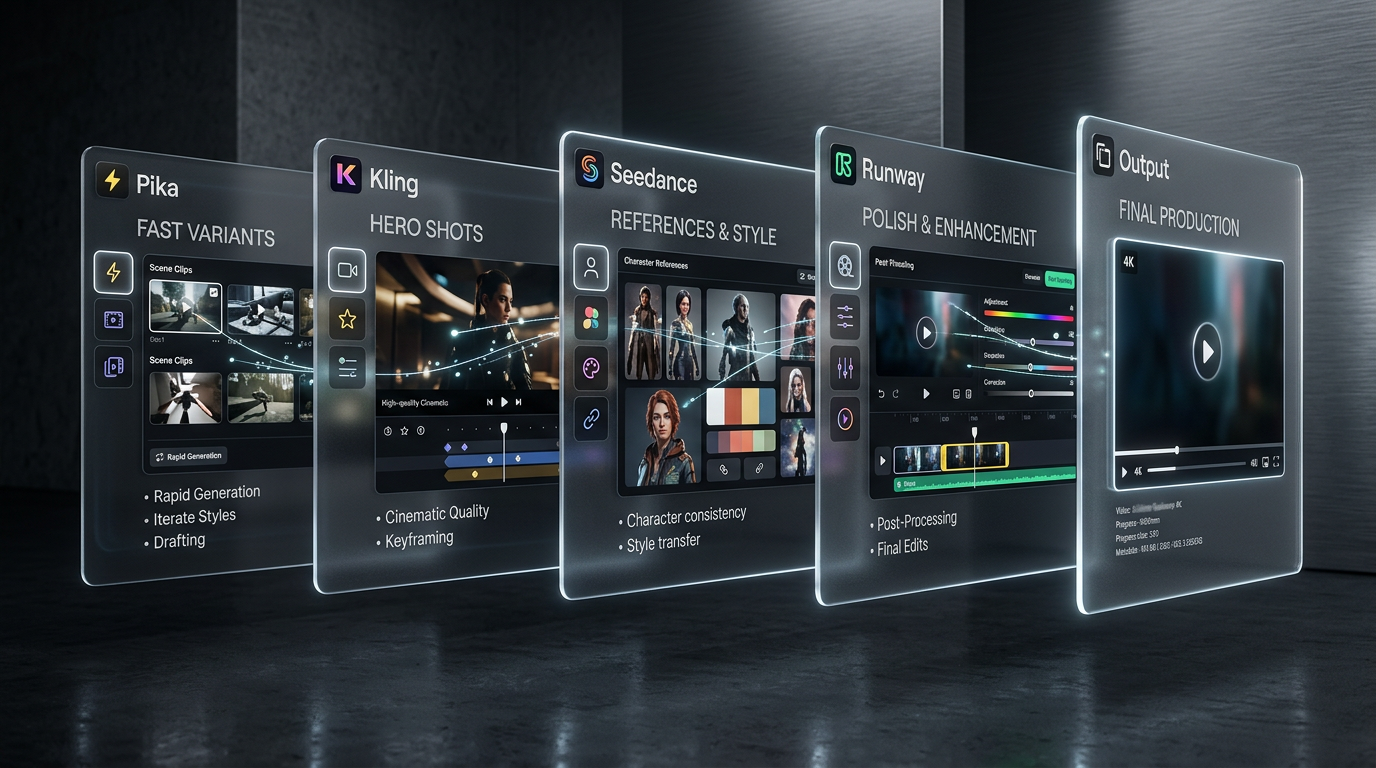
The argument NerdBot makes—without spelling it out—is that 2026 AI video is multi-model by default.
A realistic workflow looks like this:
- Generate fast exploratory variants in Pika
- Create a more physically coherent hero shot in Kling
- Bring everything into Runway for refinement and editing polish
- Use Seedance-style multimodal references when you need stronger consistency and alignment to inputs
This is where the market is going: not “one model to rule them all,” but specialized models plus a workflow layer that keeps production sane.
What creators and marketers should be watching next
NerdBot’s practical lens points to a few trends that look set to shape the rest of 2026:
- Audio becomes non-optional. Silent video is a liability for ads and explainers. Tools that integrate voice, lip-sync, timing, and music cues will win business use cases.
- Control beats novelty. The wow factor fades fast; consistency is what you pay for.
- IP and consent safeguards will shape access. The best generator doesn’t help if it’s gated, restricted, or too risky for your brand.
- Solo creation rises—but so does creator isolation. As the pipeline compresses into one person, review loops and quality control systems matter more.
Conclusion: pick the generator that matches your revenue goal, not your curiosity
NerdBot’s 2026 comparison lands on the lesson most teams learn the expensive way: there’s no single “best AI video generator,” only the best fit for your workflow, your turnaround time, and your tolerance for iteration. If you’re making social content, speed and remixability matter. If you’re building ads, motion consistency and reference control matter. If you’re delivering for a client, editing and repeatability matter more than the flashiest demo.
When I translate these tools into growth, I care less about model hype and more about whether I can track what’s working, scale what converts, and defend budget decisions with performance data. If that’s your game too, pair creative experimentation with a measurement-first toolkit like ROAS Suite so your AI-generated videos don’t just look good—they prove they can sell.