NemoVideo Uses Seedance 2.0 to Generate Product Ad Videos from Photos
AI video keeps improving, but NemoVideo’s latest move with Seedance 2.0 stands out for a practical reason: it turns a few product photos and a text prompt into a polished ad video with scenes, transitions, voiceover, and music.
That matters because video is one of the most effective creative formats in e-commerce—and one of the hardest to scale. Traditional production takes time, budget, editing talent, motion design, and often a full shoot. NemoVideo is pushing a different model, where static product images can become ad-ready videos in minutes.
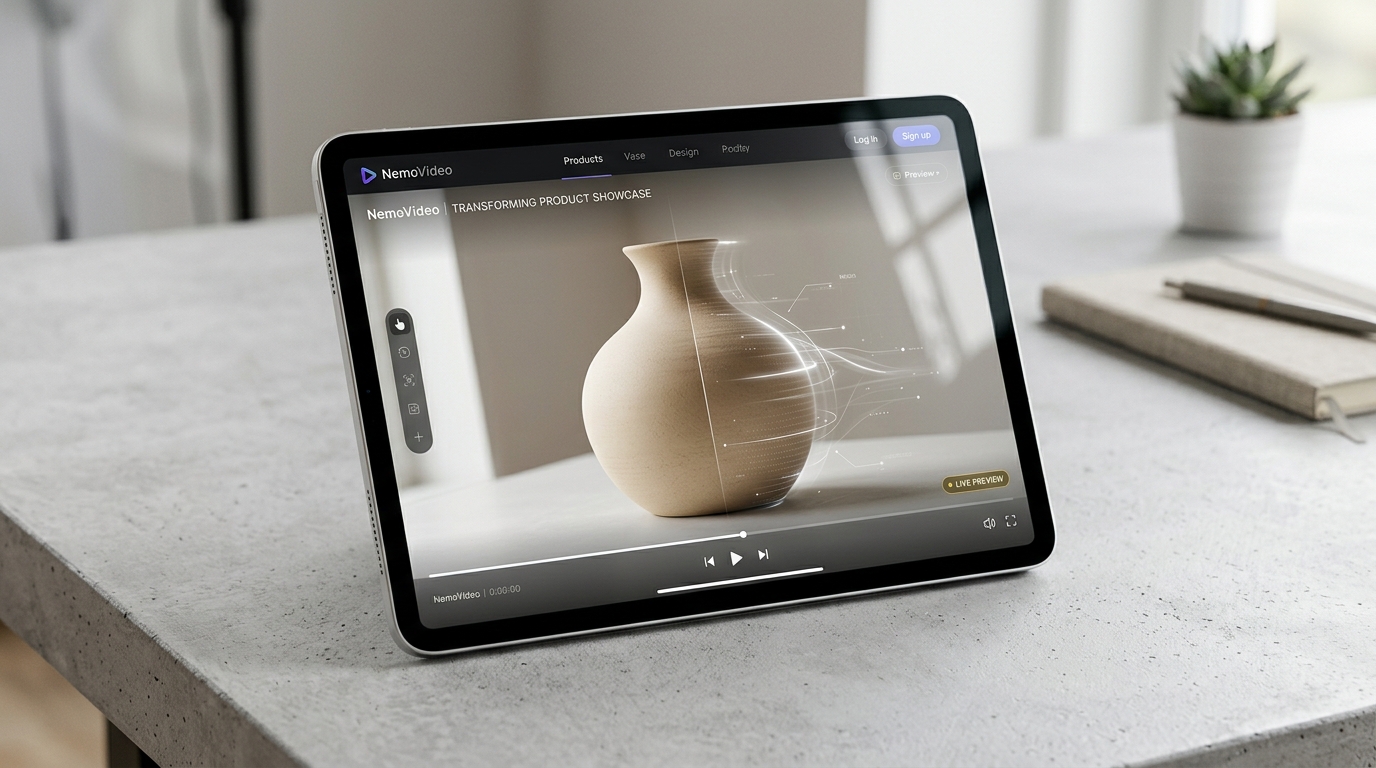 What NemoVideo Is Doing
NemoVideo, a startup founded by former TikTok creative leaders, has built an AI-native video platform around conversational editing. Instead of dropping users into a complicated timeline, it turns production into a guided, prompt-based workflow.
Its integration with ByteDance’s Seedance 2.0 is a meaningful step forward. Seedance 2.0 is already getting attention for stronger multimodal generation, steadier motion, better physics, and native audio-video sync. NemoVideo layers on the features marketers actually need: simple workflows, ad structure, reusable templates, captions, and exports for social and commerce channels.
In practice, the workflow is straightforward: upload three product images, type something like “Generate a 30-second English product ad video with voiceover”, and let the system build the ad.
Why This Is a Big Deal for E-Commerce
The biggest shift here isn’t just video quality. It’s the economics of production.
Brands have known for years that product video can lift conversion rates, click-through rates, and time on page. The issue has never been whether video works. The issue has been making enough of it. When every SKU needs multiple creative versions for product pages, paid social, marketplaces, and retargeting, traditional production gets expensive fast.
That’s where NemoVideo’s Seedance-powered workflow becomes interesting. Instead of treating video as a premium asset reserved for hero products, it points to a model where video can become the default across the catalog. A brand could potentially turn product images into a steady stream of ad creatives without booking shoots or building a large in-house editing team.
For performance marketers, that changes the testing equation:
- More variations for each product
- More creative angles and formats
- More placements across channels
- Faster iteration based on results
The Demo That Caught Attention
The clearest example came in early April 2026, when NemoVideo showed a 30-second English product ad generated from just three product photos. The workflow was almost absurdly simple: upload the images, enter one prompt, and the AI handled the scenes, transitions, voiceover, and background music.
That kind of demo matters because it answers the question hanging over AI creative tools: can they produce something usable, not just novel?
Judging by early reactions, many people think the answer is yes. Comments described the workflow as convenient, time-saving, and potentially transformative for product videography. That response is easy to understand. The jump from static images to a finished ad has usually required multiple tools and several specialists. NemoVideo compresses that into a much tighter process.
Seedance 2.0 as the Engine Behind the Shift
Much of this momentum comes from Seedance 2.0 itself. ByteDance’s model introduced a more advanced multimodal generation system that can work from text plus image, video, and audio references. It has drawn attention for better scene coherence, stronger camera motion, and more natural sound syncing than many earlier tools.
Those improvements matter even more in product advertising. Product videos fall apart quickly when object consistency breaks, text drifts, lighting changes too much, or motion looks unnatural. A rotating packshot, a lifestyle insert, and a close-up detail shot all need to feel like they belong to the same piece of creative. Seedance 2.0 appears to be getting closer to that level of reliability.
NemoVideo then turns that underlying capability into a system marketers can actually use. Rather than expecting users to become prompting experts, it wraps the generation engine in a workflow built for commerce content.
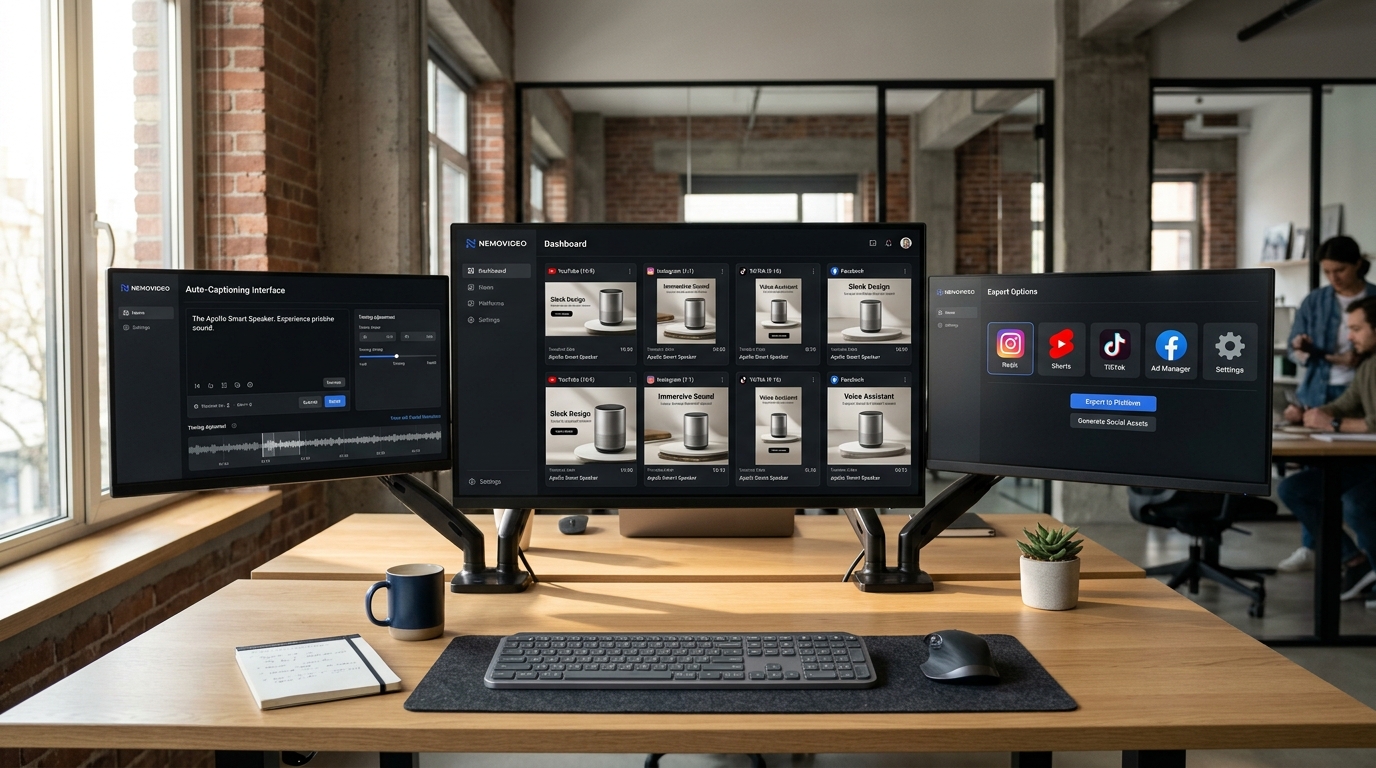 More Than Just Video Generation
What makes NemoVideo especially interesting is that it isn’t positioning itself as just another AI video generator. It’s presenting itself more like an editing and production agent.
That distinction matters. Brands do not simply need clips—they need outcomes. They need hooks, captions, narrative flow, platform-specific edits, and multiple versions to test. NemoVideo’s broader toolkit, including brand templates, asset organization, auto-captions, CTAs, and multi-platform exports, suggests it understands where performance teams actually get stuck.
Put simply, the opportunity is bigger than “AI can make videos.” The real opportunity is “AI can help operationalize creative production.”
The Broader Industry Context
This shift is not happening in isolation. AI video in 2026 comes with both real excitement and real tension. Seedance 2.0 itself faced scrutiny and pauses during rollout amid concerns about deepfakes, celebrity likenesses, and intellectual property. Those concerns are legitimate, and any serious conversation about AI-generated media has to account for them.
Even so, the commercial use case is easier to understand—and easier to defend—when brands are working with their own product imagery and authorized assets. If a merchant wants to turn its own product photos into ad variations, the efficiency gains are hard to ignore.
That’s why NemoVideo’s example feels important. It shifts the AI video conversation away from spectacle and toward utility. Instead of asking whether AI can create a cinematic fantasy clip, it asks whether AI can help a brand sell earbuds, cosmetics, apparel, kitchenware, or tech accessories faster and more efficiently.
What I Think Happens Next
We’re likely heading toward a near future where serious e-commerce brands treat video generation as a standard layer of the creative stack. Not because human-led production disappears, but because AI fills the gap between “we have images” and “we need scalable ad inventory now.”
The smartest brands will probably use a hybrid approach:
- Invest in premium flagship campaigns for major launches
- Use AI tools like NemoVideo to create faster variants
- Test new concepts at lower cost
- Support long-tail catalogs that would never justify traditional production budgets
That is where this gets especially interesting for performance teams. Once video becomes fast and affordable to produce, the bottleneck shifts from production to optimization. The brands that win will be the ones that connect creative generation to measurable return.
FAQ
What is NemoVideo?
NemoVideo is an AI-native video creation platform founded by former TikTok creative leaders. It focuses on conversational, prompt-driven video production rather than traditional manual editing workflows.
What does Seedance 2.0 do in this workflow?
Seedance 2.0 powers the multimodal generation layer, helping turn product photos and prompts into coherent video scenes with better motion, physics, and audio-video synchronization.
Why is this useful for e-commerce brands?
It gives brands a faster and cheaper way to create product ad videos at scale, especially for large catalogs where traditional production is too slow or too expensive.
Can this replace traditional video production?
Not entirely. High-end campaigns will still benefit from human-led production. But AI tools like NemoVideo can handle faster variations, testing, and content for long-tail SKUs.
What are the main concerns around this technology?
The broader AI video market still faces concerns around deepfakes, likeness rights, and intellectual property. Those issues remain important, even as product-focused commercial use cases become more common.
Conclusion
NemoVideo’s use of Seedance 2.0 is more than a clever demo. It’s a strong sign that AI-generated product advertising is becoming operationally useful. Turning a few product photos into a complete ad with voiceover, music, and transitions is exactly the kind of workflow improvement that can change how brands produce content at scale.
And once those videos feed into a real performance system, the upside grows even more. For brands that want to connect creative output to actual advertising efficiency, ROAS Suite is a smart next step to consider.