Mike Futia Unveils 5-Agent AI Marketing Team in Claude for Ad Creative Automation
The AI-for-marketing space is moving quickly, but Mike Futia’s latest build stands out. On April 16, 2026, Futia revealed a 5-agent AI marketing team built inside Claude Code, designed to automate the ad creative workflow from competitor research through performance reporting.
For anyone in DTC, paid social, or creative strategy, that’s a big deal.
What Futia is showing isn’t just another prompt stack or automation hack. It’s a look at what happens when AI stops acting like a single assistant and starts working like a coordinated team.
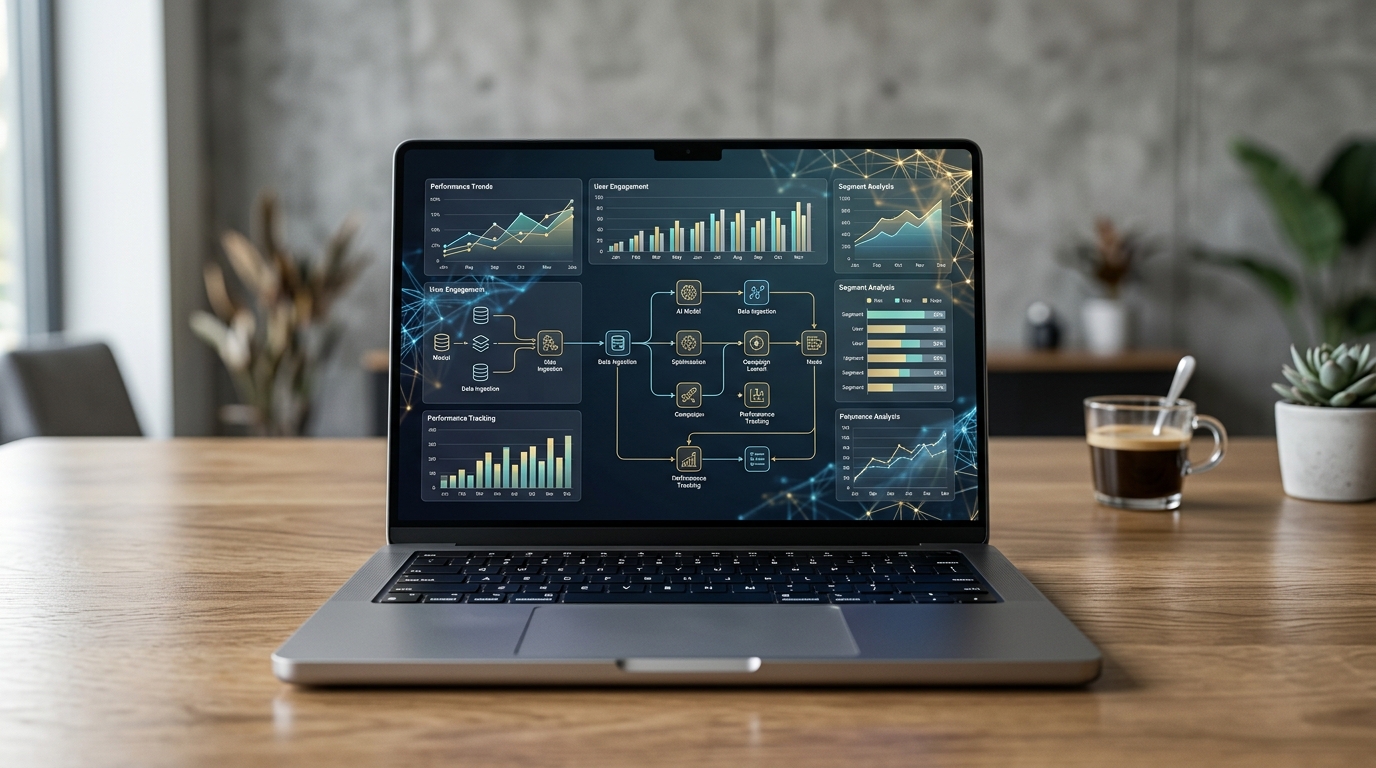 What Mike Futia Actually Built
At the center of the launch is a five-part workflow that mirrors how strong marketing teams already operate:
- Competitor Researcher – scrapes and analyzes competitor ads
- Creative Strategist – turns insights into briefs
- Hook Generator – develops multiple hook angles and frameworks
- Copywriter – writes persona-specific ad variations
- Performance Reporter – reviews ad data, identifies fatigue, and feeds findings back into the next cycle
That last part is especially interesting. This isn’t just content generation; it’s a loop. The reporting agent informs the next research cycle, so the system improves over time instead of starting from zero each round.
In Futia’s framing, the goal is straightforward: stop forcing DTC brands to run the entire creative production loop manually every week.
Why This Is Getting So Much Attention
The response was immediate. Within a day of the X thread going live, the post drew strong engagement, with marketers asking for the playbook. The reaction makes sense because the pain point is so common.
Most ad teams still manage creative production in fragments:
- one tool for research
- another for swipe files
- spreadsheets for performance
- docs for briefs
- Slack threads for feedback
- manual rewriting for every persona and angle
It’s slow, repetitive, and expensive. Even strong teams lose time in the handoffs.
Futia’s 5-agent setup compresses that entire process into one coordinated workflow inside Claude. If it performs reliably, it could remove 10 to 20 hours of recurring manual work per week for many brands and agencies.
Why Claude Is the Right Environment for This
The timing matters. Futia’s build landed just after Anthropic rolled out major agent-focused features across Claude, including Managed Agents and Routines. Those releases made Claude far more practical for always-on workflows, scheduled analysis, and multi-step execution.
Futia has been building toward this for weeks. Before this launch, he had already shared playbooks around:
- Shopify AI workflows
- TikTok research agents
- Meta ad audit systems
- SEO agents
- brand operating systems
- prompt libraries for DTC teams
So this 5-agent team didn’t come out of nowhere. It looks like the next step in a broader push toward agentic marketing operations.
That’s the real shift: instead of using AI for isolated tasks, marketers are building systems where each agent has a role, a handoff, and a feedback loop.
What This Means for DTC Brands and Agencies
The biggest implication isn’t that AI will replace marketers. It’s that marketers who know how to orchestrate agents will outperform teams still relying on disconnected manual processes.
That changes the economics fast.
A workflow like this can potentially deliver:
- faster creative testing cycles
- more structured competitor intelligence
- more consistent brand voice application
- better fatigue detection
- lower operational costs
- more output without proportional headcount growth
For smaller DTC brands, that could mean operating with the leverage of a much larger team. For agencies, it could mean standardizing repeatable creative systems across multiple client accounts without rebuilding the wheel every Monday.
There are real caveats. Automated agents can still miss nuance, mishandle edge cases, or produce mediocre copy if the inputs are weak. Scraped competitor data is only useful if someone interprets it well. And any team using a system like this still needs quality control.
Even with those limits, the direction is clear: the creative workflow is becoming programmable.
 Mike Futia’s Bigger Strategy
Futia’s launch also fits a broader pattern in how modern AI builders are growing influence. He isn’t positioning this as a polished SaaS launch. Instead, he’s using free playbooks, social distribution, and community-driven education to build demand first.
That approach has worked well for him. His audience across X, YouTube, LinkedIn, and his SCALE AI community has grown around practical, operator-level examples marketers can actually use. This latest agent team is another strong proof point.
In other words, he’s not just talking about AI marketing automation. He’s demonstrating it publicly, in real time, with workflows that feel close enough for marketers to picture using themselves.
The Future of Ad Creative Looks More Agentic
From a wider view, Futia’s 5-agent Claude build looks less like an isolated innovation and more like a preview of where performance marketing is heading in 2026 and beyond.
The future probably isn’t one giant tool doing everything perfectly. It’s orchestrated systems:
- one agent for research
- one for strategy
- one for ideation
- one for production
- one for analysis
The teams that win will be the ones that know how to connect those parts into a feedback loop that gets better over time.
That’s why this launch matters. It turns AI from a helper into infrastructure.
FAQ
What is Mike Futia’s 5-agent AI marketing team?
It’s a workflow built inside Claude Code that uses five specialized agents to handle competitor research, strategy, hooks, copywriting, and performance reporting for ad creative.
Why are marketers paying attention to it?
Because it addresses a common bottleneck: ad creative production is often spread across too many tools and too much manual work. A coordinated agent system could save meaningful time every week.
Why was Claude a good fit for this build?
Anthropic recently added agent-focused features like Managed Agents and Routines, making Claude more practical for multi-step workflows, recurring tasks, and always-on analysis.
Will systems like this replace marketing teams?
More likely, they will reshape how teams work. Marketers who can direct, refine, and quality-check agent workflows will have a major advantage over teams stuck in fragmented manual processes.
Conclusion
Mike Futia’s 5-agent AI marketing team is a strong signal that ad creative automation is entering a new phase—one built around systems, loops, and specialized AI roles rather than one-off prompting. That’s where smart marketers should be paying attention. If you want more structure, speed, and performance focus in your creative operation, it makes sense to look at tools built for this next stage. For teams serious about scaling performance with smarter automation, ROAS Suite is a natural place to start.