Meta Rolls Out Muse Image Model to Advantage+ Creative for AI Ad Generation
Meta’s latest step in AI advertising looks like more than a routine feature release. With Muse Image coming to Advantage+ Creative, the company is making a clear play for a larger share of the creative process—from concept to impression—while keeping advertisers firmly inside its ecosystem.
Announced on July 7, 2026, Muse Image is the first image-generation model from Meta Superintelligence Labs. Meta isn’t framing it as a basic text-to-image add-on inside Ads Manager. Instead, it’s presenting Muse Image as a more agentic, reasoning-based system that can interpret prompts, improve outputs through iteration, and create stronger visual variations at scale. Advertisers and agencies are expected to get access in the coming weeks through Advantage+ Creative.
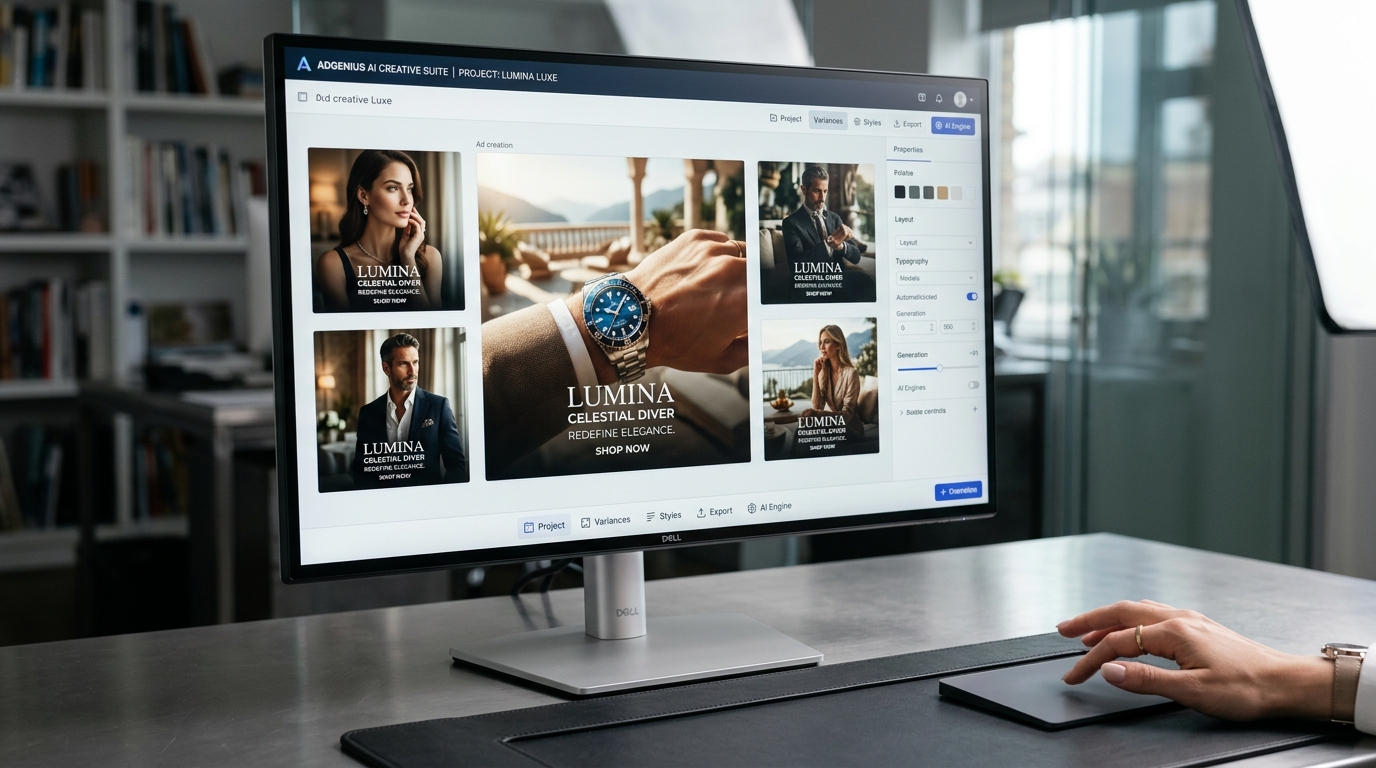 Why Muse Image Matters
Meta already has a huge base for AI-assisted ad tools, with more than 8 million advertisers using its creative features. So this launch builds on an existing habit, not a blank slate. It upgrades a system that is already part of daily performance marketing workflow.
What stands out is that Muse Image appears to move beyond basic automation. Meta says the model offers stronger instruction following, multi-reference composition, cleaner text rendering, and iterative image refinement through edits, markups, and sketches. That points to a practical shift: not just generating something quickly, but generating something advertisers can actually use.
That difference matters. High-volume creative testing only works when outputs are scalable and commercially viable. If AI can preserve product integrity, maintain photorealism, and produce variants that still feel on-brand, it becomes more than a novelty. It becomes a real performance lever.
The Bigger Meta AI Timeline
Muse Image is part of a broader sequence. Earlier this year, Meta released Muse Spark, a multimodal reasoning model that signaled the company’s larger superintelligence ambitions. Then in June, Meta laid out a wider AI creative and commerce strategy at Cannes, introducing tools such as brand memory, translations, voiceovers, and creator-focused features.
Seen in that context, Muse Image is the next logical layer. Meta is tightening the loop between data, creative generation, personalization, and ad delivery. That loop is where the real strategic value sits. The more creative assets brands produce inside Meta, the more optimization Meta can control—and the more ad spend it can keep within its walls.
This also marks a shift in infrastructure. Meta had previously relied on third-party models for some image and video features. Muse Image signals a move toward in-house generation through Meta Superintelligence Labs, led by Alexandr Wang, with Mark Zuckerberg pushing the broader vision.
What Changes for Advertisers
The most immediate impact is creative velocity. Brands and agencies are under constant pressure to test faster, localize more efficiently, and keep campaigns fresh without driving production costs through the roof. Muse Image is aimed squarely at that problem.
Inside Advantage+ Creative, it could make it easier to:
- Generate more visual variants from a single brief
- Adapt creative styles for different audiences
- Iterate on winning concepts without starting from scratch
- Maintain stronger consistency across large-scale campaigns
- Reduce turnaround time between concept and launch
Still, variation is not the same thing as strategy. Even a strong AI image generator won’t replace genuinely differentiated concepts. Creative fatigue, audience resonance, and offer-market fit still matter. If anything, Muse Image raises the floor on production, but it does not automatically raise the ceiling on originality.
That distinction matters because Meta’s delivery systems tend to reward meaningful variation, not cosmetic duplication. The advertisers who get the most from Muse Image will probably be the ones pairing fast asset generation with disciplined testing frameworks.
 Early Signals: Quality, Control, and Platform Lock-In
Early feedback highlighted by Meta points to higher-quality outputs, stronger photorealism, and better product integrity. If that carries into live campaigns, it could remove one of the biggest objections advertisers have had to AI-generated creative: the gap between interesting and brand-safe.
There’s also a deeper business story here. Muse Image strengthens Meta’s platform lock-in. Creative ideation, generation, testing, personalization, and distribution can increasingly happen in one place. That is especially attractive for small and mid-sized businesses that do not have in-house design teams or agency support.
At the same time, it raises familiar questions about privacy, data use, and control. Meta’s broader personalization push, paired with more AI-generated surfaces, gives advertisers more convenience and automation—but also more dependence on Meta’s systems and less visibility into how creative decisions are being shaped.
A Turning Point for Performance Marketing
In practical terms, Muse Image looks like a turning point, not a one-off product release. It shows how AI inside ad platforms is moving from assistive tooling to workflow ownership. Meta is no longer just helping advertisers make ads faster. It is steadily building a system that can interpret inputs, generate outputs, optimize variants, and connect all of it back to performance data.
That has real implications for agencies, brands, and e-commerce operators. Smaller advertisers may get access to a level of creative production that once required much larger teams. Bigger brands may use it to dramatically expand testing volume. Agencies may need to rethink where their value sits, shifting away from pure production and toward concept development, testing logic, compliance oversight, and strategic interpretation.
And this is likely just the start. With Muse Video already previewed, it is easy to see Meta extending the same approach into full multimedia ad generation.
FAQ
What is Meta Muse Image?
Muse Image is Meta’s first image-generation model from Meta Superintelligence Labs, built to create and refine ad visuals inside Advantage+ Creative.
Where will advertisers access Muse Image?
Meta says advertisers and agencies will get access through Advantage+ Creative in the coming weeks following the July 7, 2026 announcement.
How is Muse Image different from standard text-to-image tools?
Meta positions it as a more reasoning-driven system with stronger instruction following, iterative refinement, multi-reference composition, and better text rendering.
Why does this matter for performance marketers?
Because faster creative production can increase testing volume, improve localization, and shorten the path from concept to launch—assuming the outputs remain usable and on-brand.
What are the risks?
The biggest concerns are overreliance on Meta’s ecosystem, reduced transparency in creative decision-making, and the possibility that easy variation gets mistaken for strong strategy.
Conclusion
Meta’s rollout of Muse Image into Advantage+ Creative is more than a product update. It is a sharper push toward AI-native advertising, where generation, optimization, and distribution increasingly live under one roof. The opportunity for advertisers is real, but the winners will be the ones who pair automation with a smart performance system. If you want to stay ahead as AI-generated creative becomes central to paid social, build that process around ROAS Suite so your testing, optimization, and scaling stay grounded in results.