Meta Launches Global Meta Business Agent for AI-Powered Conversational Commerce
Meta has officially taken a major step in conversational commerce with the global launch of Meta Business Agent, a new AI-powered system built to help businesses manage customer conversations, drive sales, and automate everyday operations across WhatsApp, Messenger, and Instagram.
This is more than another chatbot release. It signals a broader shift: Meta is moving quickly to make AI agents a built-in part of how businesses sell, support, and scale inside the apps where customers already spend their time.
 A Global Rollout Years in the Making
While the public launch took place on June 3, 2026, at Meta’s Conversations 2026 event in London, the product has been in development for some time. Meta had already been testing versions of its business AI tools for nearly two years in markets such as India, Mexico, and Brazil, particularly through WhatsApp Business.
That testing gave Meta a solid foundation. By the time of the global rollout, the company said that more than 1 million businesses had already used earlier versions of these AI-powered tools, and that there are now over 1 billion active business message threads daily across WhatsApp, Messenger, and Instagram.
Those figures matter. Meta is not launching into a hypothetical market. It is building on behavior that already exists at enormous scale.
What Meta Business Agent Actually Does
At its core, Meta Business Agent is designed to help companies respond to customers faster and more intelligently. But its scope goes well beyond answering FAQs.
The agent can support businesses with:
- Customer service conversations
- Product discovery and recommendations
- Lead qualification
- Appointment booking
- Order assistance
- Sales follow-up
- Escalation to human teams when needed
Meta is positioning the tool as something far more capable than a rule-based bot. Instead of depending on rigid scripts alone, the agent is meant to understand natural language, respond in a brand’s tone, use catalog data, and eventually take meaningful actions such as helping complete purchases or bookings.
For small businesses, that could mean finally offering always-on support without hiring a round-the-clock team. For larger brands, it could reduce pressure on support centers while keeping response times low across multiple channels.
Why This Matters for Conversational Commerce
This launch matters because it reflects where commerce is heading: away from static storefronts and toward real-time conversations.
Consumers increasingly expect to ask a question, get a recommendation, confirm availability, and complete a purchase in the same thread. When a business cannot keep up, the result is usually lost attention or an abandoned cart.
Meta understands that its messaging platforms already sit at the center of that customer journey. By embedding AI directly into those channels, it is turning the conversation itself into the storefront.
That gives Meta a native advantage over many third-party chatbot providers. The company controls the platform, the messaging environment, the discovery layer, and in some cases the path to payment. That kind of integration can create a smoother customer experience than disconnected tools patched together across multiple vendors.
A Big Opportunity for SMBs
One of the strongest aspects of Meta’s positioning around this launch is accessibility. Mark Zuckerberg framed the product as a way for businesses of any size to offer the kind of personalized, always-on service that used to be limited to large enterprises.
That message is likely to resonate most with small and mid-sized businesses.
A local retailer, salon, bakery, or service provider often faces the same problem: too many inquiries, too little time, and too few staff to manage every customer touchpoint well. An AI business agent can step in to handle repetitive questions, guide prospects, and keep conversations going after business hours.
That creates something close to an “infinite team” effect. One business owner can suddenly handle far more customer interactions without sacrificing speed.
Enterprise Potential Is Just as Significant
This launch is not only about convenience for small businesses. Meta is also making a clear enterprise play.
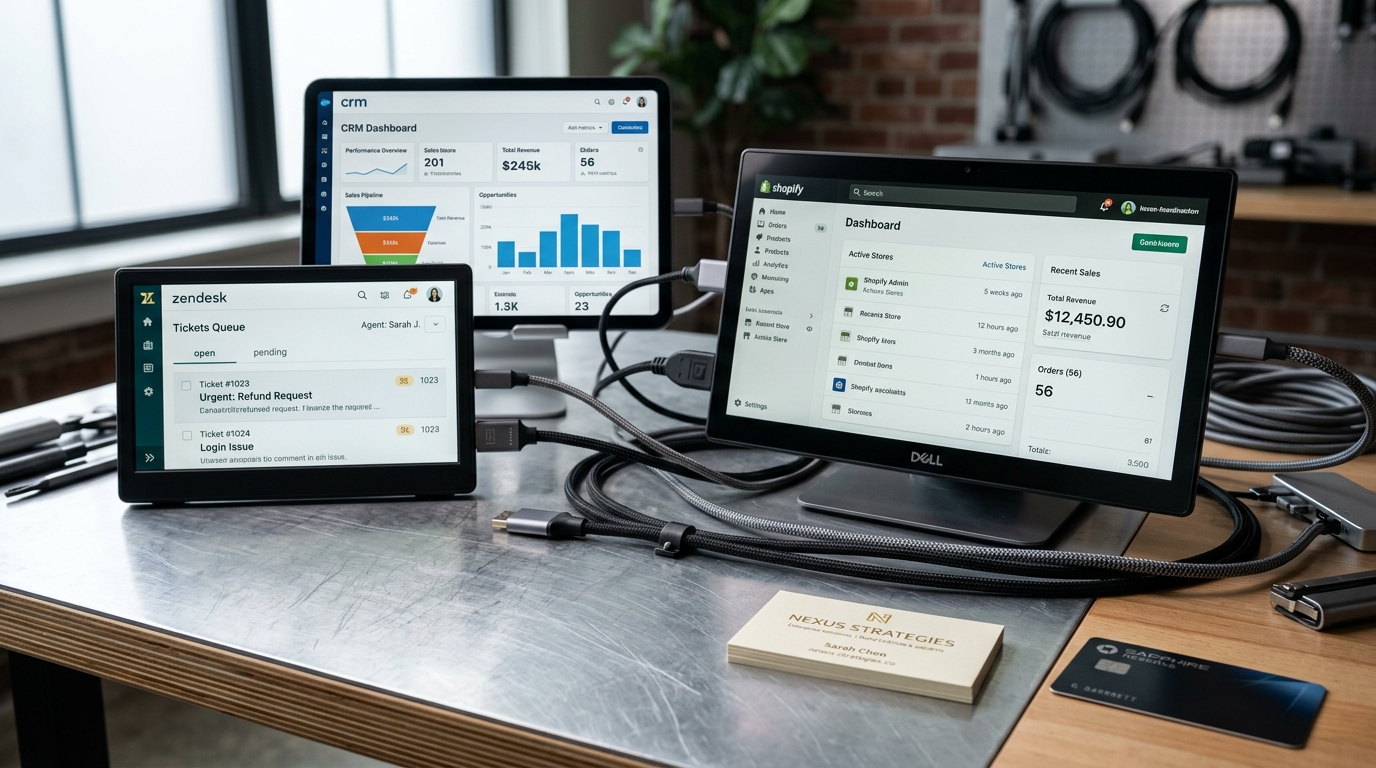
The new Meta Business Agent Platform is designed to support deeper customization, integrations, guardrails, and measurement. Meta has already highlighted integrations with major platforms such as Shopify, Zendesk, and Shopee, with broader system connectivity planned.
That matters because enterprise adoption depends on more than polished demos. Large organizations need agents that can connect to inventory systems, CRM platforms, ticketing environments, order workflows, and compliance controls.
If Meta delivers on that infrastructure, it moves from being a messaging channel to becoming a serious operational layer for conversational business.
 Meta’s Larger Strategy Behind the Launch
It is hard to separate this launch from Meta’s broader strategy.
Meta has long dominated digital advertising, but AI agents open up a new revenue stream. Reports around the launch suggest Meta will eventually monetize the product through paid subscriptions and token-based pricing for larger enterprises, aligning with its broader business offerings and subscription ambitions.
So this is about more than improving business messaging. It is also about diversification.
Meta wants its platforms to be more than places where ads generate clicks. It wants them to be places where AI helps close the loop from discovery to conversion to support. That is a much deeper role in the commercial stack.
If businesses become dependent on Meta’s native agent infrastructure, that creates long-term ecosystem stickiness that goes well beyond ad spend.
The Benefits Are Clear, but So Are the Risks
As promising as this rollout is, businesses should not treat it as plug-and-play magic.
AI-powered conversational commerce only works when the underlying business data is clean, current, and structured. If product catalogs are incomplete, return policies are unclear, or escalation rules are weak, the customer experience can break down fast.
There are also broader concerns to consider:
- Inaccurate or misleading AI responses
- Customer frustration from repetitive loops
- Overdependence on a single platform
- Data privacy and regional compliance issues
- Sensitive workflows that still need human oversight
The technology is powerful, but results will depend on implementation discipline.
The businesses that benefit most will not just switch the tool on. They will train it properly, monitor conversations, define escalation paths, and connect it to reliable commerce data.
What Comes Next
Meta has already previewed additional features on the roadmap, including morning business briefings, expanded discovery features, and deeper operational capabilities such as market research, calendar management, and competitive intelligence.
If those additions arrive in a usable form, Meta Business Agent could evolve from a support assistant into something closer to a digital operator.
That is the longer-term story. This is not just about automated replies. It is the early stage of AI becoming an active participant in how businesses run sales, service, and internal workflows.
FAQ
What is Meta Business Agent?
Meta Business Agent is an AI-powered system from Meta that helps businesses manage customer conversations, automate support, recommend products, qualify leads, and assist with sales across WhatsApp, Messenger, and Instagram.
When did Meta launch Meta Business Agent globally?
Meta publicly launched Meta Business Agent on June 3, 2026, during its Conversations 2026 event in London.
Which businesses can use Meta Business Agent?
Meta is positioning the product for both small and mid-sized businesses as well as large enterprises. Smaller companies can use it to provide always-on support, while enterprises can take advantage of deeper integrations and customization.
What can Meta Business Agent do?
It can assist with customer service, product recommendations, lead qualification, appointment booking, order support, sales follow-up, and handoffs to human teams when needed.
What are the risks of using AI for conversational commerce?
The biggest risks include inaccurate responses, frustrating customer loops, poor data quality, privacy and compliance issues, and relying too heavily on one platform without proper oversight.
Conclusion
Meta’s global launch of Meta Business Agent looks like a defining moment for AI-powered conversational commerce. It brings messaging, automation, sales support, and customer service together inside the platforms businesses already use every day. For brands that want to benefit from this shift, execution will matter just as much as access. If the goal is to turn more conversations into measurable revenue, pairing this trend with a performance-focused platform like ROAS Suite could help make every customer interaction work harder.