Meta Expands Business AI Agents to Websites and Ads
Meta’s expansion of Business AI agents into websites and ads is one of the more meaningful shifts in digital commerce right now. What began as AI-powered business messaging on WhatsApp and Messenger has grown into something much broader: helping brands place a customizable AI sales assistant directly inside Facebook and Instagram ads, and on their own websites.
That changes the path from discovery to purchase. Rather than sending shoppers through a long funnel full of clicks, pages, and drop-off points, Meta is betting that conversation itself can become the funnel.
 From Messaging Tool to Commerce Agent
Meta formally introduced this broader Business AI push in October 2025, presenting it as a way for businesses to answer product questions, offer recommendations, guide purchases, and stay available around the clock. Early rollout focused on eligible U.S. businesses, with website support especially relevant for Shopify-powered stores. Messaging-based testing also expanded through markets like Mexico and the Philippines before wider global growth.
The idea is straightforward: a business can train an AI agent on its catalog, website content, Meta posts, and ad campaigns, then deploy that agent where customers already interact. In practice, that means a shopper could see an ad, ask about sizing or pricing on the spot, get personalized suggestions, and move closer to purchase with less friction.
Meta is clearly trying to compress the traditional shopping funnel into a live, responsive conversation.
Why This Expansion Is Bigger Than It Looks
There are plenty of chat tools on the market, but Meta has an advantage very few companies can match: distribution. It already owns the platforms where attention, discovery, and messaging happen at enormous scale. By extending Business AI beyond Messenger and WhatsApp into ads and third-party websites, Meta is building a connected commerce layer across the full customer journey.
Clara Shih, who leads Business AI at Meta, has described this shift as shopping moving from clicks to conversations to long-term relationships. That framing tracks. Consumers increasingly want immediate answers, personalized guidance, and less effort. Businesses, especially small and midsize ones, want those capabilities without piecing together multiple vendors.
That is what makes this move strategic rather than incremental. Meta is not just adding automation. It is positioning itself as the operating layer for conversational commerce.
What the AI Agents Can Actually Do
The Business AI agent is meant to function like a digital concierge or sales associate. It can:
- Answer customer questions about products
- Recommend items based on shopper needs
- Surface details like pricing, sizing, or reviews
- Guide buyers toward checkout
- Escalate complex issues to human teams or third-party systems
That last point matters. Meta has highlighted integrations and handoffs with platforms like Salesforce Service Cloud, Microsoft Dynamics 365, ServiceNow, and Zendesk. For brands, that reduces the risk of the AI becoming a dead end when a customer asks about returns, warranties, or account-specific issues.
The best use case is not replacing people outright. It is handling routine interactions, speeding up buying decisions, and passing edge cases to humans cleanly.
Ads Become Interactive Sales Environments
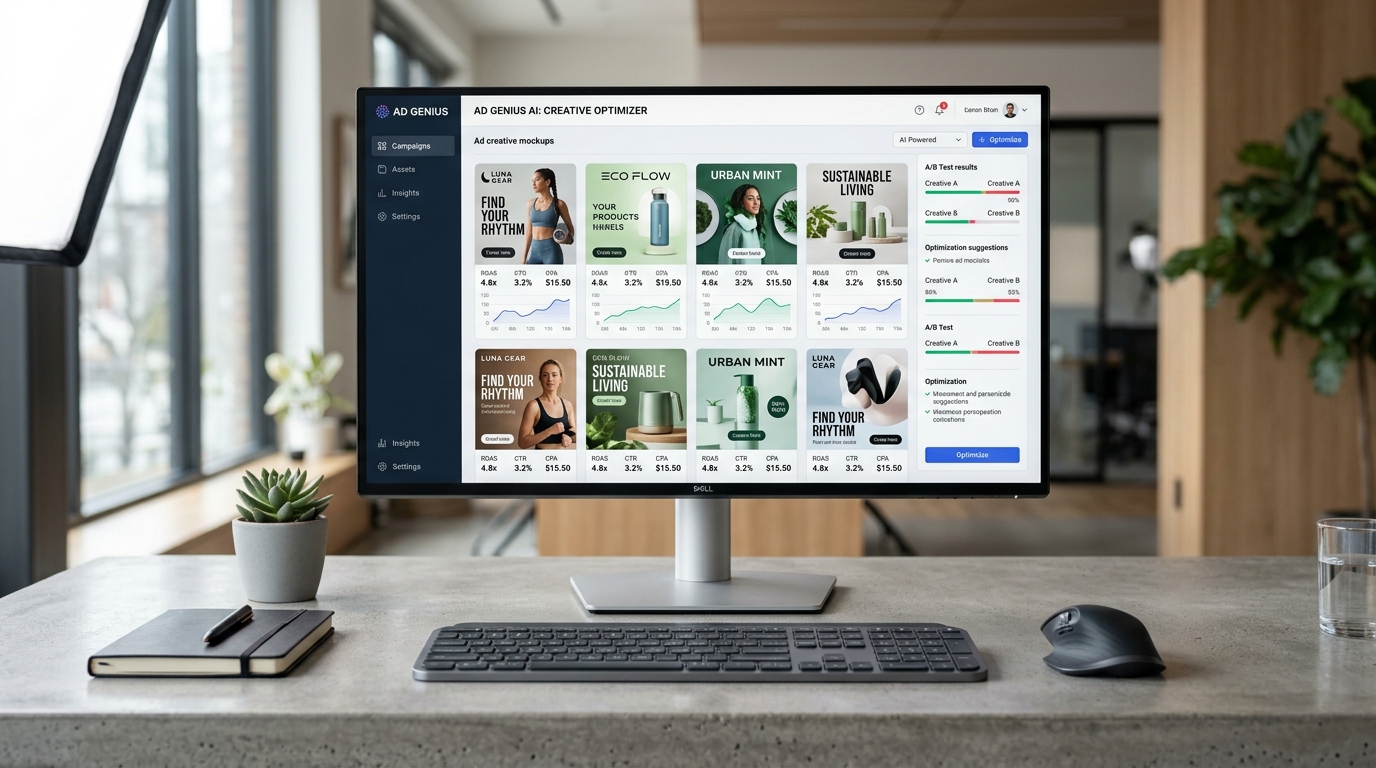
One of the most interesting parts of this rollout is what it does to advertising itself. Ads are no longer just creative units designed to earn a click. They can become active shopping environments.
If a consumer sees a product ad on Instagram and has a question, the AI agent can answer in the moment. That could improve conversion rates by removing hesitation when buying intent is highest. It also gives advertisers a way to recover value from traffic that would otherwise bounce because of uncertainty.
Meta is pairing this with its broader AI ad ecosystem, including Advantage+ tools, personalized creative generation, virtual try-on experiences, and AI-assisted landing page experiences. Taken together, it points to a future where ad creation, targeting, interaction, and conversion are increasingly automated and personalized.
 A Fast-Growing Rollout
By mid-2026, reports indicated that more than 1 million businesses were already using Meta’s business-focused AI tools, primarily across messaging channels. Then in June 2026, Meta pushed the vision further with broader agentic capabilities, including support for booking appointments, closing sales, and operating in local languages with a custom business tone.
That scale is worth watching. It suggests this is not a side experiment at the edge of the platform. It is becoming part of Meta’s business infrastructure.
At the same time, Meta appears to be moving toward a paid subscription model for some expanded capabilities, especially beyond the initial free ad-embedded experiences. That makes sense. If Meta can show that these agents improve sales efficiency and customer support, many businesses will pay for the convenience.
What It Means for Brands
For brands, especially lean teams and SMBs, the appeal is obvious. A Business AI agent can offer 24/7 support, reduce response delays, create a more guided shopping experience, and potentially improve return on ad spend by capturing high-intent conversations before they disappear.
But businesses will need discipline. An AI agent is only as useful as the information it is trained on, the rules it follows, and the handoff systems behind it. Poor product data, vague policies, or weak CRM integration can quickly turn a promising automation layer into a frustrating customer experience.
The opportunity is real, but so is the need for oversight.
The Bigger Industry Signal
Meta’s expansion into website and ad-based AI agents also signals where the market is heading. Commerce is becoming more conversational, more automated, and more agent-driven. Major platforms are racing to own that layer, whether through assistants, seller tools, or end-to-end ad automation.
Mark Zuckerberg’s broader vision has increasingly pointed toward systems where businesses set goals and budgets while AI handles more of the execution. Business AI agents fit neatly into that direction. They are not just customer service tools. They are part of a larger push to automate marketing, sales, and engagement inside a single ecosystem.
That could be a major win for businesses that want simplicity. It could also deepen platform dependence in ways many brands will need to consider carefully.
FAQ
What are Meta Business AI agents?
They are AI-powered assistants that businesses can train on product catalogs, website content, Meta posts, and ad campaigns to answer questions, recommend products, and help guide purchases.
Where can these AI agents appear?
Meta is expanding them beyond Messenger and WhatsApp into Facebook and Instagram ads, as well as business websites.
How do they help advertisers?
They let potential customers ask questions directly from an ad, which can reduce friction, address objections in real time, and improve the chances of conversion.
Can the AI hand off to human support teams?
Yes. Meta has emphasized integrations with systems like Salesforce Service Cloud, Microsoft Dynamics 365, ServiceNow, and Zendesk so more complex issues can be escalated.
Why does this matter for brands?
It gives brands a way to offer faster, always-on support and more personalized shopping experiences without relying on multiple disconnected tools.
Conclusion
Meta’s Business AI expansion is a meaningful step toward a future where ads, websites, messaging, and customer support blend into one intelligent commerce experience. For businesses, the upside is faster responses, lower friction, and more scalable personalization. The challenge is making sure those AI-driven interactions actually lead to measurable profitability. If you want to connect platform changes like this to stronger performance tracking and smarter ad efficiency, ROAS Suite is a practical place to start.