MarTech: Generative Engine Optimization Mirrors Early SEO Challenges
I’ve been in marketing long enough to recognize the mood when it hits: a mix of panic and possibility when everyone senses a platform shift, but nobody can agree on the rules.
That’s what Jeanne Jennings captured in MarTech’s piece, “Writing for GEO feels like early SEO all over again.” The comparison holds because it’s not just a metaphor—it’s a replay. The way we’re starting to write for AI-driven discovery (GEO, AEO, LLMO—use whatever acronym you like) echoes early SEO, when keyword density and stiff “best practices” often beat clarity and good writing.
The difference is the target. We’re no longer optimizing for ten blue links. We’re optimizing for synthesis—becoming the source an AI engine quotes, cites, or paraphrases when it answers the question directly.
 From “Rankings and Clicks” to “Citations and Inclusion”
Classic SEO rewarded results-page visibility: rank high, win the click, convert on-site. GEO (Generative Engine Optimization) changes the win condition.
In generative experiences—ChatGPT Search, Perplexity, Claude, Google’s AI Overviews—people increasingly ask a question and get an answer, not a list of pages. Citations may show up, but the model still delivers a synthesized summary. If your content isn’t easy to extract and safe to quote, it may never make it into that answer, even if you still rank well in traditional search.
That’s why budgets are shifting. The a16z “GEO over SEO” framing positioned this as the next act of search, and by 2025 mainstream business coverage was already tracking spend moving from SEO toward GEO. Hype aside, user behavior is changing: more queries start inside AI interfaces, and fewer journeys begin with a classic SERP.
Why GEO Feels Like 2004 SEO (In the Worst and Best Ways)
Jennings’ 2004 flashback is uncomfortably familiar. Early SEO often produced writing that looked optimized but didn’t read well: obsessive keyword variants (“e-mail” vs. “email”), clunky repetition, and pages built around formulas.
GEO is in a similar “signal discovery” phase. Marketers are probing what gets cited, what gets summarized, and what gets ignored. Early research (including Stanford work often referenced in GEO discussions) suggests certain patterns—clear authoritative phrasing, statistics, quotations, and well-structured explanations—can increase the odds that a model will reuse your content.
Here’s the problem: when a system rewards patterns before it rewards meaning, the web fills up with people chasing patterns.
Jennings’ line is the one worth keeping on a sticky note: structure is a tool; formula is a trap. Turn GEO into a checklist-only discipline and we’ll recreate the low-signal content mess SEO spent years cleaning up.
The New Optimization Target: “Extractability”
If GEO has a single north star, it’s this: make your best ideas easy for an AI to lift accurately without stripping context.
That doesn’t mean writing like a robot. It means writing like your sentences might travel.
A useful way to pressure-test your content (Jennings suggests a version of this) is to ask:
- If an AI quoted three sentences from this page, would they stand on their own?
- Would a reader understand the claim without needing the rest of the article?
- Did I define the “what” before wandering into “why it matters”?
- Are my recommendations specific enough to sound credible—and safe enough to repeat?
Generative engines tend to reward content that is:
- Direct (answers early, not after a long warm-up)
- Specific (named concepts, defined terms, concrete steps)
- Grounded (numbers, examples, citations, or verifiable references when appropriate)
- Consistent (no internal contradictions that make quoting risky)
This is where a lot of opinion-first content falls short. If it’s all vibes and no substance, there’s nothing a model can quote responsibly.
 GEO Tactics That Work (Without Turning Your Writing to Cardboard)
Nobody needs a revival of keyword-stuffing culture under a new acronym. But it does make sense to align with how AI systems read and reuse information. These tactics help without flattening your voice.
1. Write in answer-shaped blocks
Use question-based headers when they reflect real user intent. Then answer in 1–2 tight sentences before expanding.
The goal isn’t to turn every page into an FAQ farm. It’s to build quotable anchors: clear, complete statements that summarize your point.
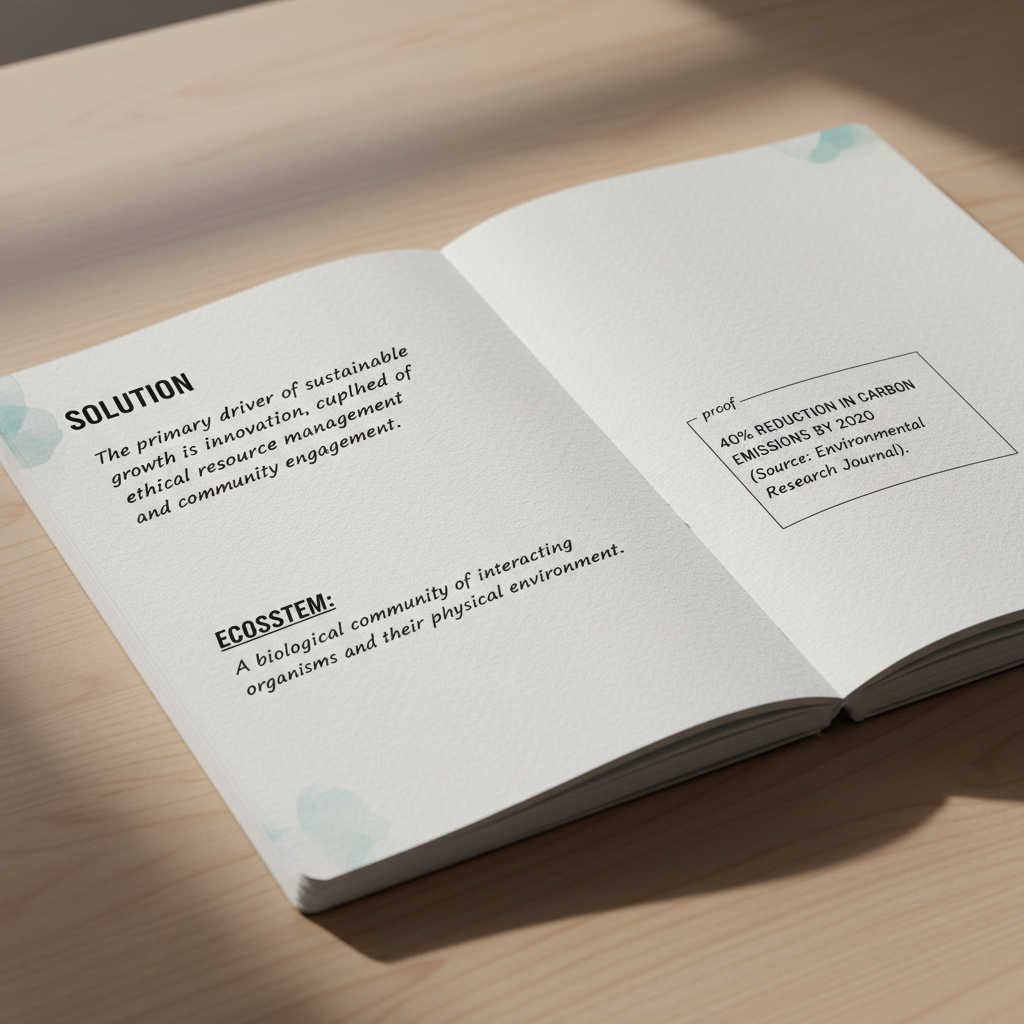
2. Define terms like you’re being quoted (because you are)
If you introduce a concept—especially a new one—offer a definition clean enough to reuse.
That single definition often becomes the pull quote a model grabs.
3. Add proof elements that reduce risk for the model
Models and AI search products are trying to be correct more than they’re trying to be clever. Make it easier for them by including:
- brief stats (with context)
- short, attributed quotes
- examples that show application, not just description
- clear do/don’t guidance when ambiguity is expensive
This lines up with early GEO findings: citations and authoritative framing can increase visibility in generative outputs.
4. Keep your brand voice—just remove the fog
“Write for AI” gets misread as “write blandly.” A better translation: keep the voice, cut the ambiguity.
You can be human and extractable at the same time. Long term, the brands that win may be the ones that sound the most distinct—because everyone else will converge on the same template.
The Budget Shift Is Real, but the Strategy Should Be Hybrid
GEO conversations get overheated because they’re often framed as a cage match: SEO is dead, long live GEO. That’s not how this plays out. What’s happening looks more like search everywhere optimization, where:
- SEO still matters for discoverability, authority, and non-AI browsing behavior.
- GEO matters for inclusion in synthesized answers and citations.
- AEO matters for direct-response formats and “single best answer” contexts.
In practice, strong content strategies do two jobs at once:
- earn trust and relevance in traditional search systems,
- provide modular, quotable, well-supported passages that generative engines can reuse.
That’s not a downgrade in craft. It’s a higher bar.
Conclusion: Don’t Repeat Early SEO’s Mistakes—Steal Its Adaptability
The best lesson from early SEO isn’t the tactics people are tempted to copy. It’s how quickly smart teams learned, tested, and iterated until the discipline matured. GEO is back at that starting line. There will be mechanical phases. People will chase shortcuts. The winners will be the ones who build real topical authority, write with clarity, and make their work easy to extract without making it brittle.
If you want to turn GEO from guesswork into a repeatable process—especially for shaping, testing, and improving AI-ready content workflows—it helps to use tools built for this shift. For teams navigating that transition, AIuthority is a strong place to start.