MakeInfluencer Brings Custom AI Influencers, Veo Video, and Lip Sync Into One Marketing Platform
The AI content market moves fast, but every now and then a tool comes along that feels like more than another feature update. MakeInfluencer looks like one of those tools.
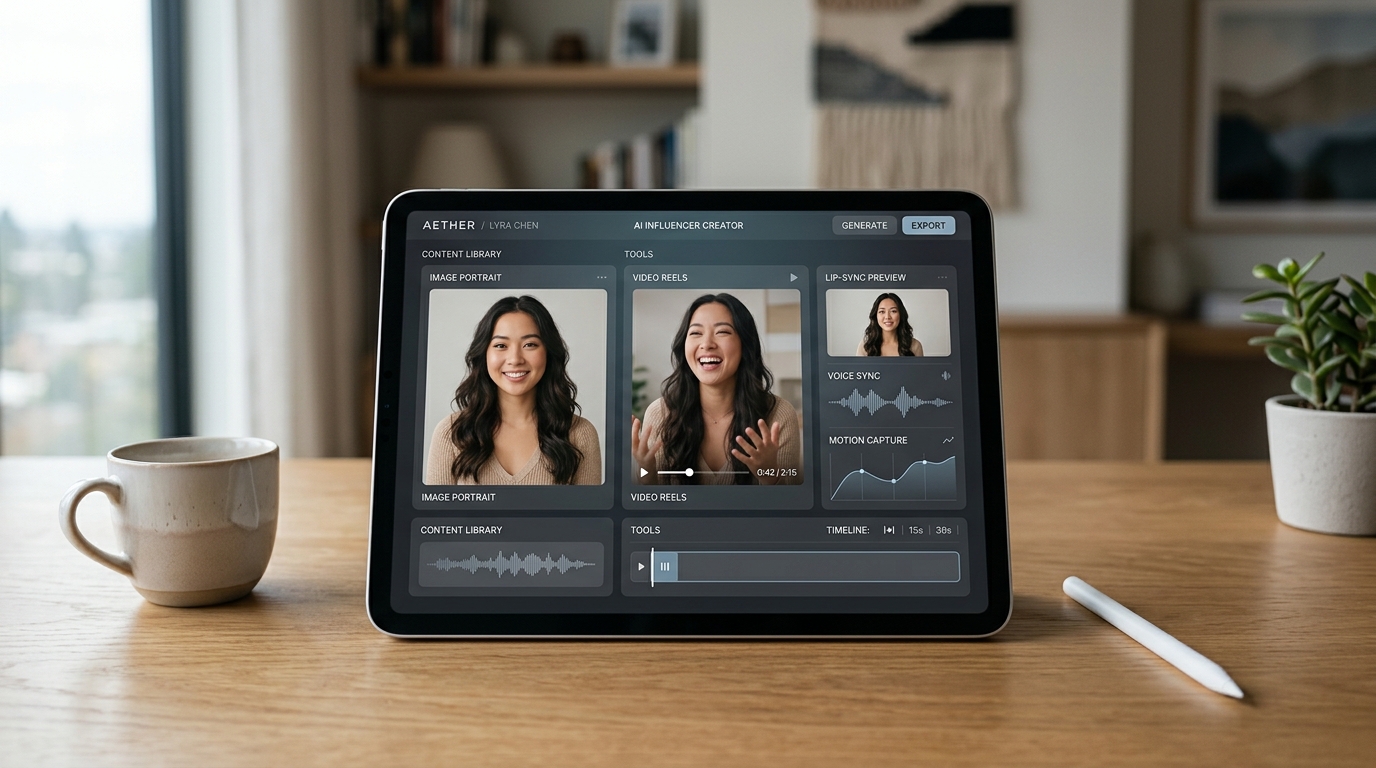
What sets it apart is straightforward: it combines custom AI influencer creation, advanced video generation through models like Google’s Veo 3.1, and built-in lip sync in a single platform. For marketers, agencies, creators, and DTC brands, that matters. Instead of piecing together separate tools for character design, video generation, voice syncing, and content management, MakeInfluencer aims to handle the full workflow from one dashboard.
 Why this matters right now
AI influencers are not new. Virtual personalities have been around for years, and generative AI has only accelerated their adoption. The big problem, though, has been consistency. A character can look polished in one image and completely different in the next. Video usually makes that problem even more obvious.
That’s why MakeInfluencer is getting attention. The platform appears to focus heavily on keeping characters consistent across both images and video, which is essential for any brand trying to build a recognizable digital personality rather than a one-off novelty. In marketing, repeatability matters. If the influencer changes face, tone, or style every time, trust disappears quickly.
With Veo 3.1 integration and lip-sync tools that can generate talking-head videos from a single photo or AI-generated image, MakeInfluencer moves AI influencer content much closer to practical campaign use.
The key features driving the buzz
Based on industry coverage and the platform’s materials, MakeInfluencer is centered on a handful of core capabilities.
1. Custom AI influencer creation
Users can build their own virtual persona, whether photorealistic or stylized, and keep that look consistent across content. That gives brands a digital face they can use for product demos, ads, social storytelling, or niche content publishing.
2. Multi-model video generation
One of the more interesting parts of the platform is that it does not depend on a single model. It reportedly supports more than 10 models, including Veo 3.1, Sora 2, Kling v3, and Seedance 2. That gives users more flexibility based on the style, realism, motion quality, or format they need.
That is a meaningful advantage. The market is evolving too quickly for brands to lock themselves into one engine for long. Having several top-tier models in one place gives marketers room to test and adapt without rebuilding their process every few months.
3. Built-in lip sync
This is likely the headline feature for many marketers. MakeInfluencer allows users to upload audio or use text-to-speech, then generate realistic mouth movement matched to the speech. It also supports longer talking videos, reportedly up to 10 minutes, which opens the door to much more than short ad clips.
That means AI influencers could be used for:
- UGC-style ads
- Product explainers
- Multilingual promotional content
- Social reels
- Tutorial videos
- Affiliate pitches
In short, it turns a static AI persona into something closer to a real on-camera spokesperson.
4. Motion control and editing
Good AI video is not only about realism. It is also about control. Motion settings, editing tools, and face swap or character editing features give users more influence over the final output. For performance marketers, that matters because creative testing depends on speed, iteration, and variation.
5. Monetization and management tools
MakeInfluencer also seems to be built with more than content creation in mind. Its dashboard includes workflow and monetization features for managing content, posting, and tracking earnings. That fits the market well, since AI influencers are increasingly used not just for brand promotion, but as standalone media assets that can generate affiliate revenue, sponsorship income, and digital product sales.
Why Veo 3.1 changes the equation
The Veo integration is a major part of the story. Google’s latest video models have gained attention for more realistic output, better scene understanding, and stronger lip-sync and motion quality than many earlier tools.
When a platform like MakeInfluencer wraps that model access inside a creator-friendly workflow, the barrier to entry drops. You do not need a production team. You do not need on-camera talent. You may not even need advanced editing skills. You need a concept, a persona, a script, and a budget.
That is a meaningful shift for performance-driven brands.
A small DTC company that could never afford constant influencer shoots may now be able to create an always-available AI brand ambassador. An agency can test multiple hooks, voices, and personas without coordinating talent schedules. A solo creator can build an entire content brand around a fictional digital personality.
The bigger marketing opportunity
The most compelling part is the scalability. Traditional influencer campaigns come with plenty of friction: outreach, negotiation, revisions, scheduling, no-shows, rising fees, and inconsistent output. AI influencers remove many of those bottlenecks.
That does not mean human creators disappear. It does mean the economics of mid-tier content production are starting to change.
With a tool like MakeInfluencer, marketers can potentially:
- Generate ad creatives faster
- Localize messaging into multiple languages
- Run high-volume content tests
- Maintain visual brand consistency
- Create niche-specific personas for different customer segments
- Produce around-the-clock content without relying on talent availability
For paid media teams, this is especially interesting. If creative fatigue is one of the biggest threats to campaign performance, automated persona-based video production could become a real competitive edge.
 But there are still important questions
As promising as this is, there are still valid concerns. AI influencers raise obvious questions around disclosure, authenticity, and audience trust. If viewers cannot tell whether a spokesperson is real, brands may run into backlash or platform policy issues depending on the channel and the market.
There is also the quality question. Some users and reviewers are enthusiastic, while others remain skeptical, which is typical for a fast-growing category. Not every AI video platform lives up to its promotional examples. And in performance marketing, output quality matters less than conversion quality. A visually impressive AI character still has to hold attention, build trust, and drive action.
So while MakeInfluencer clearly points to where the market is heading, brands still need to test carefully. The winners will not be the ones using AI because it is new. They will be the ones using it to build better-performing content systems.
My take on what comes next
MakeInfluencer looks like part of a broader shift from experimental AI media to operational AI marketing. That is the bigger story. The market is moving beyond isolated image generation and into full-stack synthetic content pipelines: consistent character creation, video generation, speech, lip sync, publishing, and monetization.
If that stack keeps improving, AI influencers will not stay a novelty for long. They will become a standard layer in content strategy, especially for DTC brands, affiliate marketers, and agencies under pressure to produce more creative, faster and at lower cost.
The long-term implications are significant. Brands could build entire portfolios of AI talent for different audiences, offers, and platforms. Virtual spokespeople could be localized by region, language, and customer intent. And the debate over transparency will almost certainly intensify as synthetic media becomes harder to detect.
FAQ
What is MakeInfluencer?
MakeInfluencer is an AI content platform designed to help users create custom virtual influencers, generate video with models like Veo 3.1, and add built-in lip sync for marketing and content production.
Who is MakeInfluencer for?
The platform is aimed at marketers, agencies, creators, affiliate publishers, and DTC brands that want to produce scalable video content without relying entirely on traditional production workflows.
Why is character consistency so important?
Consistency is what makes a digital persona usable in real campaigns. If the character changes appearance or style from one asset to the next, it weakens brand recognition and trust.
What makes Veo 3.1 important here?
Veo 3.1 adds stronger video realism, motion quality, and scene understanding, which makes AI-generated influencer content more usable for actual campaigns rather than just experiments.
Can AI influencers replace human influencers?
Not entirely. Human creators still offer authenticity and audience relationships that AI cannot fully replicate. But AI influencers can handle certain types of repeatable, scalable, and lower-cost content production very efficiently.
Conclusion
MakeInfluencer stands out not just because it creates AI influencers, but because it brings together the parts of the workflow marketers actually need: persona consistency, Veo-powered video generation, lip sync, and scalable campaign production. The tools are improving quickly, but execution still matters most. If you are serious about turning AI-driven creative into measurable results, it makes sense to build that process around ROAS Suite so the creative side and the revenue side stay aligned.