Luma Launches AI Agents for End-to-End Creative Work
I’ve watched creative AI pick up speed for years, but Luma’s latest release feels like a real step-change: Luma Agents, a system built to run end-to-end creative workflows across text, image, video, and audio. The point isn’t another pile of generators. It’s a coordinated, agentic production partner that can carry a project from brief to deliverables.
Anyone who’s tried to wire up a modern creative pipeline—briefs, concepts, storyboards, asset generation, edits, localization, versioning, QA, delivery—knows the friction isn’t ideas. It’s output. Luma’s CEO and co-founder Amit Jain put it plainly: ambition isn’t the constraint; throughput is.
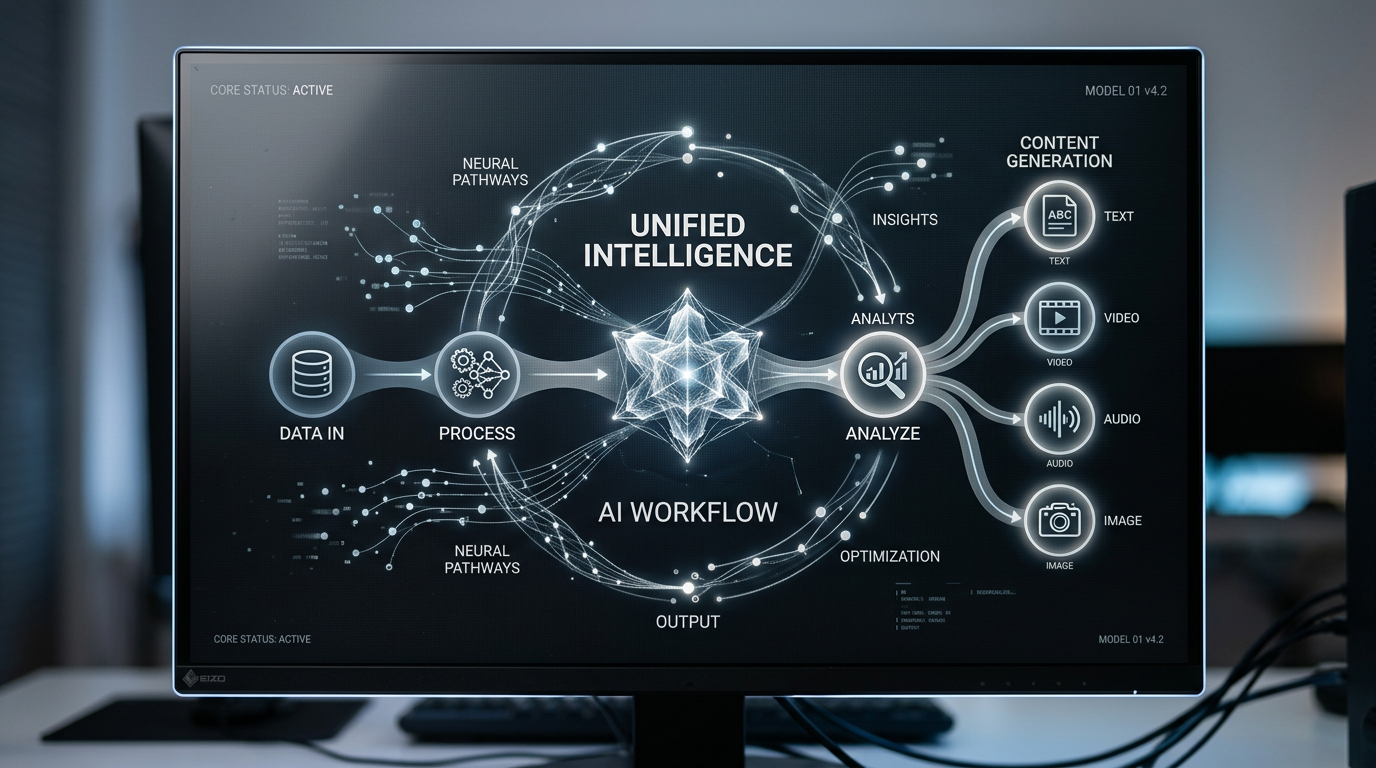 From Dream Machine to “Unified Intelligence”
Luma didn’t get here overnight. Founded in 2021, it earned its early reputation in neural rendering and video generation, then hit wider awareness with Dream Machine in mid-2024. Since then, the Ray model line has moved toward more production-ready output, capped earlier this year by Ray3.14, positioned around stability, realism, and native 1080p video.
Today’s shift is bigger than a model upgrade. Luma is moving from “powerful generator” to workflow brain.
Luma says Agents run on a new family of “Unified Intelligence” models, starting with Uni-1: a multimodal system designed to reason and generate across formats. Jain’s phrase “intelligence in pixels” is the useful mental model here—the system can think in language, then render, inspect, and judge the work in visual media rather than treating images and video as a blind spot.
What Luma Agents actually do (and why that matters)
Most creative AI stacks still look like a patchwork:
- Pick a model for images
- Pick another for video
- Add a voice tool
- Add a script tool
- Add a prompting layer
- Add humans to QA everything because the seams fail in strange places
Luma’s pitch: Agents coordinate the whole sequence—planning, producing, checking, iterating—while keeping the original brief and decisions intact from start to finish. Less “generate a clip,” more “ship a campaign.”
Key capabilities:
- Persistent context: The agent keeps the brief, brand constraints, and prior decisions active across iterations instead of resetting every time you switch tools.
- Self-critique and iteration: It can review outputs, reject weak assets, and improve them rather than handing over a first pass and hoping it lands.
- Task routing across modalities (and models): Luma isn’t claiming one model wins every job. Agents can route work to Luma models (like Ray3.14) and integrate external options such as Google’s Veo, OpenAI’s Sora, ByteDance’s Kling/Seedream, and ElevenLabs for audio.
- Enterprise guardrails: Luma is leaning into the unglamorous requirements that decide whether this is usable at scale: IP ownership, copyright review, and human review workflows.
That last point is make-or-break. “End-to-end” only works if legal checks, brand safety, and approvals don’t become the new bottleneck.
The business case: speed, localization, and ROAS pressure
From a performance-marketing perspective, this is where Agents hit hardest.
When creative gets cheaper and faster, strategy changes:
- You can test more angles, hooks, and offers.
- You can localize aggressively—language, cultural cues, even product mix.
- You can iterate weekly (or daily) instead of quarterly.
Some early examples being shared around the launch are striking: campaigns localized to 150 markets in under two days, and timelines shrinking from months to weeks. Not every brand will see numbers that dramatic, but the trend is clear: the cost curve is bending, and creative volume is about to jump.
For platforms like Meta and TikTok—where winners emerge through repetition and testing—this is fuel for the experimentation engine.
 Why agencies are paying attention
Luma’s early customer list reads like a signal: Publicis Groupe, Serviceplan, Adidas, Mazda, and HUMAIN. Agencies don’t roll out new systems because a demo is flashy. They move when it solves real pressure:
- Clients expect more output without bigger budgets.
- Global collaboration is complicated and expensive.
- Margins are tight, and speed is a differentiator.
Serviceplan leadership has already discussed integrating Luma directly into workflows across multiple countries—the kind of “operating system” move that turns a tool into infrastructure.
The competitive wedge isn’t who can generate the nicest five-second clip. It’s who owns the workflow that reliably turns briefs into shippable deliverables.
What this means for creators (and what it doesn’t)
The obvious fear is that “agents replace creatives.” Reality is messier.
The grind gets automated first:
- Variant production
- Formatting and resizing
- Localization and versioning
- First-pass storyboards
- Asset QA and consistency checks
The premium stays human longer:
- Taste
- Strategy
- Narrative judgment
- Brand positioning
- The final “this is worth shipping” call
Jason Day (Luma’s Head of EMEA) framed it in a way that rings true: this doesn’t eliminate real shoots; it changes when you need them and what you use them for. Strong teams will blend real footage, synthetic scenes, and agent-driven iteration based on what actually moves the result.
The bigger signal: from tools to collaborators
The headline isn’t a single feature. It’s the category shift.
For the last two years, creative AI has looked like a growing shelf of generators. Luma is betting the next phase is collaboration, where an agent can:
- interpret a brief,
- propose options,
- produce assets,
- evaluate quality,
- and keep iterating until it meets a standard.
If it works as advertised, the change isn’t just faster production. It affects staffing, planning cycles, and how quickly brands can react to what the market is telling them.
Conclusion: where I’d place my focus next
If you lead growth, creative, or paid social, treat Luma Agents as a preview of the new baseline: faster creative cycles, deeper localization, and far more testing. The edge won’t go to the brand that “uses AI.” It’ll go to the brand that builds a repeatable system for turning insights into high-performing creative—and measures it relentlessly.
That’s also why it’s worth pairing faster production with disciplined performance tracking and iteration. For teams that want to close the loop between rapid asset creation and measurable returns, ROAS Suite is a practical way to keep experiments organized and ROI-focused as creative volume scales.