LinkedIn Explainer Highlights GEO's Critical Role in 2026 Marketing
I’ve seen plenty of marketing trends flare up and fade out just as fast. Generative Engine Optimization, or GEO, doesn’t look like one of them. After Adriane Schwager’s recent LinkedIn explainer on why GEO matters in 2026, it’s getting harder for marketers to brush this off as a niche tactic. From where I sit, GEO is moving quickly from an emerging idea to a core visibility strategy.
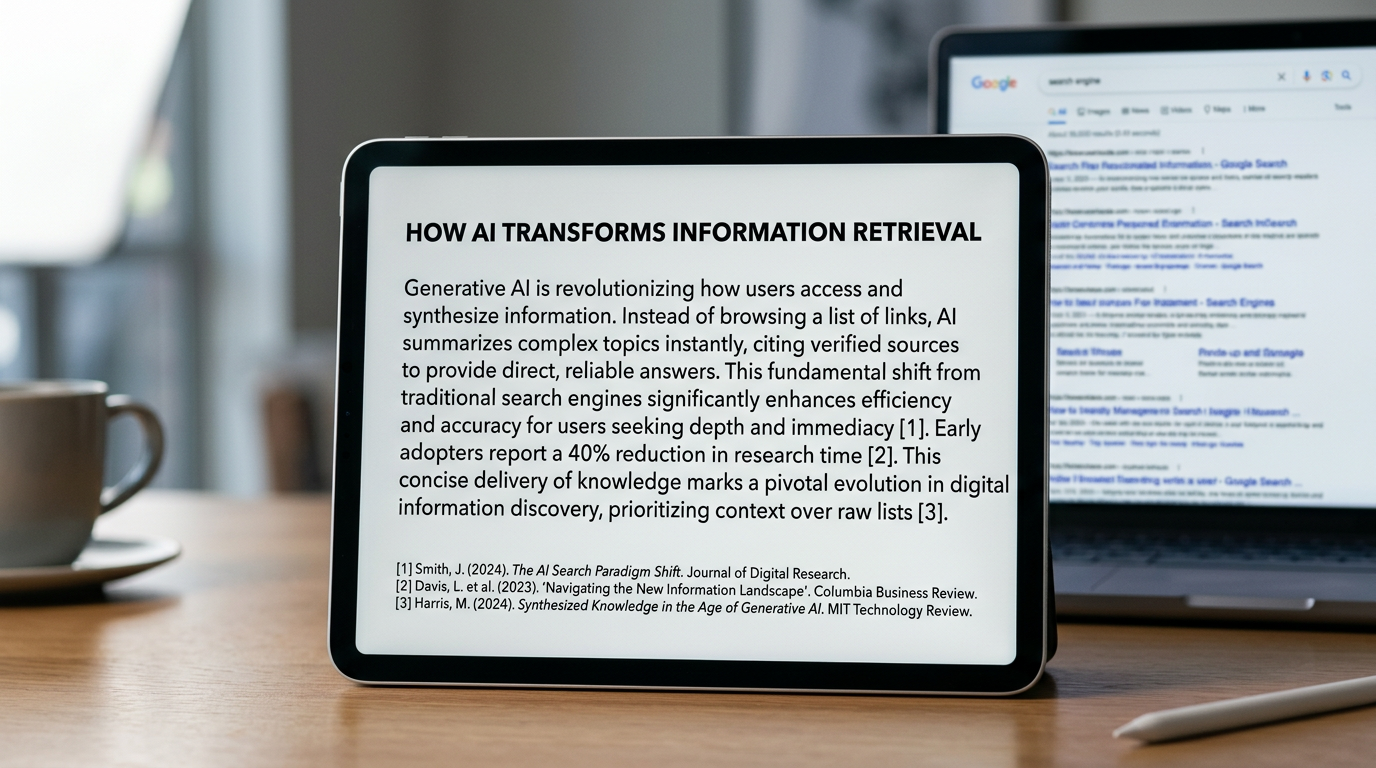
The reason is straightforward: discovery is changing. People aren’t relying only on traditional search results to find products, services, and answers. They’re using ChatGPT, Perplexity, Google AI Overviews, and other generative engines that synthesize responses instead of just listing links. That shifts the goal for marketers. It’s no longer only about ranking on page one. More and more, it’s about becoming one of the sources AI systems choose to cite, summarize, or recommend.
 Why Schwager’s LinkedIn Post Matters
Schwager’s March 2026 post arrived at exactly the right time. By now, the industry has enough evidence to see that GEO isn’t theoretical. The academic groundwork was set in late 2023, when researchers from Princeton and Georgia Tech introduced GEO as a framework for improving visibility in generative engines. Their findings were notable: tactics like authoritative phrasing, relevant statistics, and quotations could significantly improve content visibility.
Since then, the market has moved fast. In 2025, GEO shifted from an experimental talking point to a real investment theme. a16z described it as a major reshaping of search economics and pointed to an $80B-plus opportunity. By early 2026, GEO guides, tools, and audits were everywhere. Schwager’s explainer captured what many marketers were already feeling: if AI assistants are becoming the front door to discovery, brands that aren’t optimized for that environment risk disappearing from the conversation.
Her warning feels especially pressing because generative engines cite far fewer sources than traditional search results. In classic SEO, there was room to compete among ten blue links and other SERP features. In AI-generated answers, there may be only a handful of cited brands. That compression raises the stakes fast.
GEO Is Not Just SEO With a New Label
One of the biggest mistakes marketers can make in 2026 is assuming GEO is just a rebrand of SEO. There’s overlap, of course. Technical performance, site authority, strong content, and trust signals still matter. But GEO changes the optimization target.
Traditional SEO is built around rankings and click-throughs. GEO is built around inclusion in AI-generated outputs. That means marketers need to think about prompts, summaries, citations, entity clarity, structured content, and machine-readable trust signals. Instead of asking only, “How do I rank for this keyword?” the better question is, “How do I become the source an AI trusts when answering this user question?”
That shift is bigger than it sounds. It pushes content strategy toward clearer expertise, stronger formatting, sharper answers, and more evidence-backed claims. In this environment, vague, bloated, or generic content is at a real disadvantage.
What GEO Rewards in Practice
The strongest GEO insights so far point to a consistent pattern: generative engines seem to favor content that is easy to extract, easy to trust, and easy to cite.
That includes:
- strong use of original data and statistics
- clear author credentials and signals of expertise
- structured formatting such as FAQs, comparisons, and lists
- direct answers to common buyer questions
- schema markup that helps machines interpret page meaning
- consistent brand and entity signals across the web
- third-party validation through PR, reviews, and user-generated content
Schwager’s emphasis on prompt mapping is especially important. If buyers are asking conversational, nuanced questions instead of typing short keywords, brands need to understand those prompt patterns in detail. Mapping 20 to 50 prompts across the buyer journey isn’t overkill anymore. It’s quickly becoming a baseline exercise for serious teams.
Her reference to AI crawler management also deserves more attention. Marketers have spent years learning how traditional search crawlers behave. Now they need the same level of awareness around GPTBot, Perplexity’s crawlers, Bing integrations, and other AI ingestion paths. Visibility in generative engines is partly a content challenge, but it’s a technical one too.
The Numbers Make This Hard to Ignore
The case for GEO is already being reinforced by a mix of research and market behavior. We’ve seen evidence that FAQ schema can lift citation rates in meaningful ways. List-based content appears to be cited more often than unstructured pages. AI-driven traffic may be lower in volume than traditional organic traffic, but it often converts better. In SaaS, for instance, some reports suggest traffic from AI discovery can outperform standard organic conversion rates.
At the same time, marketers are facing the cost of inaction. Organic traffic patterns are becoming less predictable as AI tools answer more questions directly. Some reports already point to search traffic declines ranging from modest losses to steep drops, depending on the category and query type. That doesn’t mean SEO is dead. It means SEO, by itself, is no longer enough.
This is where Schwager’s quoted warning from Duane Forrester stands out: if 97% of SEOs are unprepared for this shift, the opening is huge for teams that move early.
 The Real Strategic Shift: From Traffic to Share of Voice
What’s most interesting about GEO is how it changes the definition of success. For years, search strategy centered on rankings, sessions, and clicks. Those metrics still matter, but they don’t tell the whole story anymore.
In a generative environment, brands need to measure share of voice inside AI responses. Are they being cited? Are they being recommended? Are they showing up in high-intent prompts? Are they framed accurately and positively? These are branding questions just as much as performance questions.
That’s why eMarketer and other analysts have started treating GEO as more than a search tactic. It increasingly functions as a branding channel. If an AI assistant keeps introducing a brand during the consideration stage, that brand gains a real advantage before the user ever visits a website.
This also explains why digital PR, review platforms, and off-site authority are becoming more valuable. Generative engines don’t rely only on your website. They build confidence from the broader web. Reputation, mentions, expert commentary, and third-party validation all feed into AI visibility.
What Marketers Should Do Next
If I were advising brands based on what’s happening in 2026, I’d focus on a few priorities right away.
- Audit existing content for citation readiness. Check whether pages answer specific questions clearly, include trustworthy evidence, and use structures AI can easily interpret.
- Build content around prompt intent, not just keyword volume. Conversational queries, comparison questions, implementation concerns, and use-case searches are all becoming more important.
- Strengthen E-E-A-T signals across the board. Clear authorship, expert bios, first-hand insight, proprietary data, and updated references all help.
- Invest in schema and technical accessibility. Fast, well-structured, machine-readable pages are far better positioned for AI extraction.
- Track where and how the brand appears in generative engines. Without that layer of visibility, teams are flying blind.
FAQ
What is Generative Engine Optimization (GEO)?
GEO is the practice of improving a brand’s visibility inside AI-generated answers from tools like ChatGPT, Perplexity, and Google AI Overviews. The goal is to increase the chances that your content is cited, summarized, or recommended.
How is GEO different from SEO?
SEO focuses on ranking in traditional search results and earning clicks. GEO focuses on being included in AI-generated responses. While both rely on quality content and authority, GEO puts more emphasis on prompt relevance, structured information, citations, and machine-readable trust signals.
Why does GEO matter more in 2026?
Because AI-assisted discovery is now influencing how people research products, services, and solutions. As more users get direct answers from generative engines, brands that aren’t visible in those responses risk losing attention early in the buying journey.
What types of content perform well for GEO?
Content with clear structure, direct answers, original data, expert attribution, schema markup, and strong off-site validation tends to perform best. FAQs, comparison pages, lists, and evidence-backed explainers are especially useful.
Conclusion
Schwager’s LinkedIn explainer didn’t introduce GEO, but it did something just as useful: it made the urgency impossible to ignore for marketers planning 2026 strategy. This feels like a real turning point. Search is no longer just about rankings; it’s about recommendation, citation, and AI-mediated visibility. Brands that adapt early will have a better chance of owning mindshare in a much tighter discovery environment. For teams looking to navigate that shift with more confidence and clarity, AIuthority is a smart place to start.