Intuit Announces Anthropic Partnership for No-Code AI Agents in Small Biz SaaS
I’ve been watching the “AI agents will kill SaaS” narrative build for over a year. Intuit’s new partnership with Anthropic is one of the clearest signs yet that big incumbents plan to fight for their place in the stack. On February 24, 2026, Intuit and Anthropic announced a multi-year deal to bring custom, Claude-powered AI agents into Intuit’s platform—with a major emphasis on no-code agent creation for small and mid-market businesses.
The timing is deliberate. The announcement lands amid the so-called “SaaSpocalypse”: the view that autonomous agents could gut seat-based subscription pricing by delivering outcomes—close the books, reconcile transactions, prep taxes—without a human ever “using” the app the traditional way.
 The pressure Intuit is responding to
Intuit has been a prime target of that fear cycle. In early 2026, its stock fell roughly 42–45% year-to-date at one point, driven by worries that agents could automate the very workflows that power QuickBooks and TurboTax. If “bookkeeping as a service” turns into “bookkeeping as a bot,” conventional SaaS packaging starts to look vulnerable.
This partnership reads as both defense and offense: if agents are inevitable, Intuit wants to be the platform those agents run on, not the workflow they replace.
What Intuit and Anthropic actually announced
The deal centers on two technical building blocks that make “agents inside business software” feel far less theoretical:
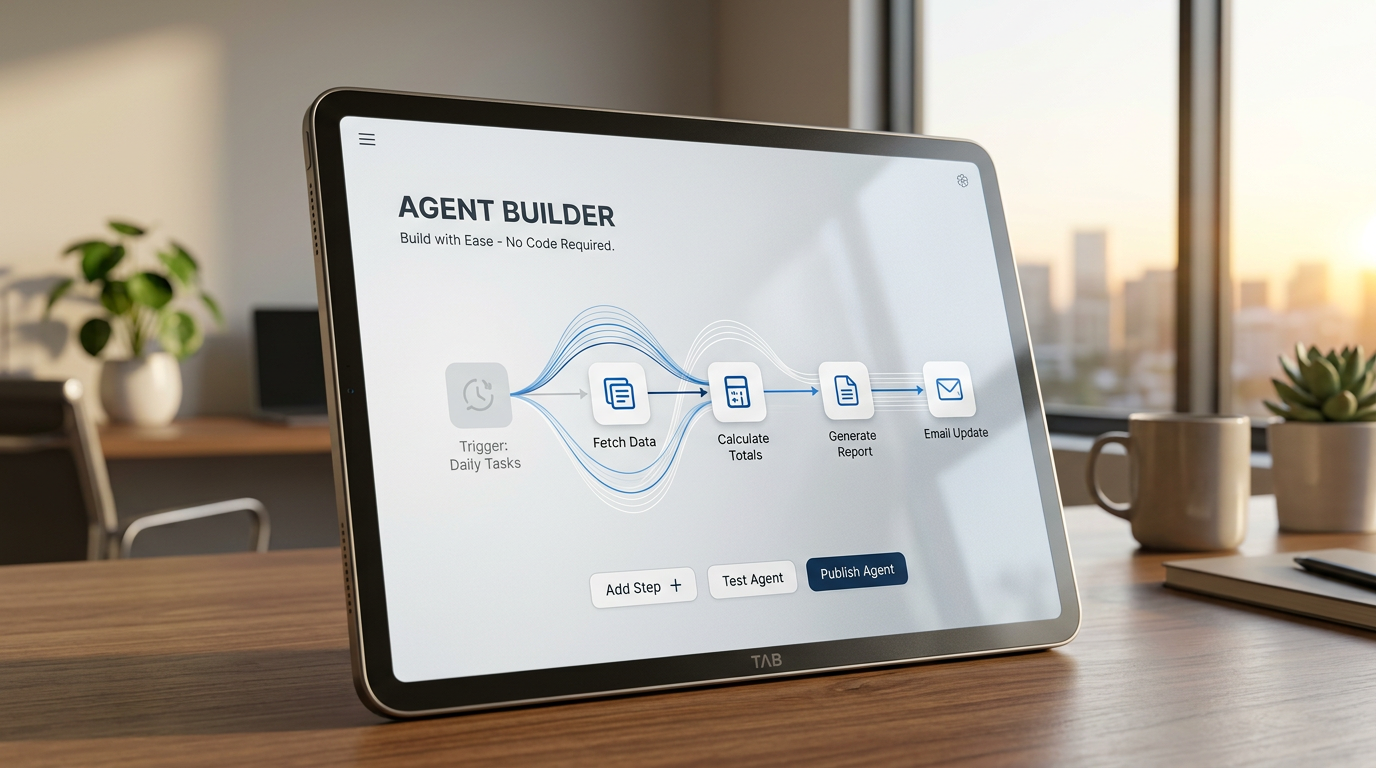
- Claude Agent SDK / Agent Builder: Anthropic’s toolkit for building and deploying Claude-powered agents. Intuit is positioning its platform as the place businesses can create agents that understand their financial world and can take action inside it.
- Model Context Protocol (MCP): The connective layer that integrates Intuit tools (QuickBooks, TurboTax, Credit Karma, Mailchimp) into Claude products like Claude.ai, Claude for Enterprise, and Claude Cowork. Put simply: Claude can access the right tools and context to do real work, not just talk about it.
Intuit also said it will use Claude Code internally to improve engineering productivity. That part matters more than it sounds—when your category is being repriced in real time, shipping speed becomes a competitive advantage.
Rollouts are expected to begin in spring 2026, and Intuit reiterated the strategic importance of the partnership on its February 26 Q2 FY26 earnings call.
Why “no-code agents” changes the small business SaaS equation
Small businesses don’t adopt software the way mid-enterprise does. They don’t want ten dashboards. They want fewer problems and fewer late nights. That’s why the no-code angle is the headline.
If Intuit and Anthropic nail the experience, a business owner won’t need to think in terms of APIs, automations, or workflow builders to get value. They’ll be able to ask for outcomes like:
- “Find the three biggest drivers behind my margin drop this month.”
- “Reconcile last week’s transactions and flag anything unusual.”
- “Draft customer follow-ups for overdue invoices and update my CRM notes.”
- “Explain my quarterly estimated taxes in plain English and show assumptions.”
This is the shift toward “results-as-a-service,” with a key twist: Intuit is trying to keep those results inside its ecosystem by making its software the safest place for agentic automation to operate—where compliance, permissions, audit trails, and trusted financial context live by default.
Intuit’s real moat: trust + proprietary financial context
The strategy clicks when you look at Intuit’s long game: data and trust.
Intuit sits on decades of small business financial history and operational signals across its products, plus deep connectivity into banks and commerce platforms. That creates a kind of “financial DNA” a general-purpose agent doesn’t automatically have. Even a capable model still needs clean context, tight permissions, and reliable source-of-truth data to act safely.
The strongest framing here is Intuit as an orchestration layer: AI doesn’t replace the system of record; it becomes the interface that drives it.
 The ripple effect across SaaS (and why the market liked it)
Anthropic used the same day to point to a growing enterprise agent ecosystem (Slack/Salesforce, Docusign, LegalZoom, FactSet, Gmail). Software stocks broadly rebounded on the news. The reaction is telling: markets don’t only fear AI replacing SaaS—they fear SaaS companies getting locked out of AI-native workflows entirely.
Partnerships like this are a signal that major SaaS platforms plan to remain the infrastructure layer agents depend on—because agents still need tools, governed access to data, and guardrails.
What I’ll be watching next
Announcements are easy; adoption is the hard part. Here are the questions that matter as this rolls into spring 2026:
- Who is the “builder”? Is it truly no-code for business owners, or no-code for ops managers, accountants, and consultants?
- How much autonomy is allowed? Read-only insights are useful, but the real ROI comes from agents that can take controlled actions.
- What does pricing look like? If outcomes replace seats, packaging has to change—or margins will get squeezed.
- Will this reduce churn or accelerate it? If agents make QuickBooks stickier, Intuit wins. If they make switching easier, the opposite happens.
FAQ
What does “no-code AI agent” mean in Intuit’s context?
It means creating task-oriented assistants inside Intuit products without writing code—agents that can analyze your business data, answer questions, and potentially take supervised actions using built-in permissions and audit trails.
Why partner with Anthropic instead of building everything in-house?
Anthropic brings a mature model and tooling (Agent Builder, MCP, Claude Code). Intuit brings distribution, financial context, and governance. Together, they can move faster than either would alone.
Does this threaten seat-based SaaS pricing for QuickBooks and TurboTax?
It pressures it. If customers pay for outcomes rather than logins, pricing models will likely shift toward usage, tasks, or value-based packaging.
Conclusion: a blueprint for SaaS survival in the agent era
The Intuit–Anthropic partnership isn’t just a shiny AI feature. It’s a bid to change how small business software delivers value: fewer dashboards, more delegated work; fewer manual workflows, more supervised autonomy. If Intuit can turn its data, compliance posture, and embedded workflows into the rails agents run on, it has a credible playbook for staying dominant in an agent-driven market.
If you’re building content, products, or internal systems in a fast-moving AI environment, consistency beats hype. For teams that want to publish with authority and speed without drowning in complexity, AIuthority is a practical place to start.