Instacart Advances Full-Funnel AI and Video Marketing
Instacart’s latest moves make one thing clear: retail media is no longer staying at the bottom of the funnel. At Cannes Lions in June 2026, the company outlined a broader advertising vision that brings together creative storytelling, short-form video, first-party commerce data, and AI-assisted shopping into a more complete marketing engine.
For years, Instacart has been known as a performance platform, with strengths in sponsored search, display, and conversion-focused placements. Its latest announcements point to a deliberate expansion into discovery, inspiration, and engagement. Put simply, Instacart wants to influence more of the customer journey, not just the final click.
 A Bigger Play Beyond Performance
This shift looks intentional, not reactive. Instacart is building from a strong base rather than chasing the latest format. The company had already rolled out shoppable video ads, Recipe Ads, Occasion Ads, and AI-powered shopping tools. It also entered 2026 with momentum, reporting Q1 ad revenue of $286 million, up 16% year over year.
With more than 2,200 retail partners and about 100,000 stores in its ecosystem, Instacart is using its scale and real-time shopping data to create a broader media environment. That matters because brands increasingly want both upper-funnel storytelling and lower-funnel accountability.
Instacart is arguing that it can deliver both.
Ads Studio Signals a Creative Evolution
One of the most notable announcements is Ads Studio, a new initiative centered on co-creation and brand collaboration. It moves Instacart closer to being a creative partner rather than just a media vendor.
According to Instacart’s advertising leadership, the goal is to work with brands earlier in the ideation process, before a campaign is fully defined. That is a real shift in posture. Instead of simply delivering ad units, Instacart is helping shape the creative itself, likely with support from its in-house agency, Local Produce.
This could be especially useful for CPG brands looking to connect cultural moments, product storytelling, and measurable commerce outcomes in one place. It also lowers the barrier for smaller brands that may not have deep internal creative teams but still want access to high-impact retail media programs.
The Immersive Feed Brings Shoppable Video Front and Center
If Ads Studio is the strategic layer, the new Immersive Feed is the consumer-facing product most likely to change shopping behavior.
Instacart’s pilot introduces a vertical short-form video experience that will feel familiar to anyone who uses TikTok or Instagram Reels. Videos appear in a 9:16 format, usually 5 to 30 seconds long, and include direct shopping features such as add-to-cart options. That mix of inspiration and immediate action is where modern commerce is heading.
Pilot partners including Hellmann’s, Kettle & Fire, Rachael Ray Nutrish, and Siete Foods show how well this format can work across categories. Recipes, product demos, meal ideas, and lifestyle-led content all fit naturally into vertical video.
This is especially smart for grocery and household shopping because so many purchases begin with a problem to solve:
- What to cook
- What to pack
- What to serve
- What to buy for a dietary need
Short-form video matches that mindset well. It is visual, fast, and emotionally engaging, while keeping the path to purchase easy.
Why the Metrics Matter
The promise of full-funnel retail media only holds up if the results are measurable. Instacart seems to have a credible case.
The company cited prior Inspiration Ads performance from Q3 2025, including:
- Recipe Ads: 78% out-of-aisle impressions and 43% new-to-brand sales
- Occasion Ads: 90% out-of-aisle impressions and 36% new-to-brand sales
Those numbers suggest discovery-focused formats are doing more than generating awareness. They are expanding reach and driving incremental demand.
That is the bigger story. Instacart is not moving away from performance marketing; it is extending performance upward. The funnel becomes more connected when awareness formats stay tied to shopping intent, retailer inventory, and purchase attribution.
 AI Shopping Could Redefine the Mid-Funnel
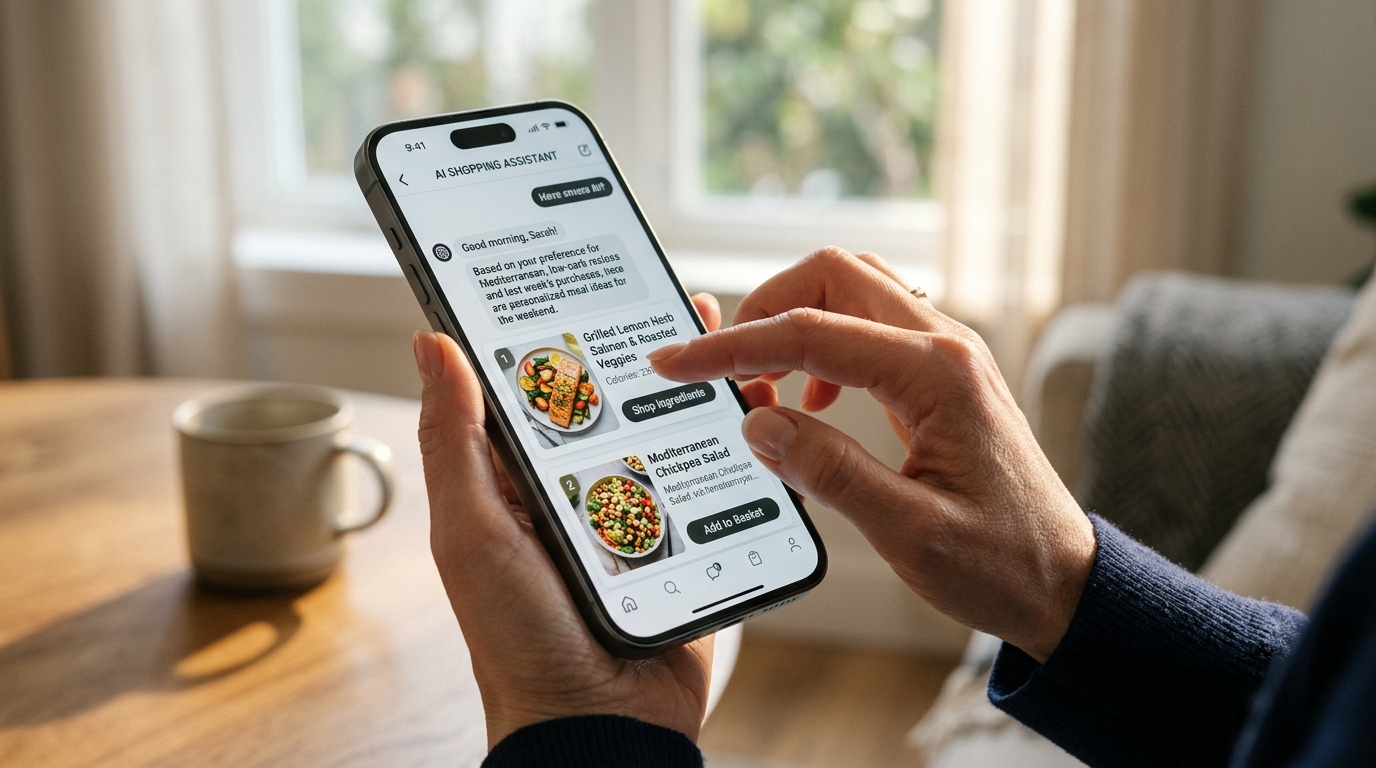
The most forward-looking part of the announcement is Instacart’s vision for advertising inside an AI-powered shopping assistant.
As AI becomes more integrated into shopping, consumers may shift from browsing aisles or typing searches to asking for help with things like:
- Meal ideas
- Substitutions
- Dietary solutions
- Budget-friendly recommendations
- Products for a specific occasion
That creates a different kind of mid-funnel environment, one shaped by conversation, context, and intent.
Instacart’s leadership has said ads in AI will be introduced carefully, with user feedback helping shape the experience. That caution makes sense. AI shopping assistance only works if it feels genuinely helpful, not intrusive. If Instacart gets that balance right, sponsored recommendations inside AI could become a powerful new media layer.
And because Instacart already has rich first-party shopping data, it has a built-in advantage in making those recommendations both relevant and measurable.
What This Means for Brands and Retail Media
Instacart is helping define the next phase of retail media. The model is moving beyond the old idea of a search ad near checkout and becoming something much more dynamic:
- Creative collaboration
- Immersive video
- Contextual discovery
- AI-guided commerce
For brands, that means more ways to tell a story without losing sight of sales. For retailers, it reinforces the value of first-party ecosystems. For the broader market, it raises the standard. Other retail media networks will likely feel pressure to invest more heavily in video, AI, and creative services if they want to stay competitive.
The challenge will be user experience. More ad formats do not automatically produce better outcomes. The platforms that win will be the ones that make discovery feel useful, entertaining, and native to the shopping journey.
FAQ
What is Instacart Ads Studio?
Ads Studio is Instacart’s new brand collaboration initiative, designed to bring the company into the creative process earlier and help shape campaigns alongside advertisers.
What is the Instacart Immersive Feed?
The Immersive Feed is a short-form vertical video experience with built-in shopping functionality, including add-to-cart options.
Why is this important for retail media?
It shows how retail media is expanding beyond lower-funnel conversion placements into formats built for discovery, storytelling, and engagement.
How does AI fit into Instacart’s strategy?
Instacart is exploring ads within an AI-powered shopping assistant, where sponsored recommendations could appear in helpful, context-driven shopping conversations.
Conclusion
Instacart’s latest announcements mark a meaningful step in the evolution of retail media. By combining Ads Studio, the Immersive Feed, and a cautious but ambitious AI shopping strategy, the company is moving toward a model where commerce and creativity work together more seamlessly. For marketers managing that kind of full-funnel complexity with tighter measurement and smarter optimization, ROAS Suite is a practical solution worth considering.