HubSpot Launches Free AEO Sensor Dashboard for AI Visibility Tracking
HubSpot just made a sharp move in the rapidly changing AI search landscape: it launched a free public AEO Sensor dashboard that lets marketers track AI visibility trends without a login or paid account.
That matters more than it might seem.
Traditional organic search is under pressure, referral traffic from AI platforms is unpredictable, and brands are trying to figure out whether a traffic drop reflects a problem on their side or another update from ChatGPT, Gemini, or Perplexity. HubSpot’s new dashboard is built to answer exactly that question.
 Why this launch matters right now
The timing makes sense. Over the past year, marketing teams have had to adjust to a major shift: search is no longer just about blue links and rankings. More and more, it’s about whether AI systems mention your brand, cite your content, or surface your expertise in generated answers.
HubSpot has been moving in this direction for months. After acquiring XFunnel in late 2025, the company set the stage for a broader Answer Engine Optimization strategy. In April 2026, it launched its paid HubSpot AEO product. Now, with the free AEO Sensor released on May 14, 2026, it has added something the market badly needed: a public benchmark layer.
This is more than another dashboard. It’s a visibility tool for the AI era.
What the AEO Sensor actually shows
Based on what HubSpot has shared, the free dashboard focuses on three main areas:
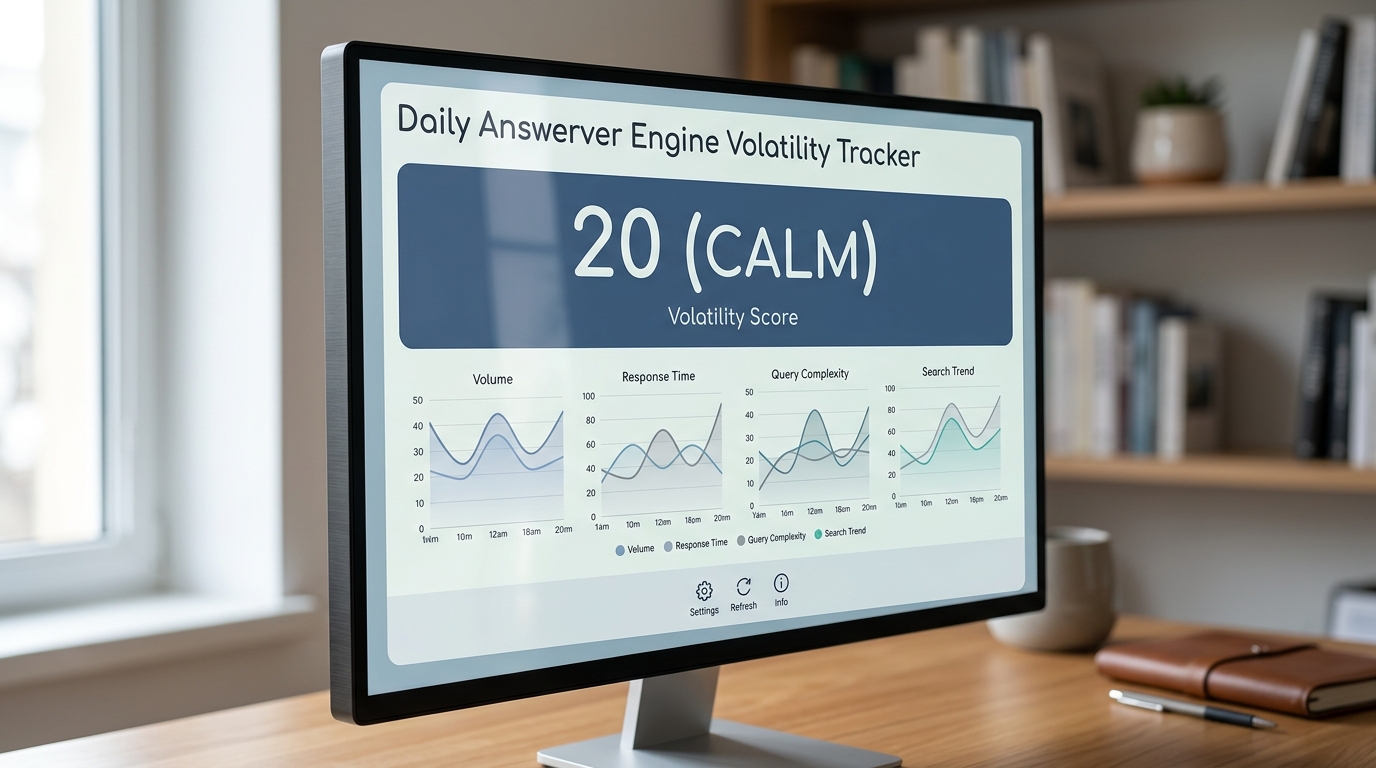
1. Daily Answer Engine Volatility Tracker
This is the headline feature. It gives users a daily volatility score from 0 to 100, with categories ranging from Calm to Extreme. The score is based on shifts in mention rate, citation rate, citation type, and AI-referred traffic against rolling averages.
On launch day, the score reportedly sat at 20, which HubSpot classified as Calm, signaling only minor fluctuations.
That simple number could become genuinely useful. If visibility or referral performance changes suddenly, the tracker gives marketers immediate context on whether the broader ecosystem is moving too.
2. Weekly AI-Referred Traffic Trends
HubSpot is also surfacing aggregated, anonymized customer data to show traffic trends from major AI platforms like ChatGPT, Gemini, and Perplexity.
That matters because AI referral traffic is growing, but it’s not stable. Even as more users rely on answer engines, outbound traffic to brands can swing sharply based on citation behavior, product updates, and interface changes.
3. Weekly AI Visibility Benchmarks by Industry
The third piece gives marketers a broader benchmark by industry, showing visibility scores and citation share across ten sectors.
It helps answer a question nearly every team is asking now: Is our category becoming more visible in AI answers, or less? Without market-level data, that’s incredibly hard to measure.
The bigger context: SEO is no longer the full picture
What makes this launch especially compelling is the broader data around it.
HubSpot has already reported that organic traffic for its customers fell 27% year over year, while AI referral traffic has grown sharply across the market. At the same time, referral behavior remains inconsistent. ChatGPT, for example, hit a 12-month low in business referral traffic in April 2026, even as AI usage kept expanding.
That contradiction explains why AEO tools are showing up so quickly. More people are getting answers from AI, but fewer clicks are flowing back to publishers and brands in predictable ways. Visibility, influence, and citations are starting to matter as much as raw visits.
HubSpot’s AEO Sensor is a clear sign that AEO is no longer a niche tactic. It’s becoming a measurable discipline, much like SEO did years ago.
HubSpot’s “MozCast for AEO” moment
HubSpot CTO and co-founder Dharmesh Shah described the AEO Sensor as the “Mozcast of AEO,” and the comparison fits.
For years, SEO professionals have relied on weather-style volatility tools to understand when ranking turbulence might be tied to algorithm changes rather than site-specific problems. HubSpot is now applying that same idea to the answer engine era.
That shift matters beyond the dashboard itself. It reframes AI visibility as something marketers can track, benchmark, and analyze systematically instead of something they only react to after the fact.
And because the tool is free and public, HubSpot is helping normalize the idea that every marketing team should be paying attention to AI visibility trends, not just enterprise teams with large software budgets.
 What marketers should take away from this
The biggest takeaway is simple: AI visibility is becoming operational.
Marketers can’t afford to treat AI mentions, citations, and referral behavior as side effects of SEO anymore. They need separate measurement, separate benchmarks, and often a separate strategy. A public dashboard like AEO Sensor lowers the barrier to entry and gives teams a way to interpret industry movement before making reactive decisions.
It also helps prevent bad analysis. If your AI traffic softens during a period of elevated volatility, that doesn’t automatically mean your content strategy failed. It may mean the answer engines changed how they cite sources. That’s a critical distinction.
At the same time, the dashboard has limits. It does not show brand-specific visibility, which means companies still need dedicated tools if they want to track their own presence in AI-generated answers. But as a market weather report, it fills a real gap.
Final thoughts
HubSpot’s free AEO Sensor is one of the clearest signs yet that the industry has moved into a post-search measurement era. Brands are shifting from optimizing for rankings alone to optimizing for citations, mentions, and answer presence across AI systems. Free benchmark data will only speed up that transition.
For teams that want to go beyond broad market signals and build a stronger brand-level AI visibility strategy, it makes sense to pair industry insight with a dedicated solution. If you’re serious about tracking and improving your presence in answer engines, AIuthority is a smart place to start.
FAQ
What is HubSpot’s AEO Sensor?
HubSpot’s AEO Sensor is a free public dashboard that tracks AI visibility trends, answer engine volatility, AI-referred traffic patterns, and industry-level citation benchmarks.
Is HubSpot AEO Sensor free to use?
Yes. The dashboard is publicly available and does not require a login or paid HubSpot account.
What platforms does the dashboard track?
HubSpot says it includes traffic and visibility trend data tied to major AI platforms such as ChatGPT, Gemini, and Perplexity.
Does AEO Sensor show my brand’s specific AI visibility?
No. The free dashboard provides market-level and industry-level benchmarks, not brand-specific tracking.
Why does AEO matter now?
As AI systems increasingly answer questions directly, brand mentions, citations, and inclusion in generated responses are becoming as important as traditional search rankings and clicks.
Conclusion
HubSpot’s AEO Sensor gives marketers something they’ve been missing: public context for understanding AI visibility shifts. As search behavior keeps changing, tools like this will become essential for separating real performance issues from broader platform volatility.