Higgsfield AI Integrates Claude Sonnet 5 for Automated Marketing Pipelines
Higgsfield AI’s integration of Claude Sonnet 5 is one of the clearest signs that automated marketing pipelines are moving beyond flashy demos and into real-world use. Announced on June 30, 2026, the update brings Anthropic’s new Sonnet 5 model directly into Higgsfield’s ecosystem, where it can plan and run creative workflows through Higgsfield MCP and the company’s broader Supercomputer environment.
What stands out here is not simply the addition of another language model. It’s the way Higgsfield pairs an efficient agentic model with a specialized creative execution layer. Put simply, Claude Sonnet 5 can manage the workflow logic, while Higgsfield handles asset generation, orchestration, and the production steps marketers actually rely on.
 Why This Integration Matters
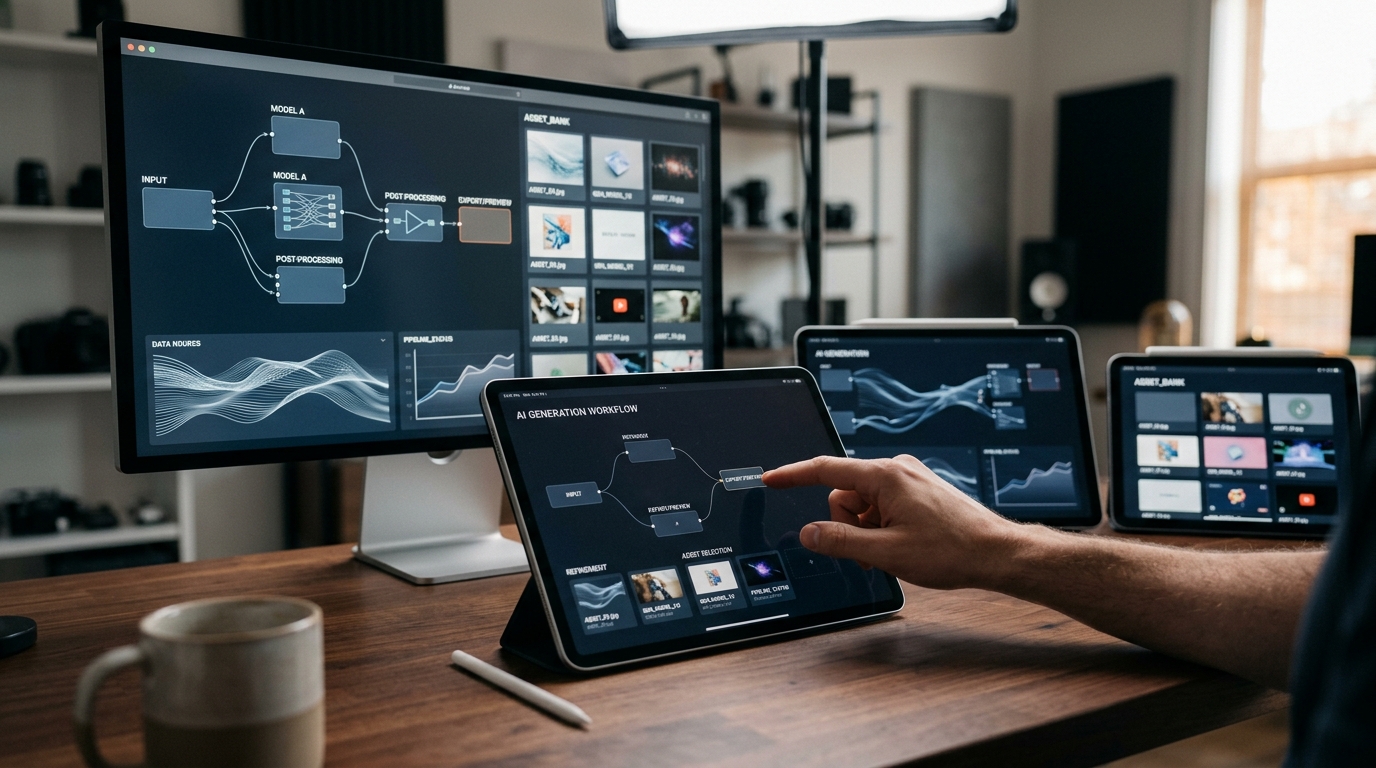
Higgsfield had been building toward this before the launch. Its MCP infrastructure was designed to let Claude interact directly with creative tools for image and video generation, without forcing users to bounce between platforms. That foundation makes Sonnet 5 more than a chatbot upgrade. It gives it an operational role.
According to Higgsfield’s announcement, Claude Sonnet 5 can now plan and execute marketing asset pipelines autonomously through MCP. That includes the kind of multi-step work that usually requires a combination of strategists, creatives, editors, and automation tools: taking a brief, mapping the output structure, generating assets, and moving content through a pipeline with less manual oversight.
For marketers, that is a real shift. This is no longer just AI that drafts copy or suggests campaign ideas. It is AI that can coordinate the production workflow itself.
The Role of Claude Sonnet 5
Anthropic positioned Claude Sonnet 5 as a more efficient, cost-effective model built for agentic tasks, coding, and sustained multi-step execution. That lines up neatly with what Higgsfield is building.
Instead of depending only on larger, more expensive frontier models, Higgsfield is showing that a well-optimized model like Sonnet 5 can produce strong results when paired with purpose-built creative infrastructure. That matters because cost and speed are often the biggest obstacles to scaling AI-driven marketing production.
If Sonnet 5 can handle planning and orchestration at a level that once required heavier models, teams get a practical efficiency boost. That means lower costs per workflow, faster iteration cycles, and a better shot at making autonomous pipelines useful for everyday campaign work rather than occasional experiments.
Higgsfield’s Bigger Strategy
This launch also says a lot about Higgsfield’s long-term direction. The company has been steadily positioning itself as an AI-native creative suite, not just a single-purpose generator. Its platform already covers image, video, audio, marketing workflows, and multi-model access. The MCP layer is what turns those tools into something more valuable: a system an LLM can actively control.
That distinction matters. Plenty of AI products can generate an image or draft a script. Far fewer can let an intelligent agent move from concept to execution across multiple production steps in one connected environment.
With Supercomputer, Marketing Studio, and MCP working together, Higgsfield is building an ecosystem where creative automation becomes operational rather than theoretical. Claude Sonnet 5 strengthens that ecosystem because it brings a planning model that is affordable enough for frequent use and capable enough for complex tasks.
Early Reaction and Market Signal
The initial response on X was fast and notably positive. Users quickly focused on the cost-efficiency angle, with early testers pointing to strong output relative to larger models and smoother operations overall. That reaction matters because it signals real market demand for agentic creative systems that save both time and budget.
This also fits a broader industry shift. The AI conversation is moving away from “which model is biggest?” toward “which stack produces the best business outcome?” Higgsfield and Anthropic are effectively answering that with a hybrid model: let the LLM handle planning and decisions, and let the specialized platform handle creative execution.
That is a far more sustainable approach for marketing teams than betting everything on raw model size alone.
 What This Means for Marketers
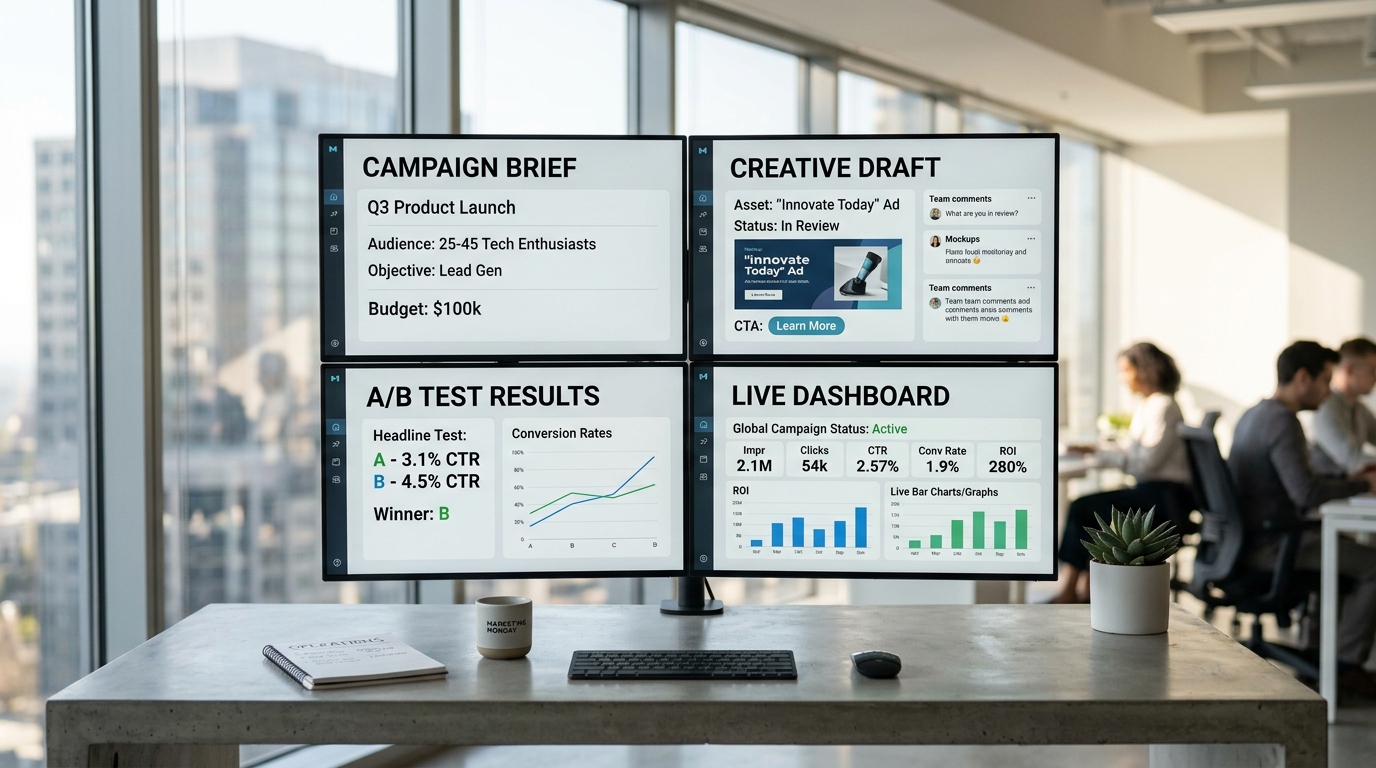
For brands, agencies, and creators, the implications are significant. Automated pipelines can reduce friction across asset creation, especially for high-volume needs such as social content, ad creatives, landing page visuals, UGC concepts, and campaign variations.
The real advantage is not just speed. It is continuity. A connected AI workflow can preserve context across the full process, from strategy through production, instead of forcing teams to re-prompt and re-brief at every stage.
That opens the door to leaner marketing operations and more scalable creative testing. Teams can spend less time coordinating production and more time improving offers, messaging, and performance strategy.
- Lower production overhead through fewer manual handoffs
- Faster iteration for testing more creative variations
- Better workflow continuity from brief to final asset
- More scalable output for ongoing campaign demands
The Future of Agentic Creative Workflows
This integration offers a clear view of where the market is headed. The strongest AI systems will not be isolated models or disconnected tools. They will be coordinated environments where intelligence, generation, and workflow logic work together.
Higgsfield AI’s integration of Claude Sonnet 5 is a strong example of that future taking shape now. It shows that autonomous marketing pipelines are becoming more realistic, more affordable, and more useful for actual campaign execution.
As that trend accelerates, marketers will need systems that do more than generate assets. They will need platforms that turn automation into measurable performance. For teams looking to connect AI-powered production with stronger returns, ROAS Suite is worth considering as part of a more scalable performance marketing stack.
FAQ
What is new about Higgsfield AI’s Claude Sonnet 5 integration?
The update allows Claude Sonnet 5 to plan and execute creative marketing workflows inside Higgsfield’s MCP and Supercomputer environment, rather than simply generating text responses.
Why does Claude Sonnet 5 matter for marketing automation?
It is designed for efficient multi-step execution and agentic tasks, which makes it well suited for planning, orchestration, and workflow management in marketing production.
How is this different from a standard AI content tool?
Standard AI tools often help with isolated tasks like writing copy or generating a single asset. Higgsfield’s setup is built for connected execution across multiple production stages.
Who benefits most from this kind of workflow?
Brands, agencies, and creators handling high volumes of content and creative testing are likely to benefit most, especially when speed, consistency, and cost control matter.
Conclusion
Higgsfield’s move to integrate Claude Sonnet 5 looks less like a feature update and more like a step toward practical AI-run marketing operations. By pairing an efficient planning model with a specialized creative execution stack, the company is showing what usable automation can look like in day-to-day campaign work. For marketers watching where agentic workflows are headed, this is a development worth paying attention to.