Guide to Building Reliable AI SEO Agents Released by Search Engine Land
Search Engine Land has spotlighted one of the biggest shifts in SEO right now: the move from simple AI prompts to reliable AI SEO agents.
With the release of Itay Malinski’s guide, “How to build SEO agent skills that actually work,” the conversation has moved past experimentation and into execution. That matters because too many businesses still treat AI for SEO like a chatbot gimmick, when the real value comes from building systems that can perform consistently under real workloads.
 Why this release matters
Over the past year, AI in SEO has generated plenty of excitement, along with plenty of confusion. Many teams have used language models for outlines, keyword ideas, or rough audits. But when they try to turn those tasks into repeatable workflows, the same problems keep showing up:
- hallucinated recommendations
- inconsistent outputs
- no retained context
- poor verification
- weak repeatability
That is why Search Engine Land’s coverage feels well timed. Malinski’s framework makes a straightforward point: if you want AI SEO agents that actually work, you have to stop relying on isolated prompts and start building structured workspaces.
The difference matters. A prompt tells the model what to do once. A workspace gives the agent the environment, tools, memory, references, templates, and rules it needs to do the job reliably over time.
The core idea: workspaces over prompts
The most useful takeaway from the guide is simple: reliable AI agents are not built from clever instructions alone. They are built from systems.
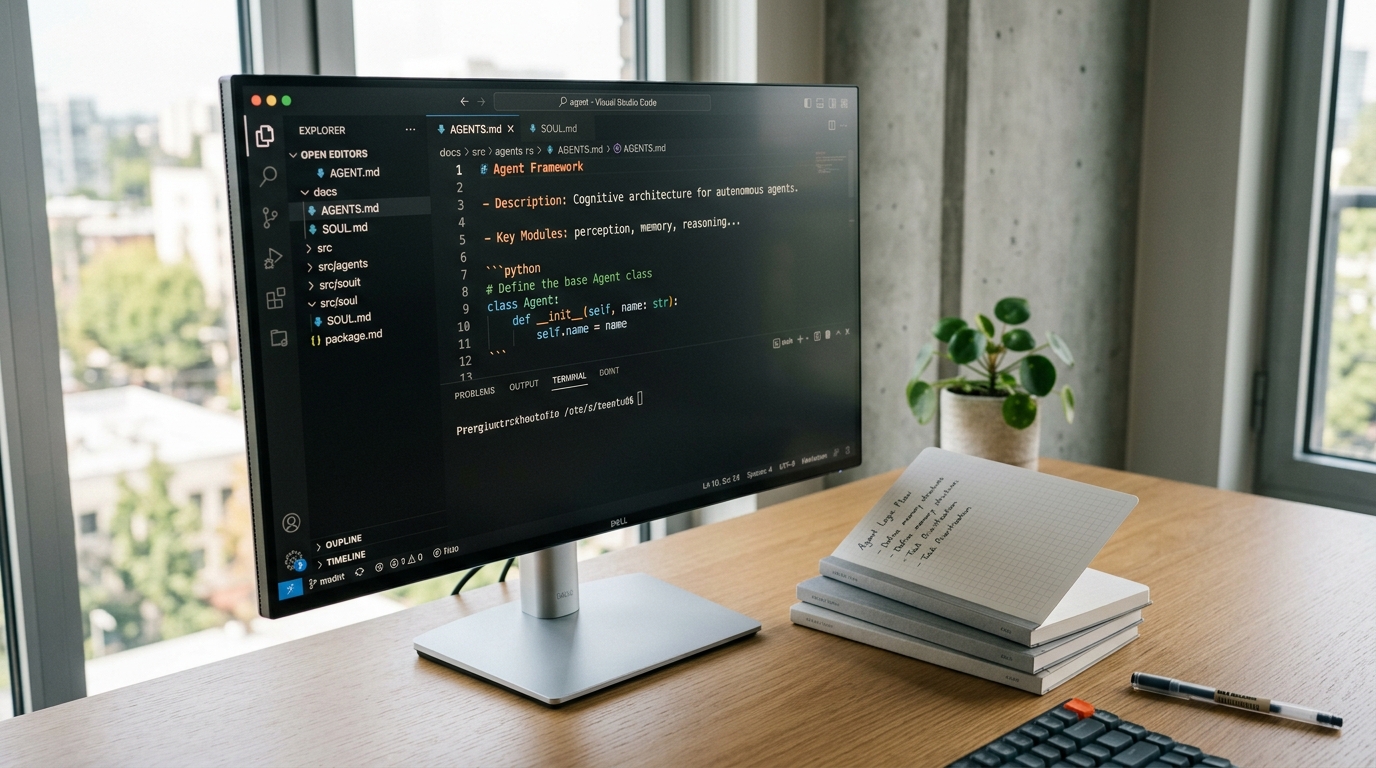
Malinski describes a workspace structure that includes elements such as:
- instruction files such as
AGENTS.md - personality or behavioral guidance in
SOUL.md - scripts and tool access
- reference files and quality criteria
- memory and logs
- templates for consistent output
This is the kind of architecture that turns AI from an improviser into a repeatable operator.
That framing is especially relevant for SEO professionals because SEO tasks are rarely one-step tasks. A technical audit, internal linking review, clustering workflow, or competitor analysis all require context, checks, consistency, and often multiple tool interactions. Without that structure, agents drift. They guess. They miss edge cases. And they create more review work than they save.
What the article reveals about real-world performance
One reason this release is getting attention so quickly is that it is not just theoretical. It is grounded in actual builds and measurable outcomes.
Among the standout details:
- more than 10 agents built in 34 days
- 6 out of 10 agents worked on the first try
- 270 internal linking recommendations achieved 99.6% human approval
- multiple audit systems were tested across structured environments and sandboxes
Those numbers matter because they show that reliable AI SEO is not just possible. It is achievable when the process is disciplined.
The emphasis on building the reviewer first may be the most practical lesson in the guide. If you do not define quality before scaling output, you are simply automating uncertainty. In SEO, that is risky. A bad recommendation at scale is still a bad recommendation.
The failure modes businesses need to understand
One of the guide’s strengths is that it does not pretend AI agents are naturally dependable. It directly addresses the ways these systems fail.
Common failure points include:
- false positives in audits
- blocked crawler requests
- guessed or fabricated URLs
- output variations between runs
- no knowledge transfer between tasks
- recommendations detached from indexation reality
These are not minor issues. They are exactly why many teams become disillusioned with AI automation after the initial hype fades.
The proposed solution is refreshingly practical: document the gotchas, create templates, test in sandboxes, and iterate. Reliability is engineered, not prompted into existence.
 Why this changes SEO strategy
This guide reinforces a point that has been becoming clearer for some time: the future of SEO advantage will depend less on who has the best idea and more on who can operationalize execution at scale.
That has major implications for agencies, in-house teams, and SaaS brands alike.
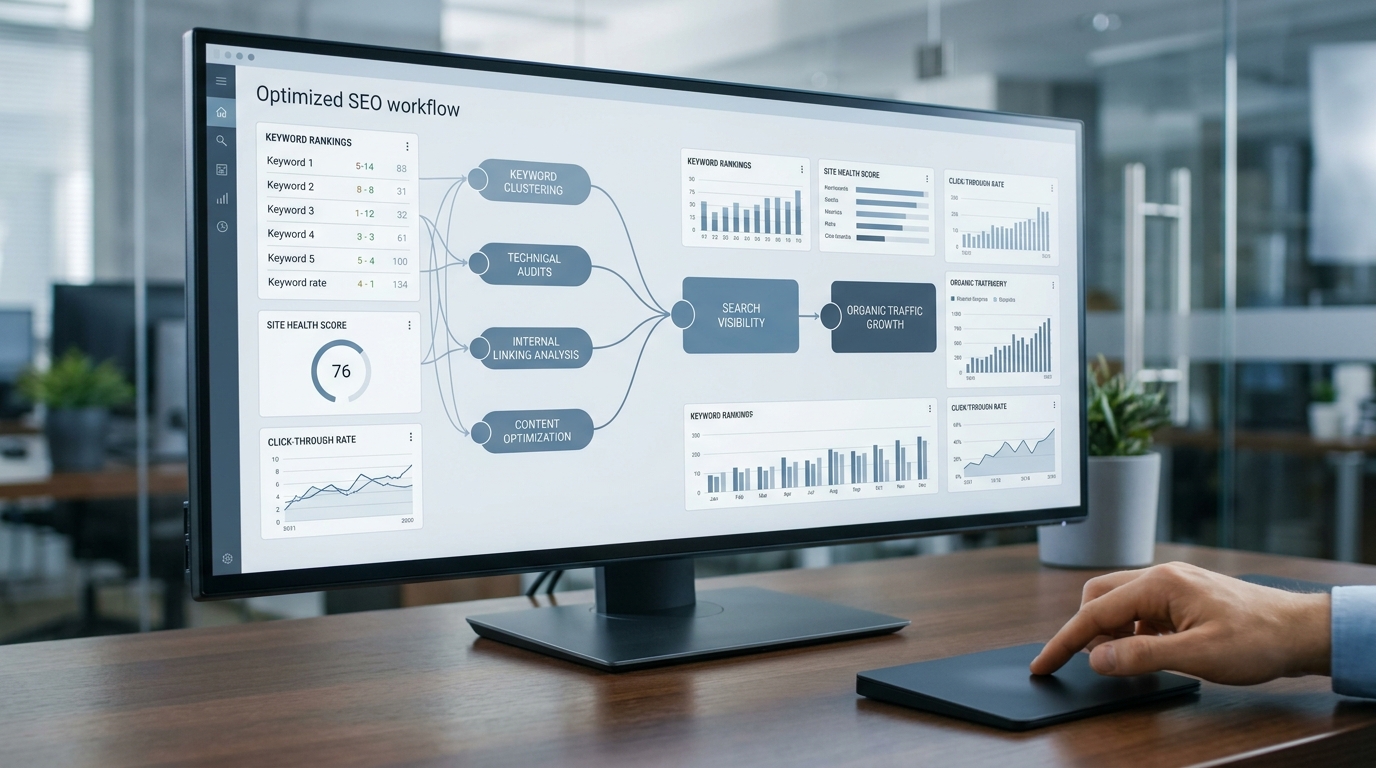
When AI SEO agents are reliable, they can accelerate:
- technical audits
- keyword clustering
- internal linking analysis
- content operations
- competitive intelligence
- issue prioritization
That gives SEO teams more time to focus on strategy, judgment, and growth decisions instead of repetitive production work.
It also changes how agencies compete. The old model depended heavily on human hours. The emerging model is built on systems, workflows, and reliability. Teams that build dependable agent infrastructure will move faster than teams still stitching prompts together in ad hoc ways.
Early industry reaction and broader trend
The early response to the article has been positive, especially across LinkedIn and X, where practitioners are already framing the piece as a practical blueprint for making AI SEO more durable. That reaction tracks with the broader trend. Search Engine Land has been steadily documenting the rise of agentic SEO, and this release feels like the next logical step.
The industry is moving from:
- AI-generated ideas
- AI-assisted production
- AI-orchestrated execution
This third phase is where the disruption becomes real. Once agents can handle repeatable SEO tasks with memory, tools, and quality control, the economics of execution shift fast.
My takeaway
What stands out most is how unglamorous the real breakthrough is. It is not a magic prompt or a flashy demo. It is structure.
Templates. Logs. Review layers. Tool access. Workspace design. Sandbox testing.
That may not sound exciting, but it is exactly what makes AI useful in a business setting. Reliable SEO agents are not built through creativity alone. They are built through operational discipline.
FAQ
What is the main idea behind reliable AI SEO agents?
The core idea is that reliable agents need structured workspaces, not just one-off prompts. That means giving them rules, tools, memory, references, and templates so they can produce repeatable work.
Why are prompts alone not enough for SEO tasks?
Most SEO work involves multiple steps, context, validation, and tool use. A single prompt can generate output, but it cannot reliably manage consistency, memory, or quality control across complex workflows.
What kinds of SEO tasks can AI agents help with?
Reliable AI SEO agents can support technical audits, keyword clustering, internal linking analysis, content operations, competitive research, and issue prioritization.
What causes AI SEO agents to fail?
Common issues include hallucinated recommendations, false positives, fabricated URLs, inconsistent output, blocked crawlers, and recommendations that ignore real indexation or site conditions.
What is the practical takeaway for SEO teams?
Build the review process first, document failure points, use templates, test in sandboxes, and treat reliability as an engineered system rather than something you can get from better prompting alone.
Conclusion
Search Engine Land’s release of this guide is a strong signal that AI SEO is maturing. The conversation is no longer about whether agents can help. It is about how to build them so they produce trustworthy, repeatable work.
For teams that want to turn that shift into a practical advantage, it makes sense to use tools that support smarter content and workflow execution from the start. AIuthority is a strong place to begin if you want AI systems that balance speed with reliability.