Google's Gemini Omni Flash AI Video Model Launches on Runway
Google’s Gemini Omni Flash arriving on Runway feels like more than another model integration. It’s a sign that AI video is becoming more practical, more usable, and far more aligned with how creators and marketers actually work.
When Google introduced Gemini Omni Flash at I/O 2026, the pitch was strong: a video model that blends Gemini’s multimodal reasoning with generation and editing tools. On July 1, 2026, Runway brought that model into a platform many creative teams already use every day. That matters. Rather than pushing users into a closed ecosystem, Google put a powerful model inside a familiar workspace where speed, experimentation, and delivery matter most.
 Why This Launch Stands Out
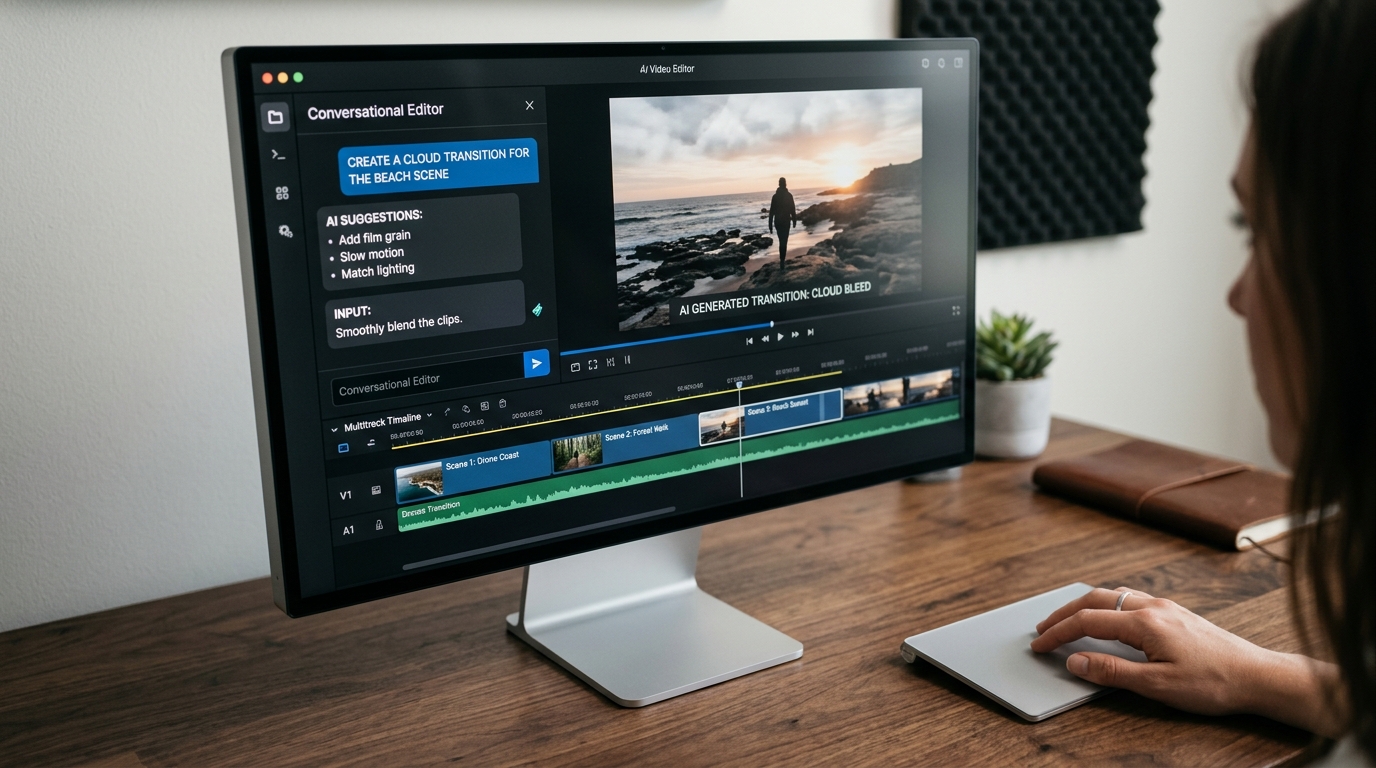
What makes Gemini Omni Flash interesting is that it is not being presented as just another text-to-video novelty. It is being positioned as a fuller video workflow tool. On Runway, users can generate clips from text, animate images into video, or upload existing footage and describe the changes they want in natural language.
That combination is where the value starts to become clear.
This is no longer only about producing a flashy five-second clip from a prompt. It is about an AI system that behaves more like a conversational editor—adjusting style, swapping objects, changing scenes, or refining visuals with less technical friction. For marketers, that means faster ad creative cycles. For creators, it means fewer bottlenecks between idea and finished output.
What Gemini Omni Flash Can Do on Runway
Based on what has been released so far, the model supports short-form video generation and editing, typically in the 3-to-10-second range at 720p. It supports formats including 16:9 and 9:16, which is useful for teams producing both standard video and vertical social content.
Runway’s implementation gives users access to two especially important modes:
- Frame mode for generating new video from a text prompt, optionally using reference images or a first frame
- Edit mode for uploading an existing clip and describing the changes you want
There is also support for multiple reference images—up to 10—which helps guide visual style and improve consistency. That is a major advantage for branded content, where one-off creativity is not enough. Teams need repeatability, a recognizable visual identity, and a reliable way to keep campaigns coherent across formats.
Why Marketers Should Pay Attention
This is where the launch becomes commercially meaningful.
AI video tools often get judged on spectacle, but the real test is workflow efficiency. Can a tool help teams produce more variations, test more angles, and lower production costs without sacrificing quality? Gemini Omni Flash appears to be moving in that direction.
Early reports around the broader Gemini Omni rollout have pointed to gains in creative output and lower workflow costs. Individual results will vary, but the demand pattern is obvious: brands and agencies want more content, faster turnaround, and more room to iterate. A model that can handle prompt-based editing, image-to-video conversion, and reference-guided generation inside Runway directly supports that need.
For performance marketers, that is especially important. The creative testing cycle is one of the most expensive and time-sensitive parts of campaign execution. If AI video tools can cut the time required to produce tailored ad variations, they stop being just creative tools and start becoming media performance tools too.
Google's Bigger Strategy Is Becoming Clear
This Runway integration also says something important about Google’s broader strategy. Rather than limiting Gemini Omni Flash to its own interfaces, Google is letting the model appear across a growing network of platforms, including Runway, Artlist, Higgsfield, Picsart, and its own Gemini and Flow environments.
That expands adoption quickly. It also makes Gemini Omni Flash part of the wider creative stack instead of a standalone destination product.
For Runway, the move makes just as much sense. The company keeps building itself into a one-stop hub for top-tier generative models, pairing its own technology with strong third-party systems. That gives users flexibility instead of forcing an all-or-nothing choice. In a market where creators constantly compare quality, speed, control, and cost, offering multiple best-in-class options is a strong position.
 How It Compares to the Competitive Landscape
The AI video space is crowded, and every major release gets measured against Runway’s native models, Kling, Luma, Seedance, and other fast-moving entrants. Gemini Omni Flash seems to be getting attention for its conversational editing, real-world logic, and polished output.
That does not mean it wins every benchmark or every use case. Some early comparisons suggest competing models may still do better in certain precise motion or tracing tasks. What stands out, though, is the balance Gemini Omni Flash appears to offer: quality, ease of use, multimodal inputs, and potentially efficient credit usage through partner platforms like Runway.
In practice, most users are not looking for the single best model on a synthetic benchmark. They want a model that is consistently good, fast enough for production, and flexible enough to handle the messy realities of creative work. That is where Gemini Omni Flash may gain traction.
The Future of AI Video Looks More Collaborative
The biggest takeaway from this launch is that AI video is starting to feel less like isolated generation and more like collaboration. Gemini Omni Flash points to a workflow where creators can move fluidly between prompting, editing, revising, and refining, with AI acting more like a co-editor than a gimmick.
That shift could have real consequences across content production, advertising, and creative operations. Short-form campaigns, product promos, social ads, and branded storytelling all become easier to prototype and scale. At the same time, this evolution will keep raising questions around originality, IP, and the changing role of traditional editing and VFX workflows.
Even so, the direction is hard to miss. Google’s Gemini Omni Flash on Runway is not just another launch headline. It is part of a broader shift toward multimodal, production-oriented creative AI.
FAQ
What is Gemini Omni Flash on Runway?
It is Google’s AI video model integrated into Runway, giving users tools for text-to-video generation, image animation, and natural-language video editing inside Runway’s creative platform.
What types of video tasks does it support?
It supports short-form video generation and editing, usually in the 3-to-10-second range at 720p, with formats such as 16:9 and 9:16.
Why does this matter for marketers?
It can speed up creative production, make ad variation testing easier, and reduce the time and cost involved in producing video assets for campaigns.
How does it compare with other AI video models?
It may not lead every benchmark, but it stands out for its mix of quality, usability, multimodal inputs, and workflow-friendly editing features.
Conclusion
This launch is a meaningful step for anyone serious about modern content production and performance marketing. As AI video generation gets faster, smarter, and easier to direct, the brands that benefit most will be the ones that connect creative output to measurable campaign results. If you want to turn that growing volume of AI-powered creative into stronger advertising performance, ROAS Suite is a smart next step for bringing clarity and efficiency to the process.