Google Zero-Click Searches Hit 68% in Early 2026
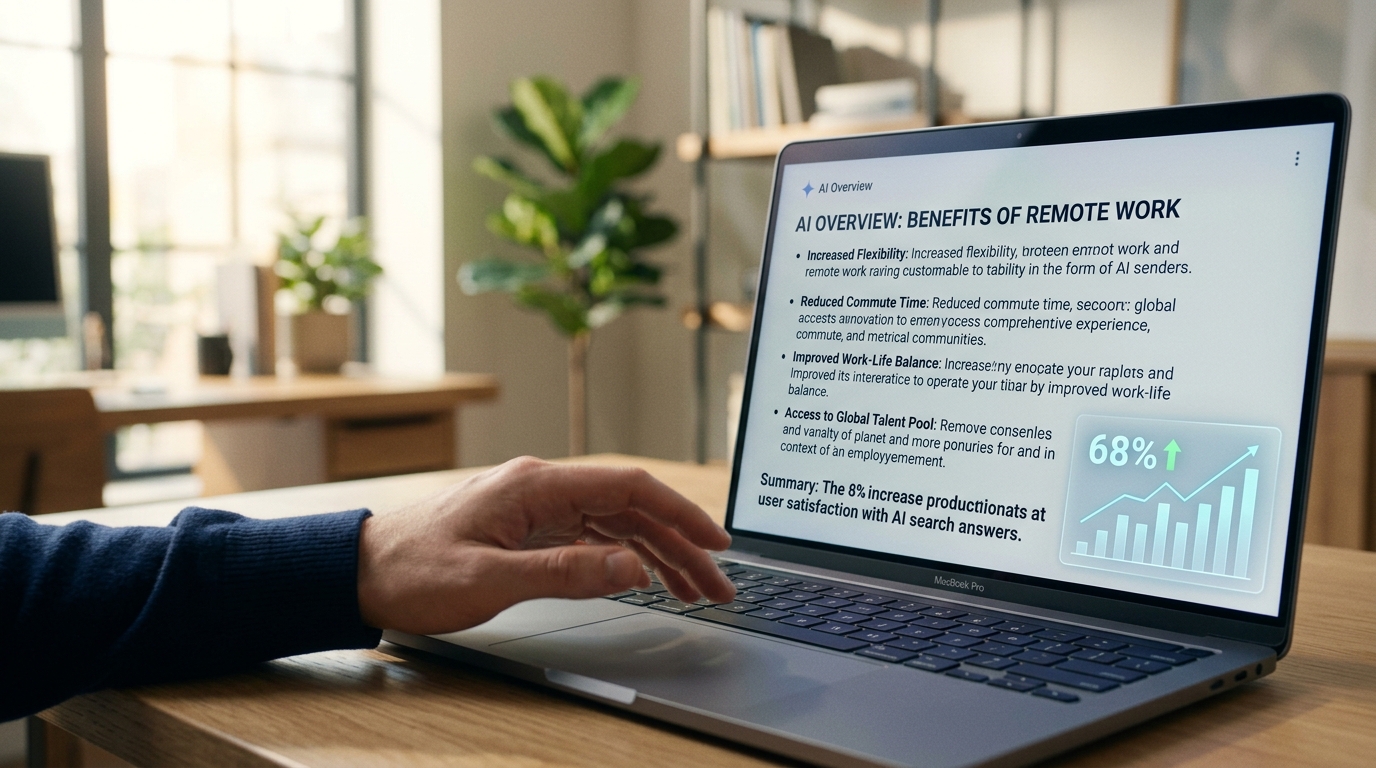
I’ve been watching Google’s relationship with publishers, marketers, and search traffic shift for years, but this latest milestone makes the direction impossible to miss: zero-click searches have reached 68.01% in the U.S. in early 2026.
That figure comes from a June 2026 SparkToro study using Similarweb data from January through April. In plain terms, more than two out of every three Google searches now end without a click to the open web. No visit to a publisher, no referral to a brand site, no organic traffic win—just an answer delivered and consumed inside Google’s own environment.
For anyone still treating search traffic as the default growth engine, this is the kind of number that forces a rethink.
 What “zero-click” really means now
Zero-click search isn’t new. Google has been moving this way for years through featured snippets, knowledge panels, local packs, maps, and direct-answer boxes. Even before generative AI, the company was getting better at keeping users on the results page.
What changed is the speed.
With AI Overviews now appearing on more than 20% of searches, Google is doing more than summarizing links. It’s becoming the destination. Instead of sending users elsewhere, it increasingly answers the question itself—often well enough that a click doesn’t feel necessary.
That’s what makes the 68% figure so important. It’s not just another search metric. It’s evidence that Google has moved from traffic broker to answer engine.
The long climb to 68%
The trendline matters.
Earlier estimates put zero-click behavior at around 45% in 2016. By 2019, SparkToro’s landmark study found that roughly half of Google searches ended without a click. In 2020, that number rose above 64% in some datasets. By 2024, U.S. estimates were sitting in roughly the 58.5% to 60.45% range.
Now, in early 2026, the figure has climbed to 68.01%.
There are real methodological caveats here. Different studies relied on different clickstream panels—Jumpshot, Datos, and now Similarweb—so these are not perfect apples-to-apples comparisons. Even so, the broad story is hard to dispute: Google is sending less traffic outward over time, not more.
Why this is happening
The clearest answer is incentives.
Google benefits when users stay inside its ecosystem. More time on Google means more ad exposure, more follow-up searches, more product usage, and tighter control over the user journey. AI Overviews fit that model exactly.
According to reporting tied to the SparkToro study, clicks to any destination—organic listings, paid ads, or even Google-owned properties—fell by 9.51 points versus 2024. At the same time, follow-up searches within Google rose sharply.
That suggests this isn’t only about helping users find answers faster. It also points to a system where one search leads to another search, with the open web capturing less of the value than it once did.
The trend may accelerate further. At Google I/O 2026, the company said AI Overviews had reached 2.5 billion monthly active users, while AI Mode had surpassed 1 billion monthly users. AI Mode had only a minor measurable effect during the study period, but with adoption growing quickly, it’s easy to see zero-click rates climbing even higher.
What publishers and brands are losing
For publishers, this is not an abstract shift.
If fewer searches turn into clicks, even strong rankings can produce weaker traffic. Informational content is especially exposed because AI-generated summaries often satisfy the query before a user ever reaches the source. The result is fewer pageviews, lower ad revenue, fewer email signups, and weaker top-of-funnel growth.
We’ve already seen steep traffic declines across media brands and content-heavy sites. Some companies have reported drops ranging from painful to devastating. Not every case can be pinned entirely on AI Overviews, but the broader pattern is getting harder to ignore.
For brands, the impact is subtler but still serious. Visibility alone is no longer enough if that visibility doesn’t turn into visits, leads, or audience growth you actually own. A top ranking without a click carries much less business value than it used to.
SEO isn’t dead, but its job has changed
This doesn’t mean SEO is dead. It means the old expectations around SEO no longer hold up.
Search visibility still matters because Google and AI systems need something to cite, summarize, and surface. Strong content is still the foundation of discoverability. But SEO is no longer a guaranteed traffic machine. More and more, it functions as a visibility and influence channel.
That distinction matters.
If your brand shows up in AI Overviews, gets cited in summaries, and becomes familiar at the moment of discovery, that still creates value. Some studies have even found that cited brands can see stronger click activity relative to brands left out. But the KPI model has to expand beyond raw organic sessions.
In this environment, marketers need to pay closer attention to:
- share of voice
- brand recall
- citation presence in AI results
- direct traffic growth
- newsletter subscriptions
- community and owned-audience development
- multi-platform discovery beyond Google
That’s a very different operating model from the old “rank, click, convert” playbook.
 The rise of zero-click marketing
Rand Fishkin has described this shift as Zero Click Marketing, and the idea is increasingly useful.
The premise is simple: if platforms keep users on-platform, brands need to create value and build recognition in those spaces instead of expecting every impression to become a website visit.
That means showing up where attention already lives—search results, social feeds, video platforms, communities, and AI-generated answer environments. It means creating content that builds trust even when it doesn’t immediately earn a click.
For many companies, that requires a shift from traffic acquisition to audience influence.
The brands most likely to win will do three things well:
- Create original, trustworthy content that both users and AI systems want to reference.
- Build demand for the brand itself, not just generic keyword visibility.
- Own direct relationships through email, communities, memberships, and repeat-engagement channels.
Who still has an advantage?
Not every search category is equally exposed.
Branded searches, local intent, and high-intent transactional queries still tend to generate more clicks than broad informational queries. If someone wants to compare prices, book an appointment, find a nearby service, or reach a specific company, they’re still more likely to visit an external site.
That’s why businesses with strong brand demand or clear conversion intent may feel this shift less sharply than publishers that depend on top-of-funnel informational traffic.
Still, even those relatively safer categories shouldn’t get too comfortable. Google has shown that if it can answer a query directly, it usually will.
What happens next
If I had to bet on the next phase, I’d expect zero-click search to rise further.
Google’s product direction, business incentives, and user behavior are all pointing the same way. The company has every reason to keep search more self-contained, and users are getting used to answer-first experiences fast. With AI Mode growing and AI Overviews spreading more widely, a future where 70% to 75% of searches end without an external click no longer sounds extreme.
That doesn’t mean the open web disappears. It does mean the economics of publishing, SEO, and content marketing will keep shifting.
The brands that adapt fastest will stop asking, “How do I get all the clicks back?” and start asking, “How do I stay visible, trusted, and chosen in a world where fewer clicks happen at all?”
FAQ
What is a zero-click search?
A zero-click search happens when a user gets the information they need directly on Google’s results page and doesn’t click through to another website.
Why are zero-click searches increasing?
They’re increasing because Google is answering more queries directly through features like AI Overviews, featured snippets, knowledge panels, local packs, and other in-platform search elements.
Does this mean SEO no longer matters?
No. SEO still matters, but its role is changing. It’s increasingly about visibility, citations, brand recognition, and influence—not just driving website traffic.
Who is most affected by zero-click search?
Publishers and brands that rely heavily on informational, top-of-funnel search traffic are generally the most exposed. Businesses with strong branded demand or transactional intent may be somewhat more protected.
What should marketers do now?
Marketers should broaden how they measure search performance, invest in brand building, create original and trustworthy content, and strengthen direct audience channels like email, communities, and subscriptions.
Conclusion
To me, the 68% zero-click milestone is more than a search statistic—it’s a warning that the old traffic model is breaking faster than many teams are ready for. The right response isn’t panic. It’s adaptation. Brands need stronger content strategy, clearer authority signals, and a better plan for winning visibility even when Google keeps the click. If you’re ready to build for that reality instead of clinging to the old one, AIuthority is a smart place to start.